Showing posts with label economic conditions. Show all posts

Friday, 10 August 2018

Private brands sell well

Private brands are owned and marketed by retailers and other channel members

Private brands traditionally sell well during periods of economic recession. That certainly was the case after the 2008 financial crash that led to a global financial downturn, when more expensive national and global brands saw price-conscious consumers switching to less-expensive private brands for many categories of purchases.

In fact, premium private brands have been part of the reason for consumers to switch away from other brands. These provide a 'halo effect' to help boost the image of all the private-brand products in the marketer's portfolio and make these products look more appealing in the eyes of consumers.

Private brands reportedly outperform national brands in four European nations, according to one source. They are strongest in the UK grocery market; research shows consumers consider the quality to be equal to that of national brands (and some consumers say the quality of private brands even exceeds that of national brands).

Many UK supermarket shoppers are admittedly looking for value. The rise of deep-discount grocery chains like Aldi and Lidl is due, in part, to the attractiveness of private brands that provide price-conscious consumers with quality alternatives to national brands.

This post updates private brand coverage in Chapter 6 of my Essential Guide to Marketing Planning, 4e.

Thursday, 28 December 2017

Trend: Online businesses opening physical locations


Trendy Products, which sells furniture online, has opened a 'digital concept showroom' in Cardiff. Trendy is, in fact, on trend, as more e-businesses add physical locations to allow customers to see and experience products, chat with salespeople, access digital catalogues and then make buying decisions.


Trendy has been in business for a decade, building a strong customer base. Now it plans to open more showrooms, expanding beyond digital to reach consumers who want to experience the product and consult with designers before they buy.

One reason for this trend is the availability of good retail locations. Many years of dismal economic growth and cautious consumer spending pushed a large number of stores into administration. Competition from online businesses has also caused retailers and other businesses to shutter some branches that weren't doing well. The result: vacancies in desirable shopping areas. And thanks to good space availability, some retail businesses are actually doing better.


Amazon, the pioneering e-tailer, arranged for space in sections of existing US retail stores for the 2017 holiday season. It owns the Whole Foods Market grocery chain, where it set up displays and sold products. But it also opened some mall stores and rented space in other department stores, enabling shoppers to see and trial Kindles and other products.

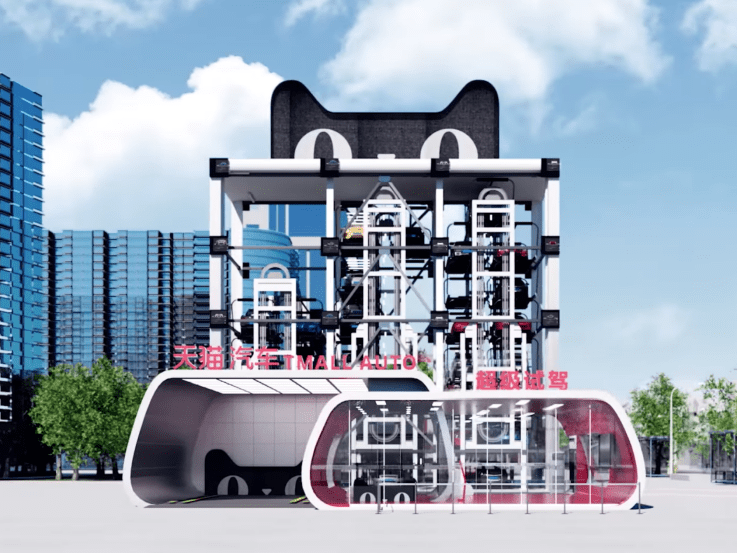
Alibaba, China's online retail giant, is adding a physical presence in key cities through partnerships and through, well, giant vending machines.

Each consumer-friendly Alibaba automated location (like the concept shown here) will sell Ford automobiles, starting with a test drive offered to consumers who qualify with sufficient credit to complete the purchase.