Showing posts with label brick-and-mortar retailing. Show all posts

Monday, 12 November 2018

Pop-up shops for holiday marketing

'Tis the season for holiday pop-up shoppes opening around the UK. More than ever, brands and businesses see pop-ups as a good way to offer a limited-time, in-person experience controlled by the brand.

This allows the companies to try new products or new displays, learn more about customers' interests and preferences, understand response to pricing and test response to communication messages featuring the pop-up. Once the pop-up closes, marketers can analyse the results and make decisions about future products, pricing, promotion and distribution possibilities--made possible by limited spending on a limited-time retail space in a targeted geographic area.

For instance:

  • Seedlip, which markets non-alcoholic drinks, is opening a Mayfair pop-up focused on its beverages as well as bar products.
  • Amazon, the pioneering online retailer, is opening a London fashion shop for one week to experiment with bricks-and-mortar store marketing.
  • Cards for Good Causes, a nonprofit, has a holiday pop-up inside a public library, selling greeting cards to benefit numerous charities.
  • One of the more unusual pop-ups is in Manchester, where Classic Football Shirts sells, well, classic football shirts like an original #7 Beckham ManU shirt, amongst others.

Monday, 23 July 2018

Three visions of the future of retailing

Suning
What is the future of retailing? Different businesses have differing visions of how people will shop and buy in the future. Here are three visions among the many being planned and tested worldwide:

  • Suning, a Chinese retailer, is testing unstaffed stores. (Photo above is from its news release.) The company calls this 'smart retailing' because of omnichannel choices and automation. Shoppers who have registered their Suning financial services account are identified via facial recognition and gain entry to the unstaffed stores. The idea is that some shoppers prefer to examine merchandise and buy in person, with tech assistance to speed transactions. 
    Start Today
  • Twenty-year-old Japanese fashion e-commerce firm Start Today wants to help customers order clothing in the correct size. Shoppers dress in a Zozosuit and their measurements are captured electronically. Then shoppers can order clothing made to fit. 
  • Retailers (both online and offline) are increasingly stocking a larger selection of preowned products (meaning gently-used merchandise). This is a trend in the upmarket wristwatch business, for example. It's also a trend in designer clothing and accessories. Not vintage, necessarily, but used items that originally were luxury priced.

Friday, 6 July 2018

Primark continues Primania

Primark, a master at marketing low-priced fast fashion, continues to engage price-conscious brand fans via its Primania page of consumer-generated fashion content. Want to see how other Primark customers accessorise a special dress or wear the company's newest tops? Browse more than 16k images uploaded by brand fans, subject to the marketer's content guidelines.

Founded in Dublin in 1969, the company now markets under a variety of private brands, including Young Dimension and Ocean Club. In addition, Primark partners with groups to market special product collections. Its recent LGBT+ Pride collection is in partnership with Stonewall, a nonprofit that promotes equality, and a portion of each purchase benefits the nonprofit.

Primark operates more than 350 stores in 12 countries. Its US stores are doing well, but the company is awaiting long-term analysis before expanding there. Unlike nearly every other retailer on the planet, Primark does not sell online, only in physical stores.

Yet its social media presence is impressive. Primark has nearly 6mm Instagram followers, 98k Pinterest followers, 225k Twitter followers.

How will Primark use marketing to celebrate its 50th anniversary in 2019?

This post updates the "Marketing at Primark" feature in Chapter 1 of Essential Guide to Marketing Planning, 4th edition.

Monday, 30 April 2018

Marketing consequences of merging Sainsbury's and ASDA

Walmart proposes to sell ASDA to Sainsbury's, creating a UK retailing giant that would increase efficiencies--and possibly intensify the supermarket price wars.

Sainsbury's would manage the new entity, with Walmart as a shareholder and partner.

One marketing consequence is the ability for the combined company to pay less for goods and services purchased in larger volume. This will, in turn, reduce costs and therefore allow for lower prices--a key element in this competitive industry.

So far, Sainsbury's says it will slash prices by 10% and will not be closing any stores after the merger is complete. UK regulators may require the sale of some stores to rivals, which would be another marketing consequence of the deal. The marketing environment for all UK retailers could change as a result.

Finally, how will consumers react? Will the merger change consumer behaviour? We'll have to wait and see.

Thursday, 1 February 2018

Marks and Spencer and legacy retailing

Marks & Spencer is a legacy retailer--meaning it has been around since long before the ecommerce age and still focuses primarily on in-store retailing.

Online, M&S is enjoying growth increases--but results are not as strong as some analysts had hoped.

Competition from other legacy retailers, as well as competition from online merchants, is causing M&S to make changes to its offline strategy. One issue the retailer is addressing is how many stores it really needs. M&S is planning to close up to 30 of its brick-and-mortar stores in the near future. 'Stores will always be an integral part of our customer experience, alongside M&S.com, but we have to ensure we have the right offer in the right locations', says a company exec.

Looking at the international retail presence, M&S is selling its Hong Kong and Macau retail business as part of its change in strategy. The new owner will retain the M&S brand on store signage as part of the deal.

To keep sales and profits growing, M&S had planned to open dozens of new food stores in its Simply Food chain. But now, after food sales did not meet performance expectations during the key yearend holiday period of 2017, the company is opening fewer stores than originally planned. The company stated that 'headwinds facing our food business have intensified as competitors have encroached on some of our space with the rapid growth of convenience'.

Sunday, 7 January 2018

Targeting business customers like consumers

Businesses don't make buying decisions--people who work for businesses actually make those decisions. And that's why B2B marketers are targeting businesspeople using consumer-driven media, both traditional and social media, with proven B2C techniques like customizing content.

Amazon, the pioneering etailer, has a marketing initiative to sell office supplies to UK businesses. 'Whether you are a sole trader, a buyer in a mid-size company or a chief procurement officer in a large multinational organisation, Amazon Business has the products and capabilities to serve your need', says an executive.

Given that so many businesspeople have purchased from Amazon as consumers, they're already familiar with the range of merchandise and the convenience of ordering. Amazon can work with corporate buyers and procurement procedures. This creates a competitive challenge for office-supply retailers with physical locations.

Yet store-based retailers recognise that small and medium businesses, in particular, often buy in stores or online, without the elaborate purchasing processes utilised by giant corporations. In Australia, the office-products retailer Officeworks knows that it serves both consumers and business customers. Some home-based entrepreneurs might pop in for toner cartridges, or a parent might pick out school supplies for a child. Both are solid markets. When a business buyer or consumer wants to examine merchandise, select an item and take it back to home or office right away, stores are convenient.

Thursday, 28 December 2017

Trend: Online businesses opening physical locations


Trendy Products, which sells furniture online, has opened a 'digital concept showroom' in Cardiff. Trendy is, in fact, on trend, as more e-businesses add physical locations to allow customers to see and experience products, chat with salespeople, access digital catalogues and then make buying decisions.


Trendy has been in business for a decade, building a strong customer base. Now it plans to open more showrooms, expanding beyond digital to reach consumers who want to experience the product and consult with designers before they buy.

One reason for this trend is the availability of good retail locations. Many years of dismal economic growth and cautious consumer spending pushed a large number of stores into administration. Competition from online businesses has also caused retailers and other businesses to shutter some branches that weren't doing well. The result: vacancies in desirable shopping areas. And thanks to good space availability, some retail businesses are actually doing better.


Amazon, the pioneering e-tailer, arranged for space in sections of existing US retail stores for the 2017 holiday season. It owns the Whole Foods Market grocery chain, where it set up displays and sold products. But it also opened some mall stores and rented space in other department stores, enabling shoppers to see and trial Kindles and other products.

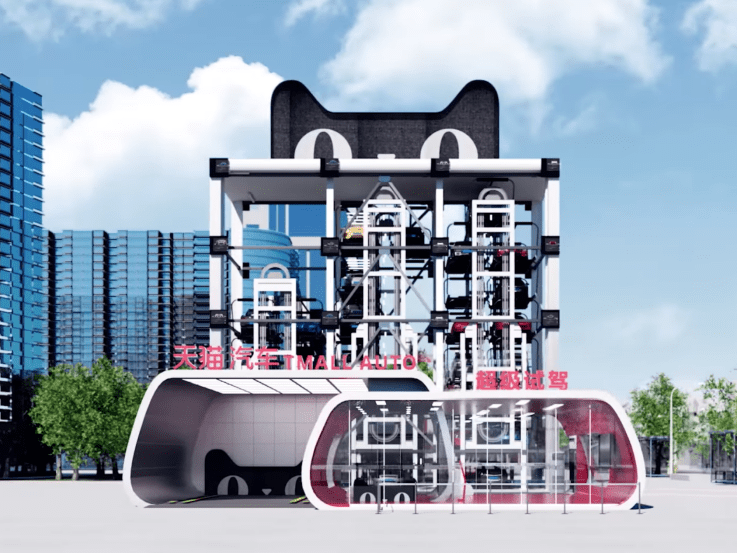
Alibaba, China's online retail giant, is adding a physical presence in key cities through partnerships and through, well, giant vending machines.

Each consumer-friendly Alibaba automated location (like the concept shown here) will sell Ford automobiles, starting with a test drive offered to consumers who qualify with sufficient credit to complete the purchase.

Wednesday, 6 September 2017

Gender neutral marketing?

John Lewis has reignited the debate over gender neutral marketing with its announcement that children's clothing will no longer be categorized as male or female. This isn't a new controversy, but a complex issue confronting retailers, manufacturers and their customers.

What about stereotyping? There is a concern that gendered toys and other products may reinforce stereotypes. Rather than have 'pink' and 'blue' aisles and products, retailers want customers to be able to browse and select products as they choose. But how does this work in everyday brick-and-mortar stores? Will it confuse or even anger some customers?

What about differences between male and female versions of products in a particular category? When customers compare the quality and marketing of boys' and girls' shoe products, for instance, some are unhappy about what they see. Pricing of products is also controversial, with complaints about different prices for men's and women's razors, for example, causing some retailers to eliminate the gender price gap.

At the same time, some marketers are recognizing distinctly different needs amongst male and female consumers, and marketing products geared to needs for each target market. Men in China, for example, are eagerly buying male beauty products like skin-care lotions. L'Oreal and ASOS are marketing makeup products for men in the UK. 

What is the future of gender neutral marketing? The controversy continues.