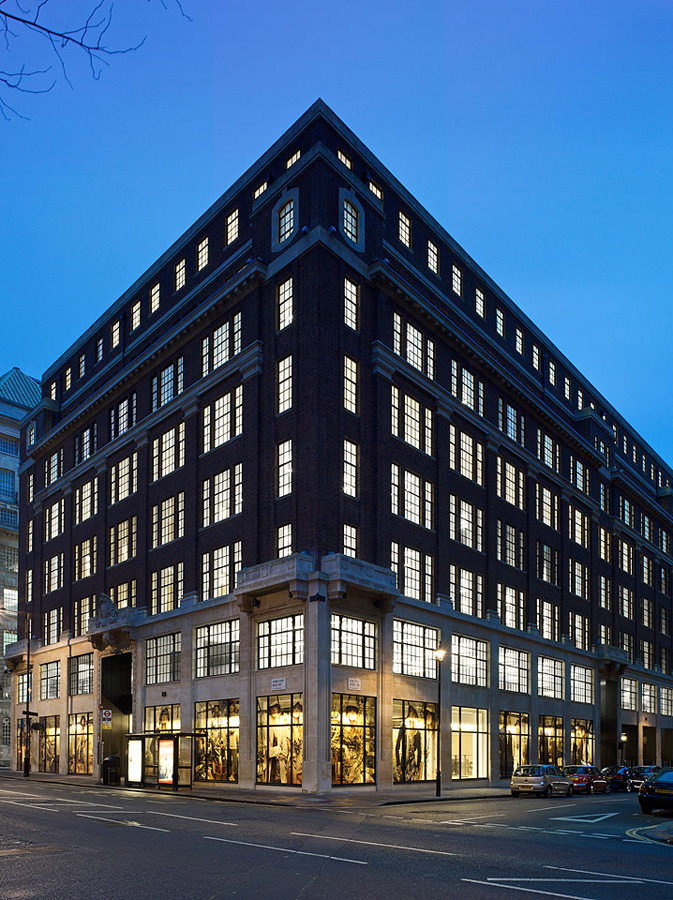
Primark, a master at marketing low-priced fast fashion, continues to engage price-conscious brand fans via its Primania page of consumer-generated fashion content. Want to see how other Primark customers accessorise a special dress or wear the company's newest tops? Browse more than 16k images uploaded by brand fans, subject to the marketer's content guidelines.
Founded in Dublin in 1969, the company now markets under a variety of private brands, including Young Dimension and Ocean Club. In addition, Primark partners with groups to market special product collections. Its recent LGBT+ Pride collection is in partnership with Stonewall, a nonprofit that promotes equality, and a portion of each purchase benefits the nonprofit.
Primark operates more than 350 stores in 12 countries. Its US stores are doing well, but the company is awaiting long-term analysis before expanding there. Unlike nearly every other retailer on the planet, Primark does not sell online, only in physical stores.
Yet its social media presence is impressive. Primark has nearly 6mm Instagram followers, 98k Pinterest followers, 225k Twitter followers.
How will Primark use marketing to celebrate its 50th anniversary in 2019?
This post updates the "Marketing at Primark" feature in Chapter 1 of Essential Guide to Marketing Planning, 4th edition.
Showing posts with label fast fashion. Show all posts
Friday, 6 July 2018
Wednesday, 8 March 2017
See now, buy now meets consumer behaviour
Behind the scenes, 'see now, buy now' fashion requires major changes in everything from production to sourcing to distribution and channel decisions. Burberry pioneered the trend toward making fashions available 'from the runway', meaning selling new styles as the new collection is being introduced.
Instead of waiting months to be able to buy new styles, consumers can click or order in season, right now. It makes sense from a consumer behaviour perspective. Not surprisingly, this is the new marketing model for a growing number of fashion brands. Yet it's quite a challenge to support. 'A switch to this kind of operational model requires extremely intense collaboration between teams that would typically work in a relatively siloed approach', explains the chief brand officer for Tommy Hilfiger.
See now, buy now isn't just for high-end fashion marketing. Fast-fashion firms like H&M are also adopting this approach. H&M Studio recently introduced new styles for men and for women in a see now, buy now strategy. The intro took place in a pop-up space, livestreamed in virtual reality via the Swedish retailer's YouTube channel.
For retailers, see now, buy now is an opportunity to create and satisfy demand in a timely manner, rather than creating anticipation and potentially losing demand due to a long wait for product availability.
It's consumer-led and puts shopping into the same moment as fashion trends are being created. In other words, see now, buy now fits today's consumer behaviour, when paying with a swipe or a click is often the norm and brands ride the tide of social media for immediacy and buzz marketing.
Instead of waiting months to be able to buy new styles, consumers can click or order in season, right now. It makes sense from a consumer behaviour perspective. Not surprisingly, this is the new marketing model for a growing number of fashion brands. Yet it's quite a challenge to support. 'A switch to this kind of operational model requires extremely intense collaboration between teams that would typically work in a relatively siloed approach', explains the chief brand officer for Tommy Hilfiger.
See now, buy now isn't just for high-end fashion marketing. Fast-fashion firms like H&M are also adopting this approach. H&M Studio recently introduced new styles for men and for women in a see now, buy now strategy. The intro took place in a pop-up space, livestreamed in virtual reality via the Swedish retailer's YouTube channel.
For retailers, see now, buy now is an opportunity to create and satisfy demand in a timely manner, rather than creating anticipation and potentially losing demand due to a long wait for product availability.
It's consumer-led and puts shopping into the same moment as fashion trends are being created. In other words, see now, buy now fits today's consumer behaviour, when paying with a swipe or a click is often the norm and brands ride the tide of social media for immediacy and buzz marketing.
Monday, 25 July 2016
Not-so-fast fashion at Urban Outfitters
The US-based clothing retailer Urban Outfitters has been expanding across the pond in the UK and continental Europe.
The European managing director of Urban Outfitters says this about the retailer's merchandise:
Urban Outfitters reaches its European and UK target audiences through a variety of social media, including Pinterest, Instagram and Twitter.
The European managing director of Urban Outfitters says this about the retailer's merchandise:
Contrary to the trend of outsourcing production and encouraging fast adoption and fast disposition of fashion, Urban Outfitters is promoting an own-brand label that is sourced and made in the UK from fabric remnants. Not only does the ReWork brand represent up-to-date fashion, it makes the most of UK design and materials. The result is, therefore, a bit experimental and feels like a limited-edition product line because the clothing items are made from remnants--with the actual remnants inspiring the designers, rather than the designers searching for material after creating a style. ReWork also helps the retailer polish its sustainability credentials.Currently around 20% of our offer is our own-brand edit and the rest own buy. The mix of both is really important.
Urban Outfitters reaches its European and UK target audiences through a variety of social media, including Pinterest, Instagram and Twitter.
Friday, 5 February 2016
High fashion meets fast fashion
From September, Burberry will make clothing and accessories available during its fashion shows, not months later (as traditional). Why? One reason is that fast-fashion marketing to the masses (by H&M and Zara, among others) has conditioned buyers to expect easy and quick access to in-season styles.
High-fashion buyers want to be able to buy online or in a store soon after a fashion hits the runway, at a time when they plan to wear it. So instead of showing summer fashions in winter or spring fashions in fall, Burberry will show fashions when they're in season and immediately sell the clothing online and in stores. Logistics may be easier once the shows, production and distribution are aligned rather than separated by many months. Plus, Burberry is cutting back on shows, introducing collections on the runway twice a year instead of four times a year.
Another reason for the change in availability is to avoid the delay that allows others to produce lower-end versions of high fashion. This protects exclusivity for the brand, at least for a short period. See a style in a show? Click to buy right away, wear the clothing within days and bask in the status of being among the very first to have the latest style.
Burberry has been emphasising mobile marketing in recent years, finding that the majority of visits to its website come from mobile devices. Continuing with digital marketing, the brand's menswear collection recently streamed on Apple TV (but with no e-commerce opportunities). The brand is working with SnapChat to target fashionistas. Marketing remains an area for investment, even when Burberry considers cost-cutting moves.
High-fashion buyers want to be able to buy online or in a store soon after a fashion hits the runway, at a time when they plan to wear it. So instead of showing summer fashions in winter or spring fashions in fall, Burberry will show fashions when they're in season and immediately sell the clothing online and in stores. Logistics may be easier once the shows, production and distribution are aligned rather than separated by many months. Plus, Burberry is cutting back on shows, introducing collections on the runway twice a year instead of four times a year.
Another reason for the change in availability is to avoid the delay that allows others to produce lower-end versions of high fashion. This protects exclusivity for the brand, at least for a short period. See a style in a show? Click to buy right away, wear the clothing within days and bask in the status of being among the very first to have the latest style.
Burberry has been emphasising mobile marketing in recent years, finding that the majority of visits to its website come from mobile devices. Continuing with digital marketing, the brand's menswear collection recently streamed on Apple TV (but with no e-commerce opportunities). The brand is working with SnapChat to target fashionistas. Marketing remains an area for investment, even when Burberry considers cost-cutting moves.
Tuesday, 25 August 2015
Fast Fashion and Sustainability
Is sustainability compatible with fast fashion? Even though fast fashion is based on speedier fashion cycles and
adoption of new styles and clothing items, H&M, Zara and their competitors recognise
that 'throw away' fashion is not just wasteful, it can contribute to
environmental damage.
H&M, based in Sweden, is increasing its focus on sustainability. It has a Chief Sustainability Officer to keep the retailer on track toward green goals. And it issues a sustainability report to demonstrate what it's doing to save the planet and reassure customers of its commitment to the natural environment.
Further, H&M has added clothing made from sustainable materials and, just as important, it actively encourages recycling inside and outside the organisation. Among other initiatives is a fashion collection programme to encourage consumers and designers to make the most of garments by reusing materials, passing garments along for use by others or turning used garments into something else.
H&M, based in Sweden, is increasing its focus on sustainability. It has a Chief Sustainability Officer to keep the retailer on track toward green goals. And it issues a sustainability report to demonstrate what it's doing to save the planet and reassure customers of its commitment to the natural environment.
Further, H&M has added clothing made from sustainable materials and, just as important, it actively encourages recycling inside and outside the organisation. Among other initiatives is a fashion collection programme to encourage consumers and designers to make the most of garments by reusing materials, passing garments along for use by others or turning used garments into something else.
Wednesday, 18 March 2015
World's biggest clothing retailer expands online
Do you know which company is the world's biggest clothing retailer?
Hint: The company is based in Spain and has 6,700 stores in 54 nations. It designs, manufactures, distributes and retails its own products using the 'fast fashion' business model.
Not only can this company make the most of emerging fashion trends, it can minimise markdowns and increase profitability because of its extraordinary ability to capture and analyse purchase data and because it controls the supply chain.
The firm's retail brands include Pull & Bear, Massimo Dutti, Bershka, Stradivarius, Uterqüe, Oysho, Zara and Zara Home.
Yes, the company is Inditex, which has just reported excellent profits. Zara is its best-known brand in most countries. Knowing its customers' digital preferences, Zara is very social, with 3 million Instagram followers, 24 million Facebook likes, 735,000 Twitter followers and 125,000 Pinterest followers.
However, online-only fashion retailers are a threat to the parent company's retail sales momentum. That's why Inditex is expanding its online operations and also moving toward larger stores rather than smaller ones--to make a retail statement, offer more styles in more sizes and colours, and reinforce a strong competitive image in top metropolitan markets where fashion stores are almost everywhere.
Nothing is left to chance. Inditex has pilot stores where it tests marketing elements such as window displays and merchandise layout. Elements that test well are put into action quickly, and the company is always testing something new.
Hint: The company is based in Spain and has 6,700 stores in 54 nations. It designs, manufactures, distributes and retails its own products using the 'fast fashion' business model.
Not only can this company make the most of emerging fashion trends, it can minimise markdowns and increase profitability because of its extraordinary ability to capture and analyse purchase data and because it controls the supply chain.
The firm's retail brands include Pull & Bear, Massimo Dutti, Bershka, Stradivarius, Uterqüe, Oysho, Zara and Zara Home.
Yes, the company is Inditex, which has just reported excellent profits. Zara is its best-known brand in most countries. Knowing its customers' digital preferences, Zara is very social, with 3 million Instagram followers, 24 million Facebook likes, 735,000 Twitter followers and 125,000 Pinterest followers.
However, online-only fashion retailers are a threat to the parent company's retail sales momentum. That's why Inditex is expanding its online operations and also moving toward larger stores rather than smaller ones--to make a retail statement, offer more styles in more sizes and colours, and reinforce a strong competitive image in top metropolitan markets where fashion stores are almost everywhere.
Nothing is left to chance. Inditex has pilot stores where it tests marketing elements such as window displays and merchandise layout. Elements that test well are put into action quickly, and the company is always testing something new.
Monday, 12 November 2012
Buy it now or never: Zara's fast fashion cycle
Constant sales have conditioned consumers to the idea that they can wait for the best price, wait until the last minute to buy. That approach won't work with Zara, the fast-fashion affordable clothing chain owned by Inditex.
Founded in 1975, Zara rings up nearly €14 billion in annual sales worldwide. Gone are the traditional spring and fall fashion collections, priced at full retail when released and later marked down to sell at a discount before the new collection debuts. Gone are the weekly or monthly sale promotions. The focus is on up-to-the-minute styles, priced to sell today (without markdowns tomorrow).
Inditex maintains its own manufacturing facilities and partners with small shops for finishing details close to its headquarters in Spain. It has great flexibility to make more of a very popular item or switch to something else as customer tastes change. Store managers report daily on customer requests, what's hot and what's not, so the experts at Zara's main office can design, produce and ship updated apparel in about two weeks.
This fast fashion cycle means that consumers must have a different attitude when they shop at Zara. 'With Zara, you know that if you don't buy it, right then and there, within 11 days the entire stock will change,' the editor of Tank tells the New York Times.
Founded in 1975, Zara rings up nearly €14 billion in annual sales worldwide. Gone are the traditional spring and fall fashion collections, priced at full retail when released and later marked down to sell at a discount before the new collection debuts. Gone are the weekly or monthly sale promotions. The focus is on up-to-the-minute styles, priced to sell today (without markdowns tomorrow).
Inditex maintains its own manufacturing facilities and partners with small shops for finishing details close to its headquarters in Spain. It has great flexibility to make more of a very popular item or switch to something else as customer tastes change. Store managers report daily on customer requests, what's hot and what's not, so the experts at Zara's main office can design, produce and ship updated apparel in about two weeks.
This fast fashion cycle means that consumers must have a different attitude when they shop at Zara. 'With Zara, you know that if you don't buy it, right then and there, within 11 days the entire stock will change,' the editor of Tank tells the New York Times.
Friday, 26 June 2009
Fast-Fashion Retailing
Competitor Zara, owned by Spain's Inditex, recently reported lower profits . . . but its expansion continues as it opens dozens of new stores in China and Russia.
Japan's Fast Retailing--parent of Uniqlo--is also growing quickly and bringing value-priced fashion apparel to shoppers around the world.
Once the economy recovers, will fast-fashion retailing be as attractive?
Subscribe to:
Posts (Atom)