Some product decisions have long time frames and extremely costly consequences. Aircraft manufacturers therefore spend considerable time studying the marketing environment to project future trends in travel and demand, before they develop and introduce a new jet.
Airbus spent billions to develop its double-decker A380 jumbo jet, betting that airlines would be ferrying large numbers of passengers from major hub to major hub. It was test-flown in 2007, receiving much publicity for its spacious interior and the amenities that could be added (such as on-board showers and luxurious first-class suites).
Airbus received some big orders from Emirates, among other airlines. In fact, Emirates is by far the largest buyer of A380s. But when Emirates cut the number of A380s in its latest order, and other orders slowed down, Airbus decided to discontinue this product after 2021. In fact, the 2020 coronavirus pandemic that brought international air travel to record-low levels seems to be accelerating the move away from A380s.
Competitor Boeing based its product decisions on a different forecast for the travel environment, believing that passengers would want to travel from point to point rather than hub to hub. It put the emphasis on nimbleness and fuel efficiency, rather than on having a high number of passengers being carried per flight. And that's attracted more buyers than the Airbus A380.
Now Boeing's original 747 jumbo jet is transitioning to a cargo carrier, extending the life cycle of this aging product. In addition, Boeing is still marketing its 777 and 787 jets to airline customers--and looking ahead with forecasts for the future of travel as it plans future product introductions.
Showing posts with label competition. Show all posts
Showing posts with label competition. Show all posts
Monday, 18 February 2019
Friday, 14 September 2018
Metro Bank continues its 'challenger' marketing
 |
| This post updates the preview and closer look at Metro Bank in Chapter 11 |
Despite intense competition, Metro Bank, as a challenger bank, has become profitable and is expanding its branch network, although a bit less aggressively than previously planned. The acquisition of a home loan portfolio is another way Metro Bank has added new customers in pursuit of growth. On the other hand, rising interest rates are putting pressure on profit margins.
Understanding that many customers want e-banking as well as retail banking services, Metro Bank has introduced a 'developer portal' for third-party developers who are creating apps to complement and enhance bank services.
At the same time, Metro Bank University is providing apprenticeship training to prepare new employees for delivering quality customer service in its busy branches--service that Metro Bank sees as being a differentiating factor in its competition for customers.

Friday, 7 September 2018
UK advertising trends
The UK economy is growing, which helps the UK advertising business rebound. As of 2018's first quarter, advertisers increased investments in digital advertising by more than 10%, not a surprise. What was a surprise was the increase of 12.5% in spending on radio advertising by 12.5%, a very strong result for this medium.
Another surprise was the increase in national newspaper advertising. Newspaper advertising spend had been decreasing since the end of 2010--until now.
Digital is, of course, a major focus for many advertisers. Yet transparency and trust remain a concern. The UK Competition and Markets Authority recently warned several influencers that any sponsored/commissioned posts on social media must be clearly marked as such.
Because celebrities and social media stars have millions of followers, what they post can make a difference in brand recognition, awareness and preference. That's why, says the senior director of the CMA, consumers should be 'clearly told whether a celebrity is promoting a product because they have bought it themselves, or because they have been paid or thanked in some way by the brand'.
Meanwhile, the Advertising Standards Authority is looking closely at marketers targeting children. It recently told Cadbury, Chewits, Squashies, KFC and Kellogg's to stop targeting children with digital adverts for foods that contain large amounts of fat, sugar or salt. For more about how the ASA protects children and vulnerable audiences, and for examples of banned adverts, see its explanation here.
Another surprise was the increase in national newspaper advertising. Newspaper advertising spend had been decreasing since the end of 2010--until now.
Digital is, of course, a major focus for many advertisers. Yet transparency and trust remain a concern. The UK Competition and Markets Authority recently warned several influencers that any sponsored/commissioned posts on social media must be clearly marked as such.
Because celebrities and social media stars have millions of followers, what they post can make a difference in brand recognition, awareness and preference. That's why, says the senior director of the CMA, consumers should be 'clearly told whether a celebrity is promoting a product because they have bought it themselves, or because they have been paid or thanked in some way by the brand'.
Meanwhile, the Advertising Standards Authority is looking closely at marketers targeting children. It recently told Cadbury, Chewits, Squashies, KFC and Kellogg's to stop targeting children with digital adverts for foods that contain large amounts of fat, sugar or salt. For more about how the ASA protects children and vulnerable audiences, and for examples of banned adverts, see its explanation here.
Tuesday, 4 September 2018
Discount train travel builds customer base

Some of these customers used to ride Trenitalia's trains and some used to fly Ryanair and Easyjet between Rome and Milan. Now Italo is adding more trains and extending its coverage to new destinations as its discount pricing structure has helped it grow to the second-largest train system in Italy.
Four price levels allow passengers to choose the value they're willing to pay for. Italo even has a frequent-rider loyalty reward scheme and a cobranded American Express credit card that offers upgrades and other benefits.
Watch for discount train travel to become more of a competitive challenge for railway systems and no-frills airlines in other European nations, as well.
Monday, 4 June 2018
Tesco fine-tunes retailing strategy

As shown above, it recently announced the closing of Tesco Direct, the company's profitless e-commerce initiative for non-food products. (Tesco.com is the company's grocery website.) Fulfilment is costly, maintaining an online shopping platform is costly and the company saw no way to profit from this venture. Most likely, competition was also a factor, with Amazon and others offering so many of the same brand-name products that were sold on Tesco Direct's site.
Yet Tesco continues to invest in physical stores. It opened a new supermarket in Dublin that features eco-friendly features such as energy conservation systems and recycling facilities.
The Tesco Clubcard is a major competitive strength, enabling the retailer to communicate with loyal customers and personalise offers. And Tesco will need this strength as it faces the soon-to-merge Sainsbury/Asda combination.
Saturday, 19 May 2018
Barbie and Ken show market segmentation in action

Royal dreams? Mattel markets the Dreamtopia Barbie and Prince Ken. A fan of Jurassic World movies? Buy a Claire Barbie or an Owen Barbie. Got a pocket? Barbie on the Go is sized to go with you to school or play or anywhere (see photo above). Want to try on different hair colours? Try the Barbie Colour Surprise Doll, with hair that changes colour when sprayed with water.
As these products demonstrate, segmentation is not just a matter of age and gender. Mattel segments the market for dolls according to factors such as lifestyle ("on the go" for instance), desire for variety or novelty (Barbie Colour Surprise), interest in a blockbuster movie (like Jurassic World) and royalty fantasy (both prince and princess).
Not that Barbie is alone in the doll world. Bratz, for instance, is a direct competitor. And Barbie also competes with other types of playthings, not just dolls--including videogames and other digital play possibilities. Barbie and Ken have had mixed sales results in recent years. Will further market segmentation have a positive effect on consumer behaviour?
Monday, 30 April 2018
Marketing consequences of merging Sainsbury's and ASDA

Sainsbury's would manage the new entity, with Walmart as a shareholder and partner.
One marketing consequence is the ability for the combined company to pay less for goods and services purchased in larger volume. This will, in turn, reduce costs and therefore allow for lower prices--a key element in this competitive industry.
So far, Sainsbury's says it will slash prices by 10% and will not be closing any stores after the merger is complete. UK regulators may require the sale of some stores to rivals, which would be another marketing consequence of the deal. The marketing environment for all UK retailers could change as a result.
Finally, how will consumers react? Will the merger change consumer behaviour? We'll have to wait and see.
Monday, 16 April 2018
Grocery retailers battle for UK market share
Aldi and Lidl, both based in Germany, have been steadily capturing market share in UK grocery retailing. Recent numbers show that Aldi has increased its market share from 3.9% at the start of 2014 to 7.3% at the start of 2018. Lidl, meanwhile, grew market share from 3.1% in early 2014 to 5.3% in early 2018.
From the perspective of traditional UK supermarkets like Tesco and Waitrose, the battle for market share has another challenge: pressure on profit margins. Aldi and Lidl are deep-discount grocers with no-frills stores. Not so for Tesco and Waitrose, which are full-service grocers. To be sure consumers can see the value in shopping at a full-service store, price promotions are often highlighted--and that cuts into margins.
In fact, price is a key element in consumers' perceptions of a store. Not long ago, Aldi overtook Waitrose as the favourite supermarket of UK consumers who were asked about satisfaction. Affordable prices would naturally be important to satisfaction.
Meanwhile, UK supermarkets will continue to face pressure from the deep discounters as Aldi and Lidl both plan to expand their store networks. At the same time, traditional supermarkets are slowing their store openings to maintain cost control. Will online grocery shopping be the competitive edge for traditional supermarkets? Possibly, as a growing number of UK shoppers try or continue buying food and household products without going into a store. Consumer behaviour is changing, and grocery retailers are learning to adapt so they can compete more effectively.
From the perspective of traditional UK supermarkets like Tesco and Waitrose, the battle for market share has another challenge: pressure on profit margins. Aldi and Lidl are deep-discount grocers with no-frills stores. Not so for Tesco and Waitrose, which are full-service grocers. To be sure consumers can see the value in shopping at a full-service store, price promotions are often highlighted--and that cuts into margins.
In fact, price is a key element in consumers' perceptions of a store. Not long ago, Aldi overtook Waitrose as the favourite supermarket of UK consumers who were asked about satisfaction. Affordable prices would naturally be important to satisfaction.
Meanwhile, UK supermarkets will continue to face pressure from the deep discounters as Aldi and Lidl both plan to expand their store networks. At the same time, traditional supermarkets are slowing their store openings to maintain cost control. Will online grocery shopping be the competitive edge for traditional supermarkets? Possibly, as a growing number of UK shoppers try or continue buying food and household products without going into a store. Consumer behaviour is changing, and grocery retailers are learning to adapt so they can compete more effectively.
Sunday, 1 April 2018
Happy 9th Blogiversary (Not April Fool)

Unquestionably, competitors are truly stakeholders of any marketing organisation, from the smallest single-person operation to multinational giants. Remember, stakeholder is defined as 'a group or individual that has an interest in or can potentially affect the marketer's performance and activities'. Surely competitors qualify because they have the ability to begin or escalate price wars, influence market share and marketing trends, influence customers and suppliers and so on.
An academic paper found six good reasons to include competitors as stakeholders. McKinsey has noted that organisations must try to anticipate competitors' strategies so they can plan ahead to deflect challenges.
At times, a marketer may want to collaborate with competitors on issues of mutual interest, such as industry standards or sustainability projects. Not on pricing--such collusion is illegal in most nations--but on larger issues that affect many stakeholders, including the public.
Friday, 2 February 2018
McDonald's is marketing convenience and more

In the UK market, McDonald's is now offering McDelivery. Via Uber, it will deliver meal orders to home or office, a service that has helped the company increase sales despite competition and other elements in the marketing environment. In fact, the company says orders for home delivery on 1/1/18 made that the busiest delivery day to date. Convenience is adding to the appeal of burgers, fries and other McD's menu items.
What else is McDonald's doing? It recently became a sponsor of the NatWest Six Nations rugby tournament, after ending its long-time Olympic sponsorship. The rugby sponsorship is being used to highlight upmarket burgers in its Signature Collection. These three burgers, featuring British and Irish beef, have new, trendy flavors compared with traditional McD's burgers. One is a BBQ burger, one is 'spicy' and one is 'classic' with smoked bacon, Cheddar cheese and a Brioche bun. So not only is convenience important, a menu with more variety--in tune with today's taste buds--makes a difference.
Monday, 18 December 2017
Most popular marketing posts ever

One reason this post attracts so many views is that when you do a search for the phrase 'competitors as stakeholders' my post is the first result after the top three scholarly articles.

Other popular posts are about Tesco's marketing plan and strategy (which continue to evolve as the marketing environment changes), Christmas adverts and #GivingTuesday.
More blog posts are on the way for 2018, including additional ideas about competitors as stakeholders.
Monday, 4 December 2017
Sainsbury's vs Domino's Pizza: Unexpected competition

'By giving our customers the chance to pre-order personalised hot pizzas and pay at the counter, we are saving them time and giving them a great value takeaway experience', says a Sainsbury's exec.
To streamline the in-store preparation process, the grocery chain is initially offering only two sizes of pizza, with multiple toppings available, in three branches. Customers order in advance and then pick up in the store, paying at the pizza counter rather than joining the queue to pay. All in line with Sainsbury's strapline, live well for less.
Grocery retailers like Sainsbury's typically offer frozen pizza or ready-to-bake pizza, but it's not usual to sell made-to-order takeaway pizzas. Yet adding takeaway pizza makes sense because so many shoppers like to buy premade meals to eat at home. Will consumers get into the habit of buying pizza where they buy milk, juice and nappies?
Sainsbury's is popular on social media, with 1.6mm Facebook likes, 505k Twitter followers, 96k YouTube followers, 171k Instagram followers, and 39k Pinterest followers. Comments about the pizza trial on these social media sites will help Sainsbury's gauge interest, in addition to tallying sales.
Monday, 25 September 2017
Competing technologies in the digital age
 |
| https://en.wikipedia.org/wiki/Video_Killed_the_Radio_Star |
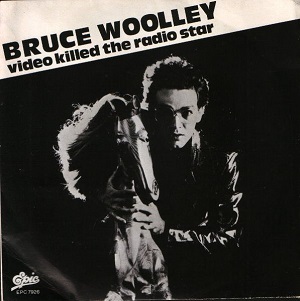
Currently, vinyl sales in the UK market are 30% higher than at this time last year. Vinyl and other mature entertainment technologies have become popular enough in the digital age that eBay recently introduced a marketplace specifically for books, music, games and video.
Another product category affected by technology: postcards. Before the end of the 20th century, consumers were sending an estimated 20 million postcards every year. Now, however, competition from social media has resulted in barely 5 million postcards sent per year. Why pay for a postcard and postage, take time to write a message and pop it into the post for delivery days later--when you can post a photo or message immediately on Instagram, Pinterest, Facebook or another site? Postcard publisher J Salmon, founded in 1880, is therefore leaving the business.
Perhaps consumers will someday see postcards as unique communication vehicles and give them a go again, the way vinyl and cassettes have become newly popular. Meantime, marketers need to carefully monitor consumer behaviour trends and the impact on the business environment as competing technologies enter the marketplace.
Monday, 3 July 2017
Vinyl record sales set records

David Bowie topped the list of vinyl best-sellers and UK music best-selling artists. And not just Bowie's final recording, but other perennial favourites sold well in vinyl and digital formats.
Why are vinyl sales soaring? 'It’s twofold in that older people are going back to vinyl but I also think the younger generation are discovering it in a way they weren’t before', says the CEO of Regent Street and Gold Bar Records.
Record Store Day in April is helping introduce vinyl to new fans and give loyal customers new reasons to buy. Established performers and newcomers alike use this April 'holiday' to launch new products with heightened marketing awareness.
Now vinyl sales are strong enough that Sony has decided to get back into that business. How will the addition of this major player affect the fortunes of GZ Vinyl and the few other vinyl manufacturers competing in the industry? Will other big labels reintroduce vinyl as well?
Wednesday, 31 May 2017
Ryanair adds share, profits and partners

By adding more jets and cutting fares to attract passengers, the no-frills airline has successfully boosted market share while forcing competitors to respond.
Even as Brexit proceeds, Ryanair is preparing for the future through partnerships with European airlines. The plan is to allow passengers to book longer-haul travel through Ryanair and connections with its partners, including Air Europa, Aer Lingus and Norwegian Air.
Ryanair's long-term goal is to be flying 200 million passengers yearly by 2024. Currently, the airline projects it will fly 130 million passengers in the next 12 months--with lower prices and higher profits.
This post updates the Ryanair case in Chapter 3 of my Essential Guide to Marketing Planning, 4th edn.
Friday, 5 May 2017
Nike's marketing marathon

The brand's lightweight shoes are a big part of this project, featuring technology that reduces effort, a salient functional benefit that even weekend athletes will appreciate. Even if none of the runners achieves the goal of 'breaking 2', Nike will be a winner for supporting the goal and celebrating sports performance (a key association for its brand, of course). In short, this marathon is also a marketing marathon.
Despite intense competition from Adidas, amongst other major brands, Nike enjoys strong brand loyalty and image. Yet Adidas has strengths that help it attract customers, including retro styled shoes favoured by many.
Nike UK has more than 400k followers on Twitter, where posts include promotions, 'where to buy', new product introductions and influencer images (think athletes). Nearly 200k followers watch the NikeWomen Pinterest account, and 450k followers check out Nike London's Instagram page. Nike UK has 28 million Facebook followers, many of whom also follow individual Nike sports accounts. Clearly, this is a brand with social media savvy, smart segmentation strategies and a good connection with its target markets.
Friday, 21 April 2017
Legacy retailers trying to adapt

Non-food purchases in UK stores are down, and in addition, competition from store-based and online retailers is putting pressure on the entire industry.
Now M&S is closing some stores, reducing the focus on apparel products (which typically have good profit margins) in favour of food products (not always as profitable, but purchased much more frequently).
M&S recognises that consumer behaviour is changing: 'Picking up food for now or tonight rather than doing one big shop or browsing and shopping online and collecting in store are great examples of this, and we are committed to adapting our business so that we stay in tune with our customers,' says chief executive Steve Rowe. At the same time, M&S is opening new stores in areas that hold market promise. Otherwise, the retailer may have difficulty achieving growth.
Debenhams is also closing stores amidst its ongoing turnaround effort. The retailer has a plan for targeting younger shoppers, with three main pillars: destination, digital,and different.
The retailer plans a sharper focus on in-store 'experiences' like cafes and more digital/social/mobile purchasing: 'We will be a destination for social shopping, with mobile the unifying platform for interacting with our customers', explains chief executive Sergio Bucher.
Adapting is a challenge, yet with consumer behaviour evolving, Debenhams and M&S must find distinctive and appropriate strategies for meeting needs in a profitable way.
Monday, 10 April 2017
Happy 8th Blogiversary
 This blog was born in April, 2009, and has continued through 760 posts in 8 years.
Happy blogiversary!
The all-time most viewed blog posts are:
- Yes, competitors are stakeholders (from 2012)
- Updating Tesco's marketing plan (from 2013)
However, research shows that participating in non-market activities with competitors is a good way to implement certain strategies for mutual benefit. Industrywide initiatives are a good example of competitors working together for a common goal. The fashion industry could collaborate on eco-friendly activities for a cleaner planet, for instance. Some are already working with recycled materials to keep items out of landfills.

As for Tesco's latest marketing plan, the UK retailer's strategy currently focuses on four key areas:
- value and sustainability (marketing goal)
- reducing food waste (societal goal)
- healthy living (societal goal)
- local communities (societal goal)
Friday, 24 February 2017
'Versus' marketing strengthens positioning
Marketing magazine has a thought-provoking opinion piece by Mark Ritson, about positioning for competitive advantage. Here's one quote:
It's not enough to say 'my brand is the best'. But if you position versus traditional brands--as one example--or versus a specific competitor, you help customers understand what your brand stands for and why it's the best choice.


Here are two examples of positioning versus traditional competitors:
One last thought: If you use advertising to highlight differences between your brand and another, be sure the comparisons are fair and not misleading.
The versus position is one in which we make it clear what we stand for to customers by highlighting the differences between ourselves and others.Remember, positioning is in the mind of the customer--how the customer thinks or feels about your brand and competing brands. Your role is to put forth a 'versus' fitting for your product or brand, one that is compelling enough to influence thought and feeling, compelling enough to encourage a purchase.
It's not enough to say 'my brand is the best'. But if you position versus traditional brands--as one example--or versus a specific competitor, you help customers understand what your brand stands for and why it's the best choice.

Here are two examples of positioning versus traditional competitors:
- Ben & Jerry's website and packaging showcase the brand's social responsibility. The company (owned by Unilever) knows that customers expect ice cream to taste good. Ben & Jerry's stands for more than just good-tasting ice cream. Its positioning relies on the brand being good for the planet, good for workers, good for social causes--not a claim that every competitor can make.
- Innocent positions itself as 100% pure, no additives, no 'nasty' stuff, just healthy, fresh ingredients. This is in contrast to traditional soft drinks that are carbonated and sugary, or that use artificial sweeteners. Plus Innocent (owned by Coca-Cola) is 'sourced sustainably' and gives 10% of profits to charity. Again, not every competitor does what Innocent does.
One last thought: If you use advertising to highlight differences between your brand and another, be sure the comparisons are fair and not misleading.
Wednesday, 8 February 2017
Marketing with purpose: Think long term

P&G wants to demonstrate its leadership in sustainability marketing, and this packaging will soon be at in Carrefour stores across France. On the way are hundreds of millions of shampoo bottles made from recycled materials. P&G has also set aggressive multi-year targets for zero manufacturing waste. These and are other actions are building the firm's reputation for sustainability over the long term.
 Competitor Unilever has been publicising its sustainability marketing as well. Last month, the company announced ambitious goals for plastic product packaging that is recyclable, reusable or compostable. It is reassessing its products and packaging to reduce the environmental impact wherever possible (as in image shown at right).
In a recent survey conducted in five countries, Unilever found that one in five consumers said they decide to buy based on whether a product was made without harming the environment. Unilever also reported that sales of its brands linked to sustainability are growing much more quickly than non-sustainability brands in the corporate portfolio.
A recent opinion column in The Guardian noted that social activism sells, and brands are busy promoting their good deeds for business reasons. In other words, marketing with purpose is the hottest way to differentiate a brand and make consumers aware of what it stands for, in order to make a sale. Well, yes, but if marketing with purpose is insincere or inconsistent, consumers will soon find that out. P&G and Unilever are committed to marketing with purpose for the long term, with considerable financial and human resources devoted to their environmental protection endeavors.
Subscribe to:
Posts (Atom)