Diversifying its product and brand portfolio, Coca-Cola has moved to buy Costa, the UK-based coffee shop chain now owned by Whitbread. Currently, Costa has 4,000 locations in 32 countries, plus thousands of self-serve coffee vending machines.
This acquisition will enable Coca-Cola to build on Costa's strong brand identity and, at the same time, enhance the non-cola beverage elements of its product portfolio. The acquisition has implications for global marketing, as well. Costa does well in China, for instance, and Coca-Cola already owns the best-selling Georgia coffee brand in Japan.
But as consumer behaviour changes, and coffee consumption grows year after year, Coca-Cola sees Costa as a brand with significant potential for further global expansion. 'Costa has strengths in many countries and in many key distribution channels of the coffee business', says Coca-Cola's CEO.
Showing posts with label product portfolio. Show all posts
Tuesday, 25 September 2018
Saturday, 16 December 2017
Unilever shakes up its product portfolio
Unilever recently sold off its spreads and margarine brands to concentrate on other, higher-potential products in its portfolio. The company's CEO explained: 'The announcement today marks a further step in reshaping and sharpening our portfolio for long term growth'.
Brands sold to KKR, a private equity firm, include Flora, ProActiv, Becel, Country Crock, I Can't Believe It's Not Butter and and Blueband.
Although the spreads business was profitable for Unilever, with margins of about 20%, the firm wants to concentrate its marketing resources on products that closely fit its vision.
In particular, Unilever has been growing formerly niche brands like Pukka Herbs tea into mainstream brands to accelerate growth. It's also investing in personal care brands that are growing quickly and launching a number of new products for highly targeted customer segments within specific geographic markets.
This updates the Unilever examples in Essential Guide to Marketing Planning 4th edn.
Brands sold to KKR, a private equity firm, include Flora, ProActiv, Becel, Country Crock, I Can't Believe It's Not Butter and and Blueband.
Although the spreads business was profitable for Unilever, with margins of about 20%, the firm wants to concentrate its marketing resources on products that closely fit its vision.
In particular, Unilever has been growing formerly niche brands like Pukka Herbs tea into mainstream brands to accelerate growth. It's also investing in personal care brands that are growing quickly and launching a number of new products for highly targeted customer segments within specific geographic markets.
This updates the Unilever examples in Essential Guide to Marketing Planning 4th edn.
Monday, 9 October 2017
Global marketing and 'segments of one'
Unilever is continuing to expand its product portfolio with acquisitions in global markets. Yet it also sees its marketing future as 'segments of one'.
Two recent acquisitions:
- In Brazil, Unilever acquired the organic/natural food company Mãe Terra. Not only is this company growing rapidly year after year, it gives Unilever added strength in natural and organic food products.
- In South Korea, Unilever acquired the cosmetics firm Carver Korea. The goal is to accelerate growth in Asia and in a product category that experiences high demand.
In particular, Unilever is moving toward 'segments of one' and the idea that its brands must be 'relevant, tailored and personal' rather than mass-marketed. This means making sure that mobile experiences and search experiences for consumers are as convenient and informative as possible.
Tuesday, 25 July 2017
Reckitt Benckiser adjusts its product portfolio
Reckitt Benckiser's product portfolio includes brands for the home (Vanish, Calgon, Woolite), for personal health (Scholl, Nurofen, Strepsils) and for hygiene (Dettol, Harpic, Lysol). Until recently, RB also had some food brands in its product pantry.
Now it has sold those food brands to McCormick, a major spice company based in the US. This is a strategic move, not just to raise money for debt reduction following the acquisition of Mead Johnson Nutrition. Strategically, food brands like French's condiments and Frank's RedHot sauce are not core to RB's product portfolio, given the move toward health and hygiene. Also, these food brands contribute less than 5% of RB's revenues.
Interestingly, RB had several bidders trying to buy its food brands, partly because brands like French's are strong in specific areas (US and Canada) but also to keep these brands out of the hands of competitors. French's has a devoted customer following in Canada because it makes its ketchup there, giving the brand a strong local connection.
This post updates coverage of product-mix and product-line decisions in Chapter 6 of Essential Guide to Marketing Planning.
Now it has sold those food brands to McCormick, a major spice company based in the US. This is a strategic move, not just to raise money for debt reduction following the acquisition of Mead Johnson Nutrition. Strategically, food brands like French's condiments and Frank's RedHot sauce are not core to RB's product portfolio, given the move toward health and hygiene. Also, these food brands contribute less than 5% of RB's revenues.
Interestingly, RB had several bidders trying to buy its food brands, partly because brands like French's are strong in specific areas (US and Canada) but also to keep these brands out of the hands of competitors. French's has a devoted customer following in Canada because it makes its ketchup there, giving the brand a strong local connection.
This post updates coverage of product-mix and product-line decisions in Chapter 6 of Essential Guide to Marketing Planning.
Tuesday, 15 December 2015
Can banks learn from burger marketing?
ANZ, a major bank in Australia and New Zealand, has a new head of retail distribution--Catriona Noble, a former McDonald's Australia exec who is bringing the lessons of 'burger marketing' to the bank.
Burgers and banking? Success in both requires training staff to have customers' needs in mind in every transaction. Speed and accuracy count in burgers and banking. Of course, the bank, like the burger place, has to evolve the menu of products in the portfolio over time as customers' requirements and preferences change. Technology can add convenience at the till or the cash machine, for burgers and banking alike.
At ANZ, Noble is sprearheading a reimagining of branches to give them a more comfortable ambiance. The idea is to blend in with the community and make customers feel at ease, encouraging repeat visits and positive brand associations. Not so different from burger restaurants, which after all must be refreshed and updated periodically.
"We have to compete on more than just price and more than just product; we have to be part of each local community," Noble says. "It is not like people want banks to be their second-best friend, but you do want to feel like you somewhat matter."
Will bank customers recommend ANZ to their friends? The Net Promoter Score is a key metric to be used in evaluating the bank's progress in satisfying customers. With NPS, customers are asked a single question: How likely is it that you would recommend this brand to a friend or colleague? Noble expects that applying NPS will result in a customer focus that differentiates ANZ from its competitors.
Competition is intense in the world of banking, and ANZ is investing in technology to enable its customers to bank when and where they want, at home or on the go. Still, branches remain a key element because of the opportunity to meet customers face-to-face and gain first-hand knowledge of their preferences, goals and concerns. ANZ is also reaching out via FB, LinkedIn, Twitter, YouTube and a news portal.
Burgers and banking? Success in both requires training staff to have customers' needs in mind in every transaction. Speed and accuracy count in burgers and banking. Of course, the bank, like the burger place, has to evolve the menu of products in the portfolio over time as customers' requirements and preferences change. Technology can add convenience at the till or the cash machine, for burgers and banking alike.
At ANZ, Noble is sprearheading a reimagining of branches to give them a more comfortable ambiance. The idea is to blend in with the community and make customers feel at ease, encouraging repeat visits and positive brand associations. Not so different from burger restaurants, which after all must be refreshed and updated periodically.
"We have to compete on more than just price and more than just product; we have to be part of each local community," Noble says. "It is not like people want banks to be their second-best friend, but you do want to feel like you somewhat matter."
Will bank customers recommend ANZ to their friends? The Net Promoter Score is a key metric to be used in evaluating the bank's progress in satisfying customers. With NPS, customers are asked a single question: How likely is it that you would recommend this brand to a friend or colleague? Noble expects that applying NPS will result in a customer focus that differentiates ANZ from its competitors.
Competition is intense in the world of banking, and ANZ is investing in technology to enable its customers to bank when and where they want, at home or on the go. Still, branches remain a key element because of the opportunity to meet customers face-to-face and gain first-hand knowledge of their preferences, goals and concerns. ANZ is also reaching out via FB, LinkedIn, Twitter, YouTube and a news portal.
Monday, 8 September 2014
Electrolux increases its brand portfolio for global share
Electrolux, based in Sweden, is buying General Electric's home appliance business, at a price of £2 billion. GE's division markets refrigerators,
air conditioners, water heaters and cookers under two main brands, GE and Hotpoint, throughout North America. Electrolux's brands, shown above left, include Frigidaire, Westinghouse, Electrolux, Eureka and Zanussi (graphic from Electrolux's pdf presentation on the deal).
In particular, GE has forged connections with North American construction firms to sell home appliances for new houses. GE has wanted to exit the consumer appliance business for some time so it can concentrate on its B2B marketing, including industrial power products, aviation products and other expensive products sold to businesses, governments and health-care providers.
Marketing to the construction industry is a marketing channel opportunity that Electrolux would like to exploit as the economy continues to improve. The deal also gives Electrolux more strength in North America, to complement its strength in the European region.
As discussed in Chapter 6 of my Essential Guide to Marketing Planning, products are often marketed with a company brand and a product line brand--as GE does with its GE Profile Series and GE Monogram appliances. In contrast, Electrolux traditionally uses an individual brand for each product line. Whether Electrolux will append its company name to the GE brands is not yet known. I can imagine a change that would create brands like "GE Monogram by Electrolux" but these decisions won't be made for some time.
The combination of Electrolux and GE appliances gives Electrolux a slim lead over Whirlpool in market share. It also adds to Electrolux's pricing complexity, given the number of brands and lines within each brand.
In particular, GE has forged connections with North American construction firms to sell home appliances for new houses. GE has wanted to exit the consumer appliance business for some time so it can concentrate on its B2B marketing, including industrial power products, aviation products and other expensive products sold to businesses, governments and health-care providers.
Marketing to the construction industry is a marketing channel opportunity that Electrolux would like to exploit as the economy continues to improve. The deal also gives Electrolux more strength in North America, to complement its strength in the European region.
As discussed in Chapter 6 of my Essential Guide to Marketing Planning, products are often marketed with a company brand and a product line brand--as GE does with its GE Profile Series and GE Monogram appliances. In contrast, Electrolux traditionally uses an individual brand for each product line. Whether Electrolux will append its company name to the GE brands is not yet known. I can imagine a change that would create brands like "GE Monogram by Electrolux" but these decisions won't be made for some time.
The combination of Electrolux and GE appliances gives Electrolux a slim lead over Whirlpool in market share. It also adds to Electrolux's pricing complexity, given the number of brands and lines within each brand.
Labels:
branding,
channels,
Electrolux,
General Electric,
pricing,
product portfolio
Thursday, 10 July 2014
How well will new Coca-Cola Life sell?
After test marketing a new lower-calorie version of its cola in South America, Coca-Cola is readying a rollout in Great Britain and beyond this year.
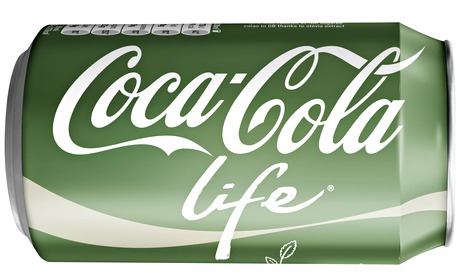
The new product, Coca-Cola Life, features a green can or green label with the characteristic Coca-Cola brand logo script.
Coca-Cola Life is also being marketed as 'natural' because it is partly sweetened by plant-based stevia, reducing the sugar content.
This addition to the Coca-Cola product portfolio comes at a time when soft-drink marketers and snack marketers face challenges due to serious societal issues such as obesity. Already, nearly half of the cola beverages sold by Coca-Cola in the UK have no calories.
Some critics are unhappy with Coca-Cola Life's calorie count and super-sweet taste. Coca-Cola responds that it is investing in programmes to encourage consumers to be more active through such activities as biking.
Consumers will have the final say: If enough buy Coca-Cola Life, and keep buying it, the new product will remain in the portfolio. If not, the new product will vanish.
The new product, Coca-Cola Life, features a green can or green label with the characteristic Coca-Cola brand logo script.
Coca-Cola Life is also being marketed as 'natural' because it is partly sweetened by plant-based stevia, reducing the sugar content.
This addition to the Coca-Cola product portfolio comes at a time when soft-drink marketers and snack marketers face challenges due to serious societal issues such as obesity. Already, nearly half of the cola beverages sold by Coca-Cola in the UK have no calories.
Some critics are unhappy with Coca-Cola Life's calorie count and super-sweet taste. Coca-Cola responds that it is investing in programmes to encourage consumers to be more active through such activities as biking.
Consumers will have the final say: If enough buy Coca-Cola Life, and keep buying it, the new product will remain in the portfolio. If not, the new product will vanish.
Monday, 7 July 2014
To grow, Unilever trims its product portfolio
Updating the chapter 12 preview example in my Essential Guide to Marketing Planning, Unilever has been adjusting its marketing plan to drive growth by focusing on core brands. The idea is to cut costs and provide marketing efficiency for a streamlined portfolio.
Here, from Unilever's 2013 annual report, is a graphic of its business model, showing a virtuous cycle of growth.
In recent months, Unilever's brand divestments have included:
Even with these portfolio changes, Unilever markets brands in three broad product categories: (1) food and drink, (2) home care and (3) personal care. Earlier this year, it became majority owner of a water purification company in China, to profit from that firm's knowledge of the local market, distribution ties and technological skill.
With marketing investment concentrated on fewer but stronger brands, Unilever expects to stimulate growth in turnover and further enhance its bottom-line results.
Here, from Unilever's 2013 annual report, is a graphic of its business model, showing a virtuous cycle of growth.
In recent months, Unilever's brand divestments have included:
- Selling its Ragu and Bertolli pasta sauce brands to Mizkan, based in Japan.
- Selling its Peperami meat snack brand to Jack Link's, based in the US.
Even with these portfolio changes, Unilever markets brands in three broad product categories: (1) food and drink, (2) home care and (3) personal care. Earlier this year, it became majority owner of a water purification company in China, to profit from that firm's knowledge of the local market, distribution ties and technological skill.
With marketing investment concentrated on fewer but stronger brands, Unilever expects to stimulate growth in turnover and further enhance its bottom-line results.
Subscribe to:
Posts (Atom)