Showing posts with label branding. Show all posts
Showing posts with label branding. Show all posts
Tuesday, 9 July 2019
Direct-to-consumer brands challenge established brands
A growing number of upstart direct-to-consumer brands are challenging established manufacturers. What are they doing? How are they doing? For an overview, take a look at this post by Reckitt Benckiser's head of global marketing and innovation.

Sunday, 8 April 2018
Celebrities, influencers and brand marketing
David Beckham is a fan of scotch whisky...and if you're a David Beckham fan, you can buy Haig Club scotch and drink the brand that is his. Literally. Beckham partnered with Diageo to create Haig Club as a whisky with personality, modeled on the whisky preferred by his Dad. Not surprisingly, Beckham also stars in marketing for his brand.
Beckham is one of a growing number of celebrities deeply involved in marketing their favourite products. Some invest money in products they like and use--such as Rihanna's investment in Vita Coca, one of today's up-and-coming coconut water products. Rihanna also has a beauty brand, Fenty Beauty by Rihanna, which is growing quickly.
Michelle Keegan, star of Our Girl, has her own celebrity-branded line of clothing with Very. Supermodel Gigi Hadid has a beauty product line with Maybelline, #GIGIxMAYBELLINE, which is heavily promoted during London Fashion Week. And of course, all these celebrities use social media and in-person appearances to market the brands they prefer.
 Not every social media star who attracts followers and influences customer attitudes and behaviour is an actor or performer. The London fashion brand Kitri recently paid fashion blogger/Instagram influencer Charlotte Groeneveld to promote a green dress for summer. A month after Groeneveld posted an Instagram pic of herself in the dress, Kitri sold 200 units in less than an hour. Kitri now has a waiting list for this dress, demand is so strong.
The marketing lesson: Know your influencers, know who they influence and know how they influence.
Beckham is one of a growing number of celebrities deeply involved in marketing their favourite products. Some invest money in products they like and use--such as Rihanna's investment in Vita Coca, one of today's up-and-coming coconut water products. Rihanna also has a beauty brand, Fenty Beauty by Rihanna, which is growing quickly.
Michelle Keegan, star of Our Girl, has her own celebrity-branded line of clothing with Very. Supermodel Gigi Hadid has a beauty product line with Maybelline, #GIGIxMAYBELLINE, which is heavily promoted during London Fashion Week. And of course, all these celebrities use social media and in-person appearances to market the brands they prefer.

The marketing lesson: Know your influencers, know who they influence and know how they influence.
Saturday, 13 May 2017
Plan for brand power on social media

Notice how international this brand ranking is? All of these brands operate across national borders. Tesco has business operations in Central Europe and Asia, not just the UK.
But the important point about this most-loved brand ranking is how these brands are perceived among UK consumers. And clearly, they have favourable perceptions. Brand love enhances the brand power of these firms and may reinforce brand loyalty. The marketing plans of these five 'most loved' firms surely include detailed initiatives for social media interactions with customers.
Of course, many brands are increasingly savvy about social media. A brand can be smaller and more local and still be clever and engaging on social media.
For instance, take a look at the brands Hubspot says are 14 of the 'best brands on Instagram'. Brands that understand consumer behaviour can maintain customer interest and loyalty by planning to interact with their fans via all types of social media.
Friday, 16 December 2016
Easy marketing £1 coffee

Here's the EasyGroup mission:
To manage and extend Europe's leading value brand to more products and services, whilst creating real wealth for all stakeholders.Businesses or other organisations can have an EasyCoffee vending machine (above) on their premises to offer employee value-priced branded coffee. In other words, EasyCoffee's distribution strategy goes beyond consumer-oriented retailing into B2B marketing.
Which is a good thing, because competition in the retail side of coffee shops is intense, given the strong brands trying to increase market share (Starbucks, Costa and so on). Not to mention competition from other food service brands that make coffee a signature element in their outreach to certain customer segments (such as McDonald's with its McCafe coffees).
Thursday, 20 October 2016
What does a brand stand for?
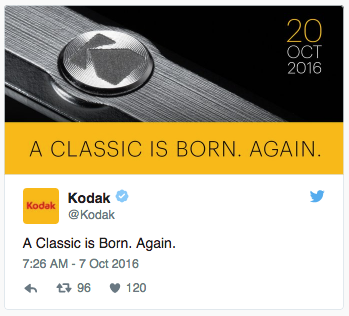
Maybe you remember Kodak's yellow and red film packaging...or other photography-related products.
Kodak is changing its brand associations, and today it describes itself this way: 'Kodak is a technology company focused on imaging'. For consumers, Kodak offers digital cameras, movie cameras, printers and more.
Can the Kodak brand be associated with smartphones? Kodak is aiming for that market. Last year, its brand appeared on a smartphone made by Bullitt. The phone didn't sell well. Now the Kodak brand is about to appear on a new smartphone, to be marketed as having a very good built-in camera. The new phone is called the Ektra.
Everyone takes photos with smartphones and tablets these days, right? Some famous photographers use their iPhones and rely on the quality, and Apple is definitely promoting the photography aspect for social media ease and professional use.
In other words, Apple has successfully associated its branded phones and tablets with high-quality photography.
Can Kodak do the same for its Ektra smartphone?
Thursday, 13 October 2016
What's in a brand?

If you've ever walked past a Marks & Spencer store, you know that the brand shown above the door is distinctive. The website shortens the name to M&S, but the typeface is the same as on the name above the door. Over the years, M&S has changed the look of its brand name, but the brand still stands for values like quality, choice and innovation.
Now some brands are trademarking words that they've used over and over in adverts. Specsavers, the well-known eyewear retailer, was able to trademark the word 'should've' which it uses in its adverts, as in the catchphrase 'should've gone to Specsavers'. This legal protection ensures that no one else will be able to use that particular wording for marketing purposes. Essentially, 'should've' becomes part of the brand associations for Specsavers.
Changing a brand symbol or logo is a big deal. BT is reportedly making changes to the look of its brand. Instagram changed its look earlier in 2016, with mixed reactions. Once people become accustomed to a brand or logo, and are loyal to that brand, not all will have a positive reaction to changes.
Monday, 3 October 2016
Inside the marketing plans of UK challenger banks
Challenger banks are recently-founded banks challenging the traditional UK high-street banks. As some high-street banks close branches and adapt IT systems to multichannel requirements, challengers begin with the latest technology and lessons learned by studying the established competitors.

Monzo is a challenger bank targeting digital-savvy customers. Originally named Mondo, Monzo operates no branches but instead delivers services electronically. Its marketing plan involves continuous customer input--asking for feedback on products for cocreation, and even soliciting ideas for the brand name Monzo. It hosts periodic get-togethers for customers to meet each other. 'People in corporates roll their eyes when startups talk about values and vision, but the brands who succeed are those who can define that for the people on the journey with them', says Monzo's head of marketing.
Another challenger is Metro Bank, founded by the experienced bank entrepreneur Vernon Hill, with retail branches that are open for extended hours every day of the week. Looking at the UK bank industry, he observes: 'There had been no entrepreneurial tradition in banking. Maybe there was 50-100 years ago, but there certainly hadn’t been one here for a long time'. So Metro bank's marketing plan is based on competing with convenience and friendly service, as well as multichannel marketing to allow customers to bank when and where they choose.
Also competing as a challenger bank is Atom Bank, which is digital-only, no branches. Its marketing plan relies on differentiation via customer focus. Customers can choose a personalised look for their Atom Bank app and even call the bank whatever they wish. Atom's CMO says: 'The traditional old banks constantly reference their relationship with its customers, but our brand strategy is about us helping people understand money much better'.
Monzo is a challenger bank targeting digital-savvy customers. Originally named Mondo, Monzo operates no branches but instead delivers services electronically. Its marketing plan involves continuous customer input--asking for feedback on products for cocreation, and even soliciting ideas for the brand name Monzo. It hosts periodic get-togethers for customers to meet each other. 'People in corporates roll their eyes when startups talk about values and vision, but the brands who succeed are those who can define that for the people on the journey with them', says Monzo's head of marketing.
Another challenger is Metro Bank, founded by the experienced bank entrepreneur Vernon Hill, with retail branches that are open for extended hours every day of the week. Looking at the UK bank industry, he observes: 'There had been no entrepreneurial tradition in banking. Maybe there was 50-100 years ago, but there certainly hadn’t been one here for a long time'. So Metro bank's marketing plan is based on competing with convenience and friendly service, as well as multichannel marketing to allow customers to bank when and where they choose.
Also competing as a challenger bank is Atom Bank, which is digital-only, no branches. Its marketing plan relies on differentiation via customer focus. Customers can choose a personalised look for their Atom Bank app and even call the bank whatever they wish. Atom's CMO says: 'The traditional old banks constantly reference their relationship with its customers, but our brand strategy is about us helping people understand money much better'.
Thursday, 14 July 2016
Marketing results of second annual Amazon Prime Day
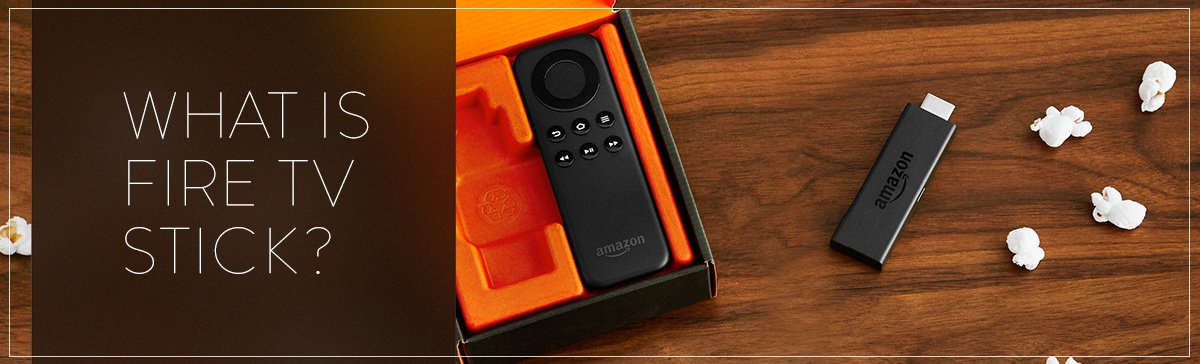 |
| Amazon's Fire TV Stick, a best-seller on Amazon Prime Day |
Amazon's proprietary products were prominently featured and shoppers clicked to buy. The Fire TV Stick gadget was a top seller, and Alexa was also popular--being used to order other Amazon products, as well. Overall Amazon customer sentiment was positive and customer engagement was high.
From a marketing standpoint, Prime Day reinforced brand loyalty, attracted new Prime members, showcased Amazon's unique products and shaped customer behaviour by providing a mid-summer shopping 'holiday' branded by the world's original online retailer.
Amazon plans to continue Prime Day because it is achieving so many key objectives, both in customer relationships and in financial results. Not to mention good publicity for the brand.
Thursday, 19 May 2016
UK tobacco packaging goes plain
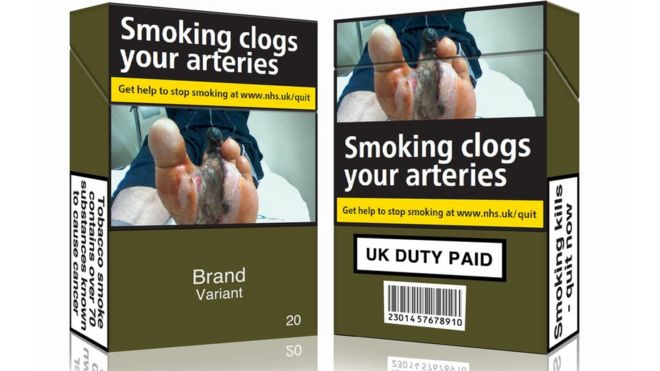
The UK High Court just ruled in a lawsuit filed by the major tobacco manufacturers. The marketers argued that the government was effectively taking away their trademarked intellectual property rights, leaving them unable to display marketing and branding symbols they've invested in and protected legally against competitive use for many decades.
The judge ruled against the tobacco marketers, saying:
'The essence of the case is about whether it is lawful for states to prevent the tobacco industry from continuing to make profits by using their trade marks and other rights to further what the World Health Organisation describes as a health crisis of epidemic proportions and which imposes an immense clean-up cost on the public purse . . . In my judgment the regulations are valid and lawful in all respects'.In his decision, the judge noted that marketing symbols and brand designs exert 'a causal effect upon consumer behaviour and encouraged smoking'. In addition to requiring plain packaging on cigarettes sold in the UK, certain types of packaging (such as 'lipstick' packs targeting female smokers) will be banned. Retailers are allowed to continue selling current inventory of branded packaging until stocks are depleted. After that, packs such as the one shown above will be the standard, with branding allowed but only within strict guidelines.
Monday, 18 April 2016
Boaty McBoatface sails into marketing history - as a brand license?

The Natural Environment Research Council asked members of the public to suggest names for its new vessel, which will debut in 2019. It received a flood of suggestions--7,000 names--and the one that received the most votes was, yes, Boaty McBoatface.
Boaty was suggested by James Hand, once a BBC radio presenter. Whether the NERC will actually select Boaty as the name is in doubt, despite the 124,000 votes it received.
Crowdsourcing is often cited as a great way to increase customer engagement with a brand, product or company. And it has been used successfully by Walkers, for instance, during the popular 'Do us a flavour' promotions to choose the next new snack flavour. LEGO also likes crowdsourcing.
Will the NERC agree with the public vote and name its new vessel Boaty McBoatface? Maybe yes, maybe no. Either way, the new vessel will be in the public eye when it debuts.
My idea is to license Boaty McBoatface to a toy manufacturer. If Thomas the Tank Engine can be a big success, so can Boaty McBoatface the polar vessel. Wouldn't Boaty be a brilliant brand?
Boaty McBoatface is sailing into marketing history, in the 'crowdsource' chapter.
Sunday, 3 January 2016
Marketing predictions for 2016

- Trust will be more important than ever. Brands must take care to keep earning it with every transaction, every marketing action. Customers still want transparency and authenticity, not just the right product at the right price.
- Omnichannel is no longer merely an option, it's a basic requirement as customers expect personalisation and relevant marketing communications and offerings across platforms, online and offline. Customers who buy online should be able to return products in a store without fuss.
- Real-time analysis of Big Data wins. Customers leave traces everywhere they digitally go. It's up to marketers to interpret wants and needs by tracking behaviour and offering ads, content and other information at the moment consumers need and want it.
- Virtual reality is a reality. Brands and entertainment marketers need to have communications and services for cutting-edge technology, especially for millennial consumers.
- 'Alternative' has gone mainstream. Goods and services that were once on the margins are increasingly popular. Customers want 'unique', and retailers want to differentiate themselves by offering something other than the usual.
- 'Buy it now' is the new social media reality. See it on Pinterest or Instagram, buy with a swipe or click. Is your brand ready to take advantage of this trend?
Wednesday, 30 December 2015
L’Oréal aims for one billion new customers

The beauty company, which owns such well-known brands as Lancome, the Body Shop and NYX, has put more emphasis on e-commerce during the past year--and shoppers are responding. The CEO recently said that total e-commerce sales in 2015 will exceed one billion euros, out of total revenues of more than 22 billion euros.
Shoppers in many nations know and trust L'Oreal brands, in part because the company adjusts its products for the needs and preferences of each consumer segment. In fact, L'Oreal features stories of multicultural innovations on its corporate website. Digital is increasingly important to the company as it seeks to attract 1 billion new customers while differentiating itself from competitors all over the planet.
No brand stays the same forever, because the marketing environment is constantly changing, including customer needs and competition, as well as regulations, environmental concerns, product possibilities and materials.
The CEO walked through a redone Body Shop store not long ago, and then told the fashion publication WWD: "The problem is that we have to represent the brand so that it looks new and it doesn’t look like the old Body Shop. That was The Body Shop of our mothers or the Millennials’ mothers and they [millennials] want their [own] brand." Which is why L'Oreal has revamped Body Shop so it represents its brand values in a way that's relevant to younger shoppers, emphasising ethical sourcing, value for price paid, function as well as fashion, natural ingredients and environmentally-friendly products and processes.
Wednesday, 12 August 2015
Coca-Cola's One Brand Strategy
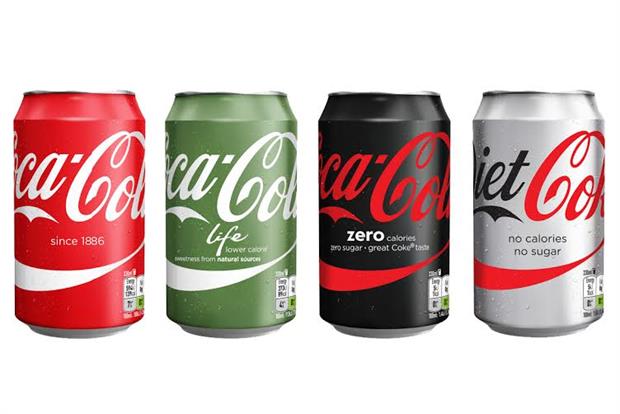
The purpose is to increase awareness of the low- and no-cal product variants and -- by 2020 -- achieve the goal of having 50% or more of Coca-Cola sales in Great Britain come from these variants.
Now the Coca-Cola company brand will be the most salient aspect of packaging, with variant names featured below the main brand in this redesign. Ads will focus on the Coca-Cola brand and benefits, with individual variants pictured or mentioned briefly. The aim here is to emphasise the brand's heritage and associations as an umbrella for all variants.
This approach has the potential to strengthen all variants by association with the well-known, well-liked company brand and increase awareness of the low- and no-cal variants as choices available to Coca-Cola fans.
However, changes to packaging (as shown above) can also be risky because consumers may not recognize the variant they prefer in its new packaging or may be confused by the new brand and packaging offers. Meanwhile, Coca-Cola is introducing the one brand strategy in more nations and supporting it with advertising and distribution activities to motivate purchase.
Thursday, 30 July 2015
Researching the marketing environment
DEVELOPING YOUR MARKETING PLAN
Every marketing plan begins with a review of the external trends and changes that affect the company, product, customers, buying trends and competition.To get a headstart on researching the marketing environment, try clicking on the links shown on my Marketing planning links page. Every link is regularly tested and updated as needed--plus new links are added as well.
Links are categorised according to:
- Preparing for marketing planning
- Analysing the marketing environment
- Researching consumer and business demographics
- Marketing ethics, social responsibility and sustainability
- Branding issues and ideas
- Marketing issues and ideas
- Marketing control and implementation
- Retailing and channel trends
Monday, 16 March 2015
Colour's branding power

The Direct Marketing Association recently posted a blog entry about the importance of being creative with colour rather than following-the-leader to use an established colour with established brand and marketing associations. The point: know what consumers associate with each colour, be aware of what emotions are evoked by each colour and be prepared to stand out.
Customers definitely recognize and react to colours--and marketers need to understand the power of colour to convey brand personality and image. Colour is only one element in visual branding, of course. Coca-Cola mixes both colour and packaging to distinguish individual product lines in its cola portfolio, for instance. Everybody recognizes Coke's vivid red. The other colours do have associations, and that's what Coke is counting on.
Friday, 13 March 2015
The best consumer and business brands in the UK are . . . ?
The Superbrands UK listing for 2015 has been revealed for both consumer and business brands. This is an annual ranking based on input from consumers and marketing experts. And the top 5 brands overall for B2C and B2B in 2015 are:
Targeting Consumers
It seems curious that Apple--a super-star brand with global recognition--is only #10 in the consumer listing, compared with Microsoft's #4 ranking on both B2C and B2B lists.
Targeting Consumers
- British Airways
- Rolex
- BBC
- Microsoft
- Nike
- British Airways
- Apple
- Virgin Atlantic
- Microsoft
- Visa
It seems curious that Apple--a super-star brand with global recognition--is only #10 in the consumer listing, compared with Microsoft's #4 ranking on both B2C and B2B lists.
Wednesday, 19 November 2014
Peppa Pig Goes Global
Peppa merchandise is a multimillion-pound business. In the UK alone, Peppa products account for £200m in revenue. Worldwide, Peppa products are worth £640m in revenue. This turnover includes revenue from a deal with Mattel's Fisher-Price toy unit.
From January, 2015, Peppa will be in Walmart stores, part of a deal by EntertainmentOne with Jazwares to expand the brand in the US market. Peppa also has new retail agreements in Paris and the French market, building on the brand's higher awareness and preference.
Watch for Peppa on TV, in stores, in theme parks, online, and wherever parents and grandparents are looking for a fun brand suitable for preschool boys and girls.
Tuesday, 11 November 2014
Launching Coca-Cola Life and Pepsi True
In the latest cola wars between the world's largest soft-drink marketers, Coca-Cola Life and Pepsi True are launching into the 'battle of the stevias'.
These are neither zero-calorie colas with artificial sweeteners nor full-calorie colas with sugar or fructose syrup. They're 'mid-cal colas' featuring stevia, a plant-derived sweetener, typically targeting millennials who want to avoid a lot of chemical ingredients.


At left, Coca-Cola Life in bottles.
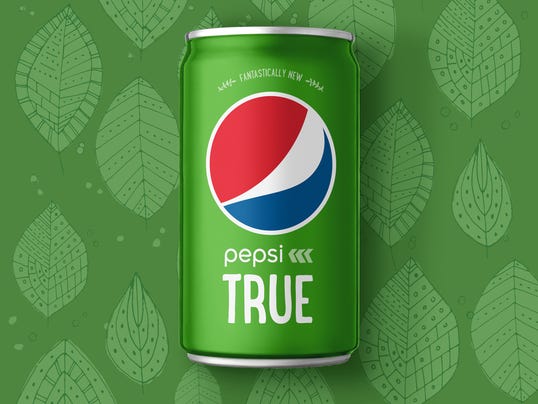
At right, a can of Pepsi True.
Note the use of green labels, which consumers usually associate with natural foods. What does this mean for dueling colas? A UK creative exec comments: 'The problem of sending confusing messages to consumers is they tend to avoid brands rather than try to decode them'.
Coca-Cola Life is launching in the UK with sampling, outdoor and transit ads and of course digital marketing. When The Grocer tasted Coca-Cola Life and compared its flavour with other Coke products, the editors preferred Life. A key question is whether this new product will attract new customers or take them from existing Coke products.
Pepsi True is currently available through Amazon in the US, but will soon be on store shelves there. Pepsi marketers view this product as a niche item because it appeals to a relatively small subsegment of soft-drink buyers.
These are neither zero-calorie colas with artificial sweeteners nor full-calorie colas with sugar or fructose syrup. They're 'mid-cal colas' featuring stevia, a plant-derived sweetener, typically targeting millennials who want to avoid a lot of chemical ingredients.

At left, Coca-Cola Life in bottles.
At right, a can of Pepsi True.
Note the use of green labels, which consumers usually associate with natural foods. What does this mean for dueling colas? A UK creative exec comments: 'The problem of sending confusing messages to consumers is they tend to avoid brands rather than try to decode them'.
Coca-Cola Life is launching in the UK with sampling, outdoor and transit ads and of course digital marketing. When The Grocer tasted Coca-Cola Life and compared its flavour with other Coke products, the editors preferred Life. A key question is whether this new product will attract new customers or take them from existing Coke products.
Pepsi True is currently available through Amazon in the US, but will soon be on store shelves there. Pepsi marketers view this product as a niche item because it appeals to a relatively small subsegment of soft-drink buyers.
Friday, 24 October 2014
How does brand identity sound?

Brand fans are encouraged to download Kia's five-note melody as a ringtone, in various rhythms and styles (Reggae, Bossa Nova, modern rock, etc.).
Sonic branding has a long history. Music or sounds that are associated with a brand have the power to bring that brand to mind when you hear that unique melody or sound. And they can influence your attitudes and perceptions of the brand.
Not all sounds associated with a brand are intentional or pleasing, as this article explains. But careful planning can result in a sound that contributes to effective rebranding. That's what SNCF, the French railway firm, found when it created a unique sonic identity for its brand. Now, after years of hearing the railway's sonic brand signatures, 92% of the listeners surveyed were able to identify the brand after hearing only 2 notes--and 71% of the listeners had a positive attitude toward the brand.
Thursday, 16 October 2014
Look-alike shoes: Converse sues

Now Converse is suing 31 companies, saying their shoes have too much of the Chuck Taylor look--and therefore violate intellectual property laws.
Among the firms being sued are Walmart, Kmart, Skechers and Ralph Lauren.
This isn't Converse's first attempt to assert its trademark rights. The company has served nearly 200 cease-and-desist notices in the past few years, telling marketers to stop making lookalike shoes that mimic Chuck Taylor's design. Now it's looking to the court system to enforce its trademark rights.
The marketing point? Success invites imitation. Marketers have to watch for imitators and be sure their brands and trademarks are protected. Otherwise, they may wind up marketing something that devolves into a generic product or category description. Zipper was once a brand. No longer. Converse wants to be sure that Chucks don't lose their brand protection. Just as important, it wants consumers to be reassured that when they buy a pair of shoes looking like the Chuck Taylor classic, it is a Chuck Taylor by Converse.
Subscribe to:
Posts (Atom)