Showing posts with label channels. Show all posts

Thursday, 14 June 2018

Burberry leverages the power of social media

https://www.instagram.com/burberry/
Social media platforms such as Facebook, Instagram and Twitter play a central marketing role for the UK fashion brand Burberry. Its marketing strategy actually relies on four distinct pillars: product, communication, distribution and digital. About communication, the company explains: 'We are evolving our communications to be led by product and made for social media'.

One study found that Burberry topped the list of 20 most valuable UK brands using social media in 2017. Fashion industry publication WWD says Burberry had the best-performing social media strategy during February's 2018 London Fashion Week. This is actually nothing new for the brand, which has long put special emphasis on social media and ecommerce: CampaignLive hailed Burberry's savvy social media strategy during London Fashion Week in 2014.

By cultivating tech-savvy consumers, Burberry has amassed an Instagram following of more than 11 million people. Its Twitter account is followed by 8.7 million people. More than 17 million people have clicked to like its Facebook page. In short, Burberry is leveraging the power of social media to reach and engage style-conscious brand fans who buy in stores or online or both.

This post updates the Burberry example in Chapter 8 of my Essential Guide to Marketing Planning.

Monday, 10 October 2016

Start-up success requires product expertise, thoughtful targeting


Brighter Foods was recently named Wales Start-up of the Year. Founded in 2014, the company specialises in healthy snack foods. Brighter Foods was also named food and drink start-up of the year and manufacturing start-up of the year for 2016.

It targets consumers who seek out snacks that are healthy and taste good. Among its products are snacks with high fibre, low fat, no dairy and/or no gluten. This is a fast-growing segment of the market and a promising target opportunity for an ambitious business seeking to expand sales.

In addition to contract manufacturing, Brighter Foods developed and now markets its own Wild Trail brand of snack bars, which are gluten- and dairy-free.

Wild Trails is being marketed via a microsite and is also available at Tesco, a channel partner that can help build brand awareness quickly. What product innovations will Brighter Foods introduce in 2017 to maintain its growth momentum?

Saturday, 14 May 2016

The Art of the Trench in Its 7th Year

Burberry launched its crowdsourced Art of the Trench microsite in 2009. Anyone can submit a photo, as the above 'upload' detail indicates. The photos not only celebrate the trench, they also celebrate the art of personal style and the brand's heritage.

With the company investing heavily to build a new Leeds factory, 'Made in Britain' is both fashionable and a big boost to the local economy.

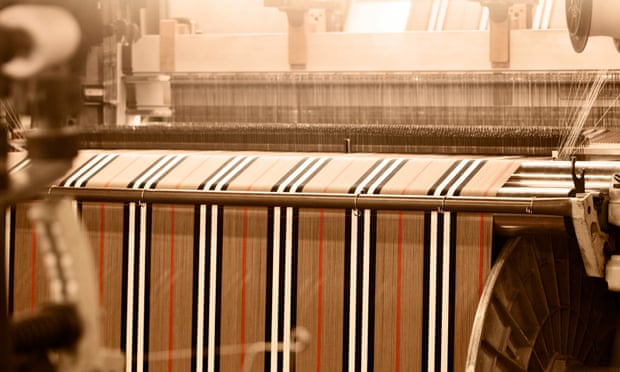
Trench coats remain in style decade after decade, with fashion updates. The Burberry trench is distinctive because of the careful hand-crafting of each detail, sewn in company factories by skilled workers who require as little as 6.5 hours to complete one trench, aided by tech extras.

Harrods, one of Burberry's channel partners, posted a style history of the trench last year. Focusing on the heritage and the craftsmanship supports the brand's upmarket image and reinforces the 'Made in Britain' message.

Thursday, 30 July 2015

Researching the marketing environment

DEVELOPING YOUR MARKETING PLAN
Every marketing plan begins with a review of the external trends and changes that affect the company, product, customers, buying trends and competition.

To get a headstart on researching the marketing environment, try clicking on the links shown on my Marketing planning links page. Every link is regularly tested and updated as needed--plus new links are added as well.

Links are categorised according to:
  • Preparing for marketing planning
  • Analysing the marketing environment
  • Researching consumer and business demographics
  • Marketing ethics, social responsibility and sustainability
  • Branding issues and ideas
  • Marketing issues and ideas
  • Marketing control and implementation
  • Retailing and channel trends
For a broad overview of the marketing plan, including a free downloadable template, click here.

Monday, 8 September 2014

Electrolux increases its brand portfolio for global share


Electrolux, based in Sweden, is buying General Electric's home appliance business, at a price of £2 billion. GE's division markets refrigerators, air conditioners, water heaters and cookers under two main brands, GE and Hotpoint, throughout North America. Electrolux's brands, shown above left, include Frigidaire, Westinghouse, Electrolux, Eureka and Zanussi (graphic from Electrolux's pdf presentation on the deal).

In particular, GE has forged connections with North American construction firms to sell home appliances for new houses. GE has wanted to exit the consumer appliance business for some time so it can concentrate on its B2B marketing, including industrial power products, aviation products and other expensive products sold to businesses, governments and health-care providers. 

Marketing to the construction industry is a marketing channel opportunity that Electrolux would like to exploit as the economy continues to improve. The deal also gives Electrolux more strength in North America, to complement its strength in the European region.

As discussed in Chapter 6 of my Essential Guide to Marketing Planning, products are often marketed with a company brand and a product line brand--as GE does with its GE Profile Series and GE Monogram appliances. In contrast, Electrolux traditionally uses an individual brand for each product line. Whether Electrolux will append its company name to the GE brands is not yet known. I can imagine a change that would create brands like "GE Monogram by Electrolux" but these decisions won't be made for some time.

The combination of Electrolux and GE appliances gives Electrolux a slim lead over Whirlpool in market share. It also adds to Electrolux's pricing complexity, given the number of brands and lines within each brand. 


Monday, 2 June 2014

Inside the Grey Market

The grey market continues to be an issue for manufacturers worldwide. A grey market occurs when wholesalers or retailers sell a branded product even though they aren't authorised to do so. The product is legitimate, but the product was obtained outside the usual distribution channels typically used by the manufacturer in that geographic region.

Often, this situation develops when a manufacturer's wholesale price is high in one area but lower in another area (due, in part, to differing channel costs, distribution strategies and price sensitivities). Another reason for grey market activity emerges when a product is available in one region but not in another. Intermediaries may buy from grey market sources when they want to boost profit margins or seek a competitive advantage by stocking an item not sold in other nearby stores. This affects warranties, as well.

The grey market has been problematic for decades, one consequence of globalisation--heightened by the popularity of online retail and wholesale channels. Sony battled grey market goods when the PlayStation Portable was at its height of popularity. Canon is one of several manufacturers warning that some products in UK stores were imported from other areas without the proper authorisation. At the very least, Canon warns that such products aren't eligible for its 'cash back' promotions. At worst, grey market products may not contain all the right parts (such as functioning CDs).

Hewlett-Packard warns that grey market equipment may be cheap but it might not function properly. Apple iPhones have been sold in China via the grey market. Callaway, the golf club company, has battled the grey market, as well. Tesla Motors is also dealing with the grey market. Even beer has been sold on the grey market. All these products are real, not counterfeit.

What happens when a grey market purchase malfunctions? How does the warranty work, and who is liable for the cost? How does the manufacturer deal with customers' and channel members' reactions to the grey market?

Wednesday, 23 April 2014

Dell's Distribution Strategy in India

Dell was founded in 1984 by Michael Dell, a college student who sold build-to-order PCs from his dormitory room. Three years later, the fast-growing company opened its first international division, in the United Kingdom.

Today, despite intense competition from tech leaders like Apple, Lenovo and Hewlett Packard, Dell has ambitious marketing plans for future growth in overseas markets like India.

The PC market in India showed some growth in 2013 but 2014 is not expected to be as strong. Dell is the second-largest PC marketer in India, with an estimated market share of 13.2%. The largest PC marketer, Hewlett Packard, has an estimated market share of 28.5%, more than double Dell's share.

To increase share and boost brand availability outside of major urban areas, Dell's distribution strategy in India relies on two key elements:
  • Targeting consumers, the company is doubling the number of Dell-brand stores in small cities and villages. These smaller markets are where Dell expects growth to be strong in the coming years, because PC ownership is not as widespread as in major urban areas. In addition, Dell is assembling laptops to keep in inventory, so distribution centers can ship laptops to the stores very soon after customers place their orders. In the past, Dell's build-to-order process minimised inventory costs--now, customers will receive orders more quickly, which in turn should increase customer satisfaction.
  • Targeting businesses, including partners, Dell is using a roadshow approach to bring its experts and products to major commercial centres like New Delhi and Mumbai. The objective is to increase support for channel partners, expand market coverage and demonstrate its ability to provide full solutions to commercial customers.

Tuesday, 21 April 2009

Sweetpea Grows Up

Sweetpea, launched by two moms in Toronto, now offers a range of 10 frozen organic baby foods in stores throughout most of Canada. The key to its success was good planning--and finding a good distributor (updating coverage of channels in Chapter 8).

At first, co-founders Eryn Green and Tamar Wagman personally visited stores and grocery chains in and around Toronto and convinced 60 to carry Sweetpea products. Looking ahead, the entrepreneurs realized they couldn't visit every grocery store in every city and suburb to build the business. They needed the expert assistance of a professional natural-foods distributor, but the one they hoped to use signed with a competitor just before Sweetpea's products made their debut.

So Green and Wagman began a campaign to attract the attention of the other distributor, SunOpta. They called and e-mailed the SunOpta buyer for months, and when they finally got him on the phone, he agreed to look at their product information. It only took 10 minutes for SunOpta to say "yes" to carrying Sweetpea's products.

Thanks to smart channel decisions, Sweetpea is now sold through 350 stores all around Canada and has become a national brand name. As its distribution expands, Sweetpea will be growing up fast.