Showing posts with label Unilever. Show all posts

Wednesday, 20 May 2020

Pandemic and Purpose

The COVID-19 pandemic continues worldwide, with some nations and some US states beginning to reopen their economies even as scientists pursue treatments and vaccines to combat the coronavirus.

Interviewed by Bloomberg BusinessWeek in May of 2020, the CEO of Unilever says:
"Our company is guided by three deeply held beliefs: That brands with purpose grow, companies with purpose last, and people with purpose thrive. And we think that refrain is going to be even more relevant in a post-coronavirus world than in a pre-coronavirus world."
Alan Jope sees trends shaped by the pandemic that include an emphasis on hygiene, on staying safe at home and on the "distance economy." He indicates these trends point to more in-home consumption and digital consumption.

Stay safe as this pandemic continues.

Monday, 18 June 2018

Unilever improves transparency in influencer marketing

Unilever, which markets such famous brands as Magnum, Omo, Luxe and Lifebuoy, wants more transparency in the world of influencer marketing (marketing mentions by celebrities and social-media stars who have many followers and who serve as opinion leaders).

When a major marketing power like Unilever takes a stand, the advertising and social media ecosystems take notice.

Unilever's chief marketing officer says the company's brands will neither buy followers nor have a marketing relationship with influencers who buy followers. The company is also prioritising relationships with digital platforms that promote transparency.

The background: Unilever respects and appreciates the close, organic connection between influencers and their followers. After all, that's why these influencers have an influence on consumers. So Unilever wants brand fans to know it will not be associated with those who buy followers to boost their numbers on social media.

This is the next step in Unilever's initiative to increase trust and integrity in influencer marketing whilst also reducing 'toxic content' online. Read more about Unilever's pledge to improve transparency here.

Tuesday, 13 March 2018

Unilever makes marketing more productive, transparent

How does Unilever make marketing more productive? Unilever has a broad portfolio of products and brands, from Axe/Lynx personal care products and Dove skin care products to Knorr soups and Hellman's condiments. Its overall marketing budget exceeds €7 billion.  

Higher productivity of marketing spend and assets would result in more efficiency and a cost savings that could be put towards more marketing, higher frequency or extended audience reach.

Firstly, the global company has decided to handle some promotional tasks in-house rather than paying agencies to do that work. Because its in-house experts know the products so well and can quickly check with decision-makers for approvals or changes, the company gains a bit more control over the marketing content and saves money at the same time. It also can handle its own pre- and post-implementation analysis, quantifying results quickly to assess marketing performance.

Also, Unilever is reassessing its digital marketing and will invest only in platforms that have a positive societal impact. In other words, it won't tolerate social media platforms that tolerate hate speech or other negativity. Unilever brands have built up consumer trust over the decades and won't risk losing trust due to a negative platform experience. This adds to transparency, as well as the company's blockchain initiative (with IBM) to improve digital ad placement info and combat fraud.

Apparently, Unilever will change its headquarters structure. For many decades, it has been an "Anglo-Dutch" multinational. News reports indicate the company may change to a single HQ in Netherlands. This should slim bureaucracy and speed decision-making, whether or not it's related to Brexit.

Sunday, 25 February 2018

Brands, transparency and social media

Brands are understandably concerned about how consumers view marketing activities on social media and, actually, how social media influence consumers and society.

For instance, are brands transparent about who they are and what they do in advertising and social media? Among UK consumers responding to a recent survey, more than half say brands are not transparent about their use of social-media influencers. This is a small part of a larger challenge that has been developing in recent years.

Unilever is unhappy with the way social media are being used to spread hate and divide society. Given the company's multibillion-pound advertising/social media budget, its ideas and its expenditures are closely watched by the marketing world.

The company recently outlined a three-point pledge to publicly demonstrate its commitment to positive communications and transparent digital interaction.

  • Unilever will not do business with any social media platform that fails to protect children or that fans the flames of societal divisions.
  • Unilever will continue to fight stereotypes and promote diversity through initiatives like its #unstereotype campaign.
  • Unilever will support digital channels that make a good customer experience their priority.
YouTube, for one, has publicly responded, saying: 'We want to do the right set of things to build [Unilever’s] trust. They are building brands on YouTube, and we want to be sure that our brand is the right place to build their brand'.

Saturday, 16 December 2017

Unilever shakes up its product portfolio

Unilever recently sold off its spreads and margarine brands to concentrate on other, higher-potential products in its portfolio. The company's CEO explained: 'The announcement today marks a further step in reshaping and sharpening our portfolio for long term growth'.

Brands sold to KKR, a private equity firm, include Flora, ProActiv, Becel, Country Crock, I Can't Believe It's Not Butter and and Blueband.

Although the spreads business was profitable for Unilever, with margins of about 20%, the firm wants to concentrate its marketing resources on products that closely fit its vision.

In particular, Unilever has been growing formerly niche brands like Pukka Herbs tea into mainstream brands to accelerate growth. It's also investing in personal care brands that are growing quickly and launching a number of new products for highly targeted customer segments within specific geographic markets.

This updates the Unilever examples in Essential Guide to Marketing Planning 4th edn.

Monday, 9 October 2017

Global marketing and 'segments of one'

Unilever is continuing to expand its product portfolio with acquisitions in global markets. Yet it also sees its marketing future as 'segments of one'.

Two recent acquisitions:

  • In Brazil, Unilever acquired the organic/natural food company Mãe Terra. Not only is this company growing rapidly year after year, it gives Unilever added strength in natural and organic food products.
  • In South Korea, Unilever acquired the cosmetics firm Carver Korea. The goal is to accelerate growth in Asia and in a product category that experiences high demand.
Earlier in 2017, Unilever refused a takeover bid by Kraft Heinz. Now the marketing strategy focuses on five elements: consumers, connections (with consumers, in real time), content (beyond advertising), community (building relationships) and commerce (new ways to engage throughout the buying process). 

In particular, Unilever is moving toward 'segments of one' and the idea that its brands must be 'relevant, tailored and personal' rather than mass-marketed. This means making sure that mobile experiences and search experiences for consumers are as convenient and informative as possible.

Friday, 8 September 2017

Unilever and Nestle Pursue Niche Growth

Sweet Earth is being acquired by Nestle
Switzerland-based Nestle is buying a small California firm known for vegan and vegetarian foods; Dutch-British Unilever is buying a company that makes herbal organic teas.

Unilever is acquiring Pukka Herbs
Both of these multinationals are building part of their growth strategies around acquiring businesses and products in niches that are attractive because of increasing consumer appeal and the ability to be noticed through distinctive brands/products.

Unilever, for example, pursued Pukka Herbs because it is unusually fast-growing in its niche. Unilever's top tea executive explains: 'In the morning a lot of people still drink black tea as it picks you up, but in the afternoon or evening herbal tea is wonderful with different benefits'. In other words, Pukka Herbs complements Unilever's existing tea brands and products.

Nestle bought Sweet Earth, a vegan/vegetarian food marketer, to get firmly established in the plant-based protein market. Nestle USA's CEO comments: 'One of Nestlé’s strategic priorities is to build out our portfolio of vegetarian and flexitarian choices in line with modern health trends'.

Mainstream brands/products continue to sell--but certain niches are growing more rapidly and delivering customer acquisition (and profits) through specialization. That's why more multinationals will be exploiting growth opportunities by buying firms that have a following and a strong brand image in a well-defined niche.

Friday, 24 February 2017

'Versus' marketing strengthens positioning

Marketing magazine has a thought-provoking opinion piece by Mark Ritson, about positioning for competitive advantage. Here's one quote:
The versus position is one in which we make it clear what we stand for to customers by highlighting the differences between ourselves and others.
Remember, positioning is in the mind of the customer--how the customer thinks or feels about your brand and competing brands. Your role is to put forth a 'versus' fitting for your product or brand, one that is compelling enough to influence thought and feeling, compelling enough to encourage a purchase.

It's not enough to say 'my brand is the best'. But if you position versus traditional brands--as one example--or versus a specific competitor, you help customers understand what your brand stands for and why it's the best choice.


Here are two examples of positioning versus traditional competitors:
  • Ben & Jerry's website and packaging showcase the brand's social responsibility. The company (owned by Unilever) knows that customers expect ice cream to taste good. Ben & Jerry's stands for more than just good-tasting ice cream. Its positioning relies on the brand being good for the planet, good for workers, good for social causes--not a claim that every competitor can make.
  • Innocent positions itself as 100% pure, no additives, no 'nasty' stuff, just healthy, fresh ingredients. This is in contrast to traditional soft drinks that are carbonated and sugary, or that use artificial sweeteners. Plus Innocent (owned by Coca-Cola) is 'sourced sustainably' and gives 10% of profits to charity. Again, not every competitor does what Innocent does.

One last thought: If you use advertising to highlight differences between your brand and another, be sure the comparisons are fair and not misleading.

Wednesday, 8 February 2017

Marketing with purpose: Think long term

Marketing with purpose is how some of the world's largest businesses are differentiating themselves in today's competitive global economy. At left, an image showing the new packaging of Procter & Gamble's Head & Shoulders shampoo, a bottle made partly from recycled plastics found on beaches.

P&G wants to demonstrate its leadership in sustainability marketing, and this packaging will soon be at in Carrefour stores across France. On the way are hundreds of millions of shampoo bottles made from recycled materials. P&G has also set aggressive multi-year targets for zero manufacturing waste. These and are other actions are building the firm's reputation for sustainability over the long term.

Competitor Unilever has been publicising its sustainability marketing as well. Last month, the company announced ambitious goals for plastic product packaging that is recyclable, reusable or compostable. It is reassessing its products and packaging to reduce the environmental impact wherever possible (as in image shown at right).

In a recent survey conducted in five countries, Unilever found that one in five consumers said they decide to buy based on whether a product was made without harming the environment. Unilever also reported that sales of its brands linked to sustainability are growing much more quickly than non-sustainability brands in the corporate portfolio.

A recent opinion column in The Guardian noted that social activism sells, and brands are busy promoting their good deeds for business reasons. In other words, marketing with purpose is the hottest way to differentiate a brand and make consumers aware of what it stands for, in order to make a sale. Well, yes, but if marketing with purpose is insincere or inconsistent, consumers will soon find that out. P&G and Unilever are committed to marketing with purpose for the long term, with considerable financial and human resources devoted to their environmental protection endeavors.

Thursday, 29 December 2016

Unilever's unstereotype initiative

One of the most notable of 2016's marketing initiatives, according to Campaign Live, has been Unilever's #Unstereotype campaign, headed by the company's SVP of global marketing, Aline Santos.

Unilever's research revealed the need to make changes in how its brand advertising depicts people. Among the brands affected by this new change is Axe (also known as Lynx). Santos explains: 'The stereotype of men that we been portraying for years isn't relevant any more. Not only was it not relevant, it wasn't right.'

In June, 2016, Unilever posted the following about its #Unstereotype initiative:

Gender identity is changing. Our advertising has not changed enough – up until now. We've listened to consumers and looked at the way we portray gender in our advertising and realised we need to do things differently. We understand that by using our influence responsibly, we can contribute to positive cultural change as well as making better connections with people through our advertising. That's why we've asked every one of our brands to challenge itself to move away from unhelpful stereotypical portrayals of gender, especially for women, and to deliver fresh campaigns that are more relevant to today’s consumer. We call this movement #UNSTEREOTYPE – and it is already making a difference.
The #Unstereotype campaign resonates in an industry where stereotyping is often in evidence (especially in advertising messages to or including women). In fact, Kantar Futures head J Walker Smith says this is the way of the future:
The advertising and marketing industry has got a lot of ground to make up to simply project a realistic, contemporary picture of female identity, so keeping up with and pre-empting its evolution will be no easy task. The good news is that Unilever has now shown that it pays dividends, and that those brands brave enough to move their strategy forward have a great opportunity for growth, disruption and creativity.

Friday, 14 October 2016

Product pricing and Brexit

Unilever and Tesco skirmished briefly about pricing this week.

As a result of Brexit, the value of the pound sterling has slumped, and Unilever is trying to increase the price of some products by an average of about 10% to compensate for the slump.

Inventory on Tesco's store shelves dwindled as the grocery giant fought Unilever over pricing. Media coverage of the battle raised the possibility that Tesco's shoppers might be unable to find beloved brands like Marmite and Ben & Jerry's.

Tesco resisted Unilever's price increase by emphasising its role as championing low prices on behalf of consumers. Unilever explained that its supply costs are increasing, profits are going to be affected and therefore product pricing must be adjusted.

After a 24-hour standoff, Tesco and Unilever announced that the dispute had been resolved and shelves would be full of the brands shoppers want.

Expect more announcements about wholesale pricing as other producers seek to counteract the slump of sterling by increasing prices, if possible.

Friday, 7 October 2016

Purpose-driven marketing at Unilever


Unilever's chief marketing officer recently said: 'We need to build brands with purpose. We need to go from "marketing to consumers", to "mattering to people"'.

In other words, the consumer products giant believes in purpose-driven marketing.

One year ago Marketing Week named the top 100 firms for brand purpose--and at the top was Unilever.

Just weeks ago, Unilever arranged to buy Seventh Generation, a US-based brand of household cleaners known for sustainability.

Unilever's executive vice president for global marketing notes that brands need to be activist as part of their purpose: 'Consumers are really expecting brands to create movements. They want to be part of those movements', she explains.

Yes, the firm's brands seek to make a positive difference (via social responsibility, sustainability and so forth). And in the process, Unilever benefits by meeting customers' needs, increasing public trust and, ultimately, improving the bottom line. 'Fifty percent of Unilever's growth today is coming from brands that are acting on their purpose', the EVP says.

Thursday, 26 May 2016

Opinion leaders in the palaces

Opinion leaders are people who are particularly admired or who have special qualities that result in their having influence over what some consumers like or buy.

For some segments, the Duchess of Cambridge is an opinion leader for women's fashion, as an example.

In the UK, the display of a Royal Warrant confirms that the households of royal opinion leaders have used the brand for at least five years. Products apply for and may display the Royal Warrant indicating product use by one of three royal households (HM The Queen, HRM The Duke of Edinburgh or HRM The Prince of Wales).

Among the Royal Warrant holders in food and beverage, for example, are BritVic, Renshaw Baking, Johnnie Walker and Selfridges.

When Unilever's Marmite became a Royal Warrant holder just ahead of the Queen's 90th birthday this year, it celebrated by publicising the warrant and toasting the Queen's special birthday. The brand received extra social media attention on this occasion, as 'Love It' fans were glad that Marmite is enjoyed in the palaces.

Tuesday, 19 January 2016

Unilever faces changes in consumer behaviour

Butter is becoming more popular as consumers return to its taste and its natural ingredients. McDonald's, for instance, has experienced higher demand for its Egg McMuffin sandwich since switching from margerine to butter last year.

And this is only one of the changes in consumer behaviour that are challenging Unilever, which markets such spreads as I Can't Believe It's Not Butter, Stork and Flora.

Recent financial results show spreads lagging in revenue growth. Yet the company, which was created early in the 20th century by combining the soaps of Britain's Lever Brothers with the spreads of Dutch margarine maker Margarine Unie, isn't ready to simply sell the spreads division. With consumer behaviour changes in mind, it is putting new marketing efforts behind new products in its existing range, such as Stork with Butter.

Being a global corporation, Unilever has 400+ brands in markets on every continent. And it recently arranged to begin marketing again in Cuba, after an absence of several years. But the CEO sees a challenging year ahead as economics give consumers little reason to reach into their pockets and spend.

Monday, 11 May 2015

Unilever's sustainability strategy resonates with customers

Unilever is seeking to support sustainability through improvements in health and well-being (blue on the chart), reduced environmental impact (dark green), enhancing the livelihoods of communities (red) and making its businesses more transparent and sustainable (light green).

What does the multinational consider to be a material issue or opportunity? From 2010, when the sustainability initiative was implemented, Unilever applied four criteria:
  • The degree to which an issue is aligned with our vision and purpose, brand portfolio and geography.
  • The potential impact on our operations, or on our sourcing and consumers.
  • The extent of Unilever’s influence on the issue.
  • The importance of an issue to our key stakeholders.
Unilever now has evidence that progress on sustainability issues resonates with its customer base. Its brands most active in sustainability initiatives (Dove, Lifebuoy, Ben & Jerry's, Comfort) 'accounted for half the company's growth in 2014 and grew at twice the rate of the rest of the business' according to CEO Paul Polman.

In other words, a solid sustainability strategy can help save the planet, improve the quality of life for stakeholders and bring the company closer to growth goals.

Monday, 2 March 2015

Unilever and Procter & Gamble crowdsource innovation

Unilever--known for its portfolio of food, personal care, and household products--has established a special crowdsourcing site to invite ideas for new products and new technology, as well as to invite applications for venture funding.

The Unilever Foundry is designed to accelerate acquisition and implementation of new crowdsourced products/technologies 'ten-fold' within 5 years. This Unilever site has a dedicated Twitter feed for news about innovation and venture funding.
Procter & Gamble, one of Unilever's key competitors, has its own innovation site, P&G Connect & Develop, also for crowdsourcing ideas to meet the company's needs, including marketing content.  P&G has a special Twitter account devoted to crowdsourcing, as well.

How far can companies go in crowdsourcing innovation?

Wednesday, 9 January 2013

Marketers invest in tomorrow's partners

Some of the biggest names in business are putting money into tiny firms that have the potential to become key partners or suppliers sometime in the future. The firms making the investments aren't banks--they're multinationals that want to benefit from new ideas and new processes that indie startups might develop.

Here are a few examples:
  • Unilever Ventures has an 'incubation' programme to help small UK businesses that are developing innovative ways for customers to interact with brands via smartphone and social media.
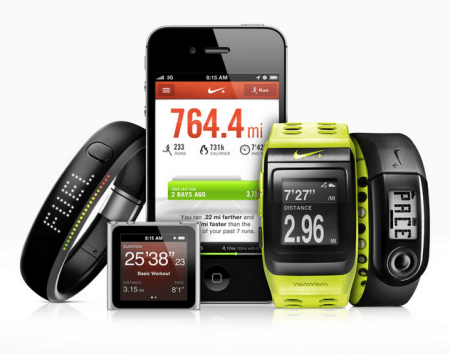
  • Nike is investing in tech companies that plan to use its Nike+ technology (see photo, right).
  • Procter & Gamble has joined with the University of Cincinnati in Ohio to fund a 'startup accelerator' for new businesses.
  • BMW has a New York-based venture capital unit to assist businesses that are developing mobile services offerings.
  • Intel Capital invests in firms that are working on new technologies, devices and software suitable for its chips.
What innovations will grow out of these investments? How many will be successful? And  will the marketers that invest in these startups gain a competitive edge from their association with the next new thing?

Wednesday, 12 September 2012

Coffee, Tea and Nespresso

Nespresso has been marketing premium single-serve coffeemakers and coffee capsules for decades--and brewing up high profits for parent company Nestlé.

Its posh positioning is reinforced by adverts featuring movie star George Clooney and branded boutiques where stylish coffee machines are the stars of the show. In fact, Nespresso recently announced it will build another factory to keep up with worldwide demand.

The single-serve coffee market has attracted a lot of competitors in recent years, however, and Nespresso is now busy defending its market share while launching new products to maintain revenue momentum.

Currently, Nespresso is introducing upmarket machines that brew one top-quality cup of tea at a time, for example. But competition may grow even more intense in the tea segment as Unilever thinks about opening a chain of trendy tea-machine boutiques.

In the core coffee market, Nespresso recently lost a legal battle in Germany to prevent competitors from selling capsules that fit Nespresso machines (but cost less than Nespresso's replacement capsules). Its patents were upheld by the European Patent Office, on the other hand. Meanwhile, Starbucks is launching its own single-serve coffeemaker and already makes replacement capsules to fit the Keurig machines that are popular in North America. What innovations will the market see next?

Thursday, 12 July 2012

What do consumers REALLY look at in the store?

How does a company like Unilever know what packaging will catch your attention from the crowded supermarket shelf? Eye-tracking technology is the key.

Consumers can't always articulate what they need or like, so researchers have devised various techniques for digging deeper to find out what really drives the decision-making process. Neuromarketing, which includes eye-tracking and fMRI testing, offers insights into consumers' physiological reactions to packages, ads, and other marketing tactics.

The image above shows how long and how often consumers in one Unilever test looked at particular packages on a simulated store shelf. Researchers in several areas, including London and Mumbai, are using eye-tracking to gauge local consumers' reactions to Unilever products. Neuromarketing isn't used by the majority of marketers--yet--but it is a promising technique for deeper understanding of what consumers feel about brands and products.

Monday, 2 April 2012

The green side of Unilever

Unilever has set the ambitious goal of doubling sales while slashing its eco-impact by half buy 2020. The European head of Unilever says:
"We will prove to the world that this is the right plan and this is also the right sustainable plan for business."
As the company's illustration shows, product packaging and transportation packaging together account for 73% of its environmental footprint. Shrinking or otherwise changing product packaging--without putting products at risk--will make transportation packaging smaller or lighter or both, which in turn will cut shipping costs and save fuel as well.

Now Unilever is opening the door to firms and entrepreneurs with innovative ideas for revamping its packaging technology and other green projects. A good idea!