Showing posts with label social responsibility. Show all posts

Tuesday, 20 March 2018

Updated links to marketing planning ideas and resources

My list of links to marketing planing ideas and resources has been updated. Now you can click to see more than 50 sources of data, advice and news related to:

  • Preparing for marketing planning and implementation
  • Analysing the marketing environment
  • Researching consumer and business demographics
  • Marketing ethics, social responsibility and sustainability
  • Branding issues and ideas
  • Marketing mix issues and ideas
  • Marketing channels and retailing trends
For instance, if you're looking for a marketing plan template, my list includes a link to the Australian government's business page with a downloadable guide and template.

So please browse the links the next time you're researching the background for a marketing plan project.

Thursday, 1 December 2016

What's new in chocolate marketing?

Chocolate for the holidays . . . chocolate as an everyday affordable luxury . . . chocolate as a socially-responsible snack. These are some of the ways that chocolate marketers position their products. The world of chocolate marketing is changing, thanks to changes in technology, consumer behaviour and society.

  • Nestlé announced today that it has discovered a scientific way to reduce the amount of sugar in a chocolate bar without sacrificing taste. The company has been trying to reformulate its products to reduce levels of sugar. With obesity a concern in many nations, marketing chocolate with lower sugar could make products like Nestlé's KitKat bars more appealing to a wider market. 
  • Toblerone, made by Mondelez International, recently changed two of its chocolate bars to reduce the weight, in response to higher ingredient costs. Most if not all chocolate marketers are experiencing higher costs, which some can absorb for months and others must pass along in the form of higher prices or reduced-size products. 
  • Consumers are often interested in where a product's ingredients come from, seeking out ethically-sourced chocolate from companies that have a social responsibility agenda. 'Single-origin' chocolate is sourced from one area, ideally from one group of cocoa growers who receive fair-market pay for their crops. Single-origin chocolate also reflects the distinctive flavour of its beans. Waitrose, for example, is marketing chocolate bars from specific sources, each with its own flavour. 

  • Hotel Chocolat was a leader in single-origin chocolate, a first-mover advantage in mystique that has helped build its brand. Now Hotel Chocolat, which has a chain of branded shops, is continuing its growth by opening cafés where customers can experience its chocolates in a branded restaurant-style setting.
Some of these trends are discussed in the updated sample marketing plan for the fictional company Lost Legends Luxury Chocolatier, when my next edition of the Essential Guide to Marketing Planning is published in 2017.

Friday, 7 October 2016

Purpose-driven marketing at Unilever


Unilever's chief marketing officer recently said: 'We need to build brands with purpose. We need to go from "marketing to consumers", to "mattering to people"'.

In other words, the consumer products giant believes in purpose-driven marketing.

One year ago Marketing Week named the top 100 firms for brand purpose--and at the top was Unilever.

Just weeks ago, Unilever arranged to buy Seventh Generation, a US-based brand of household cleaners known for sustainability.

Unilever's executive vice president for global marketing notes that brands need to be activist as part of their purpose: 'Consumers are really expecting brands to create movements. They want to be part of those movements', she explains.

Yes, the firm's brands seek to make a positive difference (via social responsibility, sustainability and so forth). And in the process, Unilever benefits by meeting customers' needs, increasing public trust and, ultimately, improving the bottom line. 'Fifty percent of Unilever's growth today is coming from brands that are acting on their purpose', the EVP says.

Monday, 19 October 2015

Greenwashing: VW's reputation is at risk

Volkswagen, the world's best-selling car company as of 2015, has admitted to using software to manipulate testing for polluting emissions in its diesel-powered cars.

Many hundreds of thousands of vehicles are involved--and, just as critically, the reputation of this venerable automaker is at risk. VW has already dropped the royal warrant from its UK communications.

Being linked to greenwashing will damage any company in the short term. In the case of VW, which has long-term ambitions to remain the top-selling automaker on Earth, dealing with the scandal surrounding its diesel cars' actual pollution performance is complicated by customer claims, shareholder outrage and governmental actions. VW must now rehabilitate its brand and reassure stakeholders of its sincerity and commitment to fixing what's gone wrong.

In this age of social media and online news coverage, when negative headlines can flash around the world within moments, is greenwashing going to disappear? In the words of Nick Timon, chief innovation officer of marketing firm Adjust Your Set:
I don’t mean to sound glib – of course environmental consciousness is important, laudable and pressing – but the way many companies are suddenly developing a social conscience on this front smacks of insincerity and laziness, as if the industry has learnt nothing from the greenwashing debacle and instead is jumping gung-ho into the shiny new sport of ‘purpose-washing’.

Monday, 10 August 2015

Aldi's growth strategy on both sides of the Atlantic

Aldi--the German-owned discount grocery chain known for super-low prices and no frills--is expanding across the UK and in the US.

With a UK market share of more than 5% the chain's growth strategy means investing £600m to open 130 additional stores and increase its workforce to 35,000 by 2022. Costs are low, so prices are low.

Bring-your-own-bags to tote groceries home--and if you buy an Aldi's UK bag, the pennies go to the RSPB, aiding a good cause and reinforcing the company's reputation for social responsibility. Aldi UK has attracted more than 1m Facebook likes, 188k followers on Twitter, 7,500 followers on Pinterest and a few thousand followers in Youtube.

Across the pond, Aldi is getting ready to compete even more aggressively with Trader Joe's and other low-price grocery chains. Within a year, its growth strategy calls for 45 new stores in California, where local consumers value both quality and low prices. Unlike the bare-bones assortments of the past, Aldi's is testing organic specialties such as cage-free eggs and chia seeds to differentiate itself and attract new shoppers.

Aldi US is as social as Aldi UK, with 1.5m Facebook likes, a few thousand Youtube followers, 23k Twitter followers and 24k Pinterest followers.

Thursday, 30 July 2015

Researching the marketing environment

DEVELOPING YOUR MARKETING PLAN
Every marketing plan begins with a review of the external trends and changes that affect the company, product, customers, buying trends and competition.

To get a headstart on researching the marketing environment, try clicking on the links shown on my Marketing planning links page. Every link is regularly tested and updated as needed--plus new links are added as well.

Links are categorised according to:
  • Preparing for marketing planning
  • Analysing the marketing environment
  • Researching consumer and business demographics
  • Marketing ethics, social responsibility and sustainability
  • Branding issues and ideas
  • Marketing issues and ideas
  • Marketing control and implementation
  • Retailing and channel trends
For a broad overview of the marketing plan, including a free downloadable template, click here.

Sunday, 24 May 2015

Update: Marketing at Reckitt Benckiser

Reckitt Benckiser markets some very well-known brand names in health, hygiene and household products, including Finish, Strepsils, Vanish, Scholls, Mucinex and Airwick. This post updates the RB opening case on pages 1-2 of Essential Guide to Marketing Planning 3e.

Here's how RB's main product categories contributed to turnover in 2014:
  • Hygiene products generated 41% of RB's revenue
  • Health products generated 31% of RB's revenue
  • Home products generated 20% of RB's revenue
  • Portfolio brands and foods generated 8% of RB's revenue
Each RB brand has its own digital marketing strategy, including a distinct social media personality and presence. Shailesh Shukla, VP of marketing for RB, notes that consumer behaviour is what drives marketing strategy. How do consumers perceive each brand and how do they use digital media with respect to each product category? The answers to those questions are key to RB's media and content decisions.

Corporate RB is also social, with 236,000 FB likes, 13,000 Twitter followers, and a YouTube presence. In addition, RB pursues an active social responsibility and sustainability agenda.

Wednesday, 15 April 2015

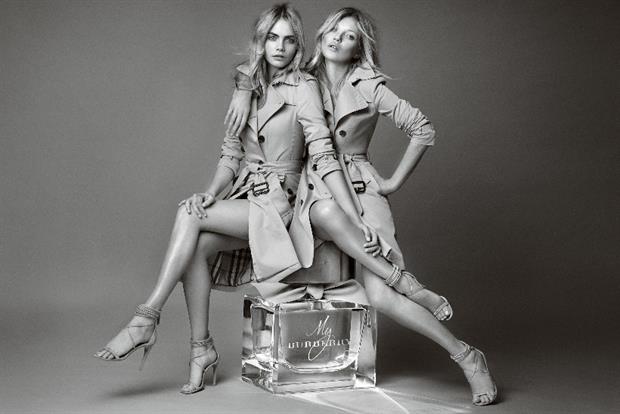
Burberry: To be a great brand, be a great company

Burberry (founded in 1856) is acknowledged as a great brand, with millions of global brand fans and laudable financial results. What does Burberry think about its stature? Here's a quote from the website:

Burberry believes that to be a great brand, it must also be a great company. Burberry constantly leverages the energy of its creative thinking culture for positive change, within its own organisation as well as in its business partnerships, wider community engagement and societal and environmental impact.


In other words, Burberry isn't just a fashion brand, it's also a creative force for good and for fostering creativity throughout the business world and society. And it has creatively revitalised the 159-year-old brand by using customer behaviour as the basis of its 21st century marketing.

Digital is, of course, a major element in Burberry's brand marketing. The CFO observes: 'We talk about the customer being agnostic, that’s how we think about digital versus mainline [sales]'. Customers can browse and shop as they choose, whether online or via mobile or in stores. Increasingly popular, click and collect (established in 2013) now accounts for 20% of Burberry's digital business. Being able to personalise Burberry sites for individual tastes and interests engaged customers in creative ways, as well.

Not only is Burberry embracing digital, it remains a solid presence in shopping centres and high streets worldwide, with 214 retail stores, 213 concessions, 57 outlets and 67 franchise stores. And it's a social media darling, with 1.7 million FB likes and 128,000 Pinterest followers.

Wednesday, 10 December 2014

Food trucks use social media as marketing engine

Entrepreneurs are bringing their unique food experiences to streets in London and beyond--with social media as the marketing engine for attracting customers. 

At left, a food truck with eye-catching flair: Engine's 1950s fire engine, serving American-style hot dogs and grilled sandwiches. Using social media like Twitter, Facebook and Pinterest helps Engine stay in touch with customers, alert them to new products and publicise new locations.

Another example: Rainbo (offering gyoza and more), which markets its weekend and festival outings with blogs like 'van life' and combines street food with social responsibility (its cause: ending child labour).

Now some food trucks have a membership organisation (KERB) to promote their services and encourage entrepreneurial newbies. KERB is savvy about social media, using Tumblr, Twitter, Facebook and more to feature its members and build excitement about gourmet street food.

Thursday, 10 July 2014

How well will new Coca-Cola Life sell?

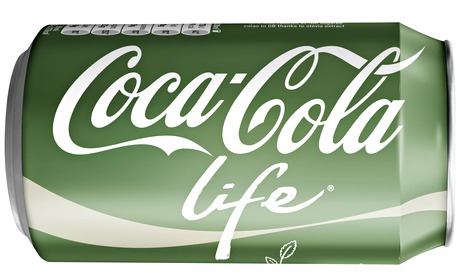
After test marketing a new lower-calorie version of its cola in South America, Coca-Cola is readying a rollout in Great Britain and beyond this year.

The new product, Coca-Cola Life, features a green can or green label with the characteristic Coca-Cola brand logo script.

Coca-Cola Life is also being marketed as 'natural' because it is partly sweetened by plant-based stevia, reducing the sugar content.

This addition to the Coca-Cola product portfolio comes at a time when soft-drink marketers and snack marketers face challenges due to serious societal issues such as obesity. Already, nearly half of the cola beverages sold by Coca-Cola in the UK have no calories.

Some critics are unhappy with Coca-Cola Life's calorie count and super-sweet taste. Coca-Cola responds that it is investing in programmes to encourage consumers to be more active through such activities as biking.

Consumers will have the final say: If enough buy Coca-Cola Life, and keep buying it, the new product will remain in the portfolio. If not, the new product will vanish.

Wednesday, 11 September 2013

Metrics for sustainability marketing

When Marks & Spencer announced its Plan A for sustainability marketing in 2007, it set goals for reducing its carbon footprint, achieving zero landfill waste, buying from sustainable sources, fair trade practices and helping customers lead healthier lives. The UK retailer pledged to invest £200 million over a five-year period to achieve these goals.

According to the metrics, M&S has made significant progress towards its goals and created a net cost-savings to the company. The retailer sends nothing to the landfill, has achieved its lower carbon footprint targets, is developing additional sustainable sources for products and materials it buys and has established workable fair trade practices as well as provided consumers with tools for healthy living. For transparency reasons, M&S reports its sustainability results on a special site and in periodic reports.

One important element in the marketing plan to keep waste from landfills has been M&S's partnership with Oxfam, which encourages shoppers to 'shwop it'--bring in an unwanted piece of apparel that M&S will give to Oxfam for resale or recycling. This partnership has kept 3.5 million items of clothing from landing in landfills, and given Oxfam the opportunity to raise £2 million by selling 'shwopped' clothing. One last metric: Shoppers feel good about participating, and their positive attitudes affect the way they perceive M&S and Oxfam.

Wednesday, 15 May 2013

Retailers deal with supply-chain workers' safety

Much of the world's clothing is made in Bangladesh factories, some unknown number possibly as dangerous as the factory where last month, more than 1,100 workers tragically lost their lives in a building collapse.
Now H&M, Zara, Benetton and several other big-name retailers have committed to working closely with factory owners and the government to improve conditions. H&M issued a statement saying it wants to create an environment 'in which no worker needs to fear fires, building collapses or other accidents that could be prevented with reasonable health and safety measures'.

UK's Primark and Canada's Loblaw will compensate the family of victims of the factory collapse. According to a Loblaw statement, 'We are working to ensure that we will deliver support in the best and most meaningful way possible, and with the goal of ensuring that victims and their families receive benefits now and in the future'.

Walmart has so far decided to conduct safety inspections on its own, saying it believes this is the fastest way to uncover and correct potential problems. The world's largest retailer plans to post the results of its factory inspections on its website, because 'transparency is the ultimate accountability mechanism'.

Thursday, 14 March 2013

Oxfam goes 'behind the brands'

Oxfam International wants consumers to know more about how the world's biggest food brands approach ethics and social responsibility. The 'Behind the Brands' campaign is aimed at actually changing the way these big brands do business, using the public spotlight and consumer pressure to stimulate change.


Here's what Oxfam's chief executive says: 'Consumers have the right to know how their food has been produced and the impact this has on the world's poorest people who are growing the ingredients. The hundreds of brands lining supermarket shelves are predominantly owned by just 10 huge companies, which have combined revenues of more than $1bn a day while one-in-eight people go to bed hungry every night'.

Oxfam has developed scoreboards and applies seven criteria (including transparency, land use and climate issues) to rank these 10 big food marketers:
  • Associated British Foods (owner of Ovaltine and other brands)
  • Coca-Cola
  • Danone
  • Kellogg
  • General Mills
  • Mars
  • Mondelez (formerly Kraft)
  • Nestle
  • Pepsi
  • Unilever
Nestle was among the first to respond to Oxfam's rankings regarding its chocolate products. Among other actions, it is studying how to have a strong, positive impact on women in its supply chain. Oxfam welcomed this response and urged prompt planning and implementation.

Needless to say, social media like Facebook (where Oxfam GB has 128,000+ likes) will play a role in the success of 'Behind the Brands'.

Wednesday, 4 July 2012

John Lewis connects with its communities

Retailing is so often focused on price competition, and yet strong, positive relationships with customers and their communities can make a real difference in long-term loyalty.

John Lewis is opening its doors to community groups that need meeting space, expertise and other assistance. Among the groups that have taken advantage of free meeting space in John Lewis department stores are Friends of the Welsh National Opera, Jo's Cervical Cancer Trust and the Peace Hospice.


'We'd like our shops to become a place where the community is happy to spend time, for use as a genuine resource', says Managing Director Andy Street.

Each John Lewis department store has a community liaison coordinator to work with local groups in identifying needs and providing resources such as free meeting space or volunteers recruited from store staff. These personal connections help the retailer integrate more fully into the everyday life of the community, a key element in social responsibility.

Take a look at the John Lewis Partnership's social responsibility page for info about other steps the retailer is taking to connect with its communities.

Monday, 8 August 2011

Ethical Brands

A new Goodbrands survey shows that Innocent Drinks (left), Co-operative Bank, and Marks & Spencer impress ethically-minded consumers as among the most ethical UK brands. 

The head of M&S Sustainable Business tells Marketing Week: 
First and foremost, we are very clear that going green will not cost the consumer extra . . . Why should a consumer pay more for a product that has protected the planet and not exploited people? M&S must manage that cost and not pass it on to the consumer.
Divine Chocolate--45% owned by cocoa growers who produce Fairtrade-marked cocoa beans--is another brand recognized for its ethics.

Over time, consumers who choose ethical brands tend to be more loyal and accept premium prices for what they view as premium products (because these products don't hurt the planet, for example, or are socially responsible).

Today, no brand can afford to be seen as unethical. With the speed of social media, brands that don't act ethically are quickly exposed.

Wednesday, 8 June 2011

Hotel Chocolat's Recipe for Success

Updating the case study in Chapter 4 of my Essential Guide to Marketing Planning, here's a look at what the upmarket chocolatier Hotel Chocolat has been doing.

Currently, the company operates dozens of stores across the UK as well as in one in Boston and three in the Middle East. Just this week, the firm announced plans for three new UK stores. Its distribution strategy also includes selling through selected John Lewis stores.

One of the firm's marketing specialities is segmentation by occasion (holidays, birthday, wedding, thank you and more), age, gender and lifestyle (vegan and alcohol-free, for example). Hotel Chocolat offers a full range of "genres" (milk chocolate, dark chocolate, white chocolate and so on) and provides corporate buyers with bespoke chocolate gifts, among other products.

Chocolatiers don't typically operate their own hotels, but that's one of the initiatives that sets Hotel Chocolat apart from competitors. Its Chocolate Hotel in Saint Lucia, West Indies, is adjacent to the firm's Rabot Estate Cocoa Plantation. Not just for chocolate lovers, the hotel's marketing mixes the mystique of a Caribbean holiday with a taste of social responsibility (a la eco-tourism). 

Another unusual move: When Hotel Chocolat wanted to raise money for expansion, it offered members of its chocolate tasting club a "chocolate bond," including twice-monthly dividends paid in chocolate treats.

For social media marketing, Hotel Chocolat uses Twitter and Facebook plus its own blog, "Tales from Tree to Bar." Want to see the hotel or cocoa plantation? Tune into the firm's YouTube channel.