Tesco has a new weapon in its battle with deep-discount retail chains Lidl and Aldi.
It just opened two discount-price stores in a new chain it calls Jack, for Tesco's founder, Sir Jack Cohen. Short name, easy to remember, limited assortment, low prices, local merchandise. And the store openings coincide with Tesco's celebration of 100 years of low prices.
Most of the products will be branded own-label, but some will be well-known global brands like Coca-Cola. To reinforce the British origin of local merchandise, and the chain's British heritage, Jack signage features the Union Jack.
Tesco's CEO says the target market is 'economically challenged [consumers] that need a bargain and the affluent shopper that wants a bargain'. Adding a 'treasure hunt' element, the centre aisle of each Jack's store displays WIGIG promotions--bargain products that will go quickly, so 'when it's gone, it's gone'.
Lidl and Aldi have challenged Tesco and other full-service supermarkets in recent years, attracting price-conscious consumers willing to buy what they want at low, low prices in a no-frills retail atmosphere.
A few months ago, Tesco closed its Tesco Direct business, which sold non-food products directly to consumers. That business had been operating for nearly 12 years but was not yet profitable. Will Jack's enable Tesco to compete effectively in a highly pressured retail environment--and be profitable at the same time?
Showing posts with label Tesco. Show all posts
Showing posts with label Tesco. Show all posts
Wednesday, 10 October 2018
Monday, 4 June 2018
Tesco fine-tunes retailing strategy

As shown above, it recently announced the closing of Tesco Direct, the company's profitless e-commerce initiative for non-food products. (Tesco.com is the company's grocery website.) Fulfilment is costly, maintaining an online shopping platform is costly and the company saw no way to profit from this venture. Most likely, competition was also a factor, with Amazon and others offering so many of the same brand-name products that were sold on Tesco Direct's site.
Yet Tesco continues to invest in physical stores. It opened a new supermarket in Dublin that features eco-friendly features such as energy conservation systems and recycling facilities.
The Tesco Clubcard is a major competitive strength, enabling the retailer to communicate with loyal customers and personalise offers. And Tesco will need this strength as it faces the soon-to-merge Sainsbury/Asda combination.

Monday, 16 April 2018
Grocery retailers battle for UK market share
Aldi and Lidl, both based in Germany, have been steadily capturing market share in UK grocery retailing. Recent numbers show that Aldi has increased its market share from 3.9% at the start of 2014 to 7.3% at the start of 2018. Lidl, meanwhile, grew market share from 3.1% in early 2014 to 5.3% in early 2018.
From the perspective of traditional UK supermarkets like Tesco and Waitrose, the battle for market share has another challenge: pressure on profit margins. Aldi and Lidl are deep-discount grocers with no-frills stores. Not so for Tesco and Waitrose, which are full-service grocers. To be sure consumers can see the value in shopping at a full-service store, price promotions are often highlighted--and that cuts into margins.
In fact, price is a key element in consumers' perceptions of a store. Not long ago, Aldi overtook Waitrose as the favourite supermarket of UK consumers who were asked about satisfaction. Affordable prices would naturally be important to satisfaction.
Meanwhile, UK supermarkets will continue to face pressure from the deep discounters as Aldi and Lidl both plan to expand their store networks. At the same time, traditional supermarkets are slowing their store openings to maintain cost control. Will online grocery shopping be the competitive edge for traditional supermarkets? Possibly, as a growing number of UK shoppers try or continue buying food and household products without going into a store. Consumer behaviour is changing, and grocery retailers are learning to adapt so they can compete more effectively.
From the perspective of traditional UK supermarkets like Tesco and Waitrose, the battle for market share has another challenge: pressure on profit margins. Aldi and Lidl are deep-discount grocers with no-frills stores. Not so for Tesco and Waitrose, which are full-service grocers. To be sure consumers can see the value in shopping at a full-service store, price promotions are often highlighted--and that cuts into margins.
In fact, price is a key element in consumers' perceptions of a store. Not long ago, Aldi overtook Waitrose as the favourite supermarket of UK consumers who were asked about satisfaction. Affordable prices would naturally be important to satisfaction.
Meanwhile, UK supermarkets will continue to face pressure from the deep discounters as Aldi and Lidl both plan to expand their store networks. At the same time, traditional supermarkets are slowing their store openings to maintain cost control. Will online grocery shopping be the competitive edge for traditional supermarkets? Possibly, as a growing number of UK shoppers try or continue buying food and household products without going into a store. Consumer behaviour is changing, and grocery retailers are learning to adapt so they can compete more effectively.
Monday, 18 December 2017
Most popular marketing posts ever

One reason this post attracts so many views is that when you do a search for the phrase 'competitors as stakeholders' my post is the first result after the top three scholarly articles.

Other popular posts are about Tesco's marketing plan and strategy (which continue to evolve as the marketing environment changes), Christmas adverts and #GivingTuesday.
More blog posts are on the way for 2018, including additional ideas about competitors as stakeholders.
Sunday, 18 June 2017
UK legacy grocery retailers continue to evolve
 |
| Sainsbury strapline |
Why? Changing consumer behaviour and evolving industry dynamics.
 |
| Nisa logo |
- Sainsbury is expected to buy Nisa convenience shops, a 'family' of 2,900 'independent grocers' that serve local neighbourhood shoppers.
- Tesco announced the acquisition of wholesale food firm Booker, a deal that is currently being evaluated by regulatory officials and may result in industry changes.
So grocery retailing is increasingly global even as the industry adjusts to low-price, no-frills competition and the growing popularity of online shopping via Amazon and others.
Monday, 10 April 2017
Happy 8th Blogiversary
 This blog was born in April, 2009, and has continued through 760 posts in 8 years.
Happy blogiversary!
The all-time most viewed blog posts are:
- Yes, competitors are stakeholders (from 2012)
- Updating Tesco's marketing plan (from 2013)
However, research shows that participating in non-market activities with competitors is a good way to implement certain strategies for mutual benefit. Industrywide initiatives are a good example of competitors working together for a common goal. The fashion industry could collaborate on eco-friendly activities for a cleaner planet, for instance. Some are already working with recycled materials to keep items out of landfills.

As for Tesco's latest marketing plan, the UK retailer's strategy currently focuses on four key areas:
- value and sustainability (marketing goal)
- reducing food waste (societal goal)
- healthy living (societal goal)
- local communities (societal goal)
Wednesday, 1 March 2017
Tesco's core purpose, over time
Tesco has published its core purpose (also known as the mission statement) on its corporate website for years. Over time, the core purpose has changed slightly to a tighter focus on what, specifically, Tesco aspires to do for its customers.

In 2010, Tesco's mission statement (shown above, retrieved from the Internet Archive's Wayback Machine), was 'to create value for customers to earn their lifetime value'.

In 2014, Tesco's mission statement (shown above, again from the Wayback Machine), was to 'make what matters better, together'.
 In 2017, Tesco's mission statement (shown above, from today's website), was 'serving Britain's shoppers a little better every day'.
In my opinion the 2017 mission statement is stronger than the earlier versions. Why?
Take a look at Checklist #1 in my Essential Guide to Marketing Planning for questions to use in evaluating any mission statement, including Tesco's. For example, one question is: 'Who will the organisation focus on?'
Tesco's 2014 core purpose was less specific on this point than its 2017 core purpose, which clearly states 'Britain's shoppers'. In other words, it defines a particular group of customers in a particular market. The statement also mentions that Tesco will be 'a little better every day'.
This provides clear strategic direction for decision-makers (and reflects Tesco's shift away from operating stores in other nations). The clarity helps the grocery retailer's turnaround efforts, which depend on careful pricing and on consistent customer service, to battle intense competition.

In 2010, Tesco's mission statement (shown above, retrieved from the Internet Archive's Wayback Machine), was 'to create value for customers to earn their lifetime value'.

In 2014, Tesco's mission statement (shown above, again from the Wayback Machine), was to 'make what matters better, together'.

In my opinion the 2017 mission statement is stronger than the earlier versions. Why?
Take a look at Checklist #1 in my Essential Guide to Marketing Planning for questions to use in evaluating any mission statement, including Tesco's. For example, one question is: 'Who will the organisation focus on?'
Tesco's 2014 core purpose was less specific on this point than its 2017 core purpose, which clearly states 'Britain's shoppers'. In other words, it defines a particular group of customers in a particular market. The statement also mentions that Tesco will be 'a little better every day'.
This provides clear strategic direction for decision-makers (and reflects Tesco's shift away from operating stores in other nations). The clarity helps the grocery retailer's turnaround efforts, which depend on careful pricing and on consistent customer service, to battle intense competition.
Wednesday, 1 February 2017
Marketing mobile payments and mobile donations
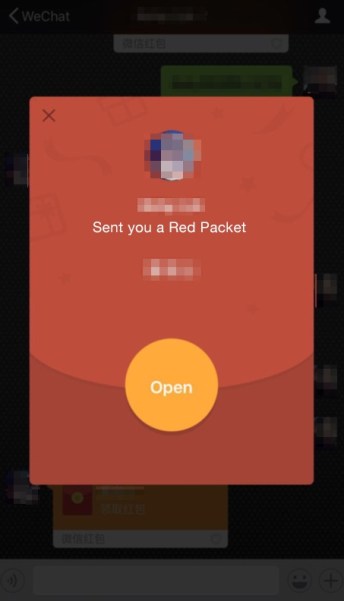
In fact, mobile apps facilitate many e-commerce and personal payments, not just holiday gift traditions.
Mobile payments are gaining ground around the globe, sometimes aided by government actions to remove obstacles, as India is doing. In-store mobile payments are also increasing, with Chinese shoppers especially enthusiastic about the convenience and speed.
French shoppers are less enthusiastic, however, and German shoppers are not adopting mobile payments in large numbers either.
In the UK, mobile payments are more popular than in many other markets. Why? One reason is that credit and debit cards are widespread in the UK, so linking them with a mobile payment app streamlines the process and makes everything simple. Also, national retailers like Tesco have their own mobile payment plans, which encourages shoppers to try when they buy.
Now Oxfam and other UK charities are inviting cashless mobile payment donations, making it convenient to give a small preset amount with just a tap or swipe or click.
Sunday, 1 January 2017
Mind the gender price gap
PRICING: SAME FOR MEN AND WOMEN?
This review has reassured us that for Boots own brands the two reported examples, Boots disposable razors and Botanics eye roll-on, are indeed exceptional cases which do not completely meet our principles and we are taking action to correct these prices.Now Tesco has also changed its pricing so razors cost the same for men as for women. It said: '...following an internal review and discussions with our suppliers, we have acted on concerns about the difference in price of our female and male disposable twin-blade razors, in line with our commitment to ensure consistently low, simple and affordable pricing.'
In 2017, more retailers are likely to follow this model and eliminate the gender price gap (sometimes known as the pink tax) so that functionally equivalent products are priced the same, regardless of whether the target market is male or female. But this same pricing trend is not as widespread among hair stylists. How many other product categories will move toward gender-neutral pricing in 2017?
Friday, 14 October 2016
Product pricing and Brexit

As a result of Brexit, the value of the pound sterling has slumped, and Unilever is trying to increase the price of some products by an average of about 10% to compensate for the slump.
Inventory on Tesco's store shelves dwindled as the grocery giant fought Unilever over pricing. Media coverage of the battle raised the possibility that Tesco's shoppers might be unable to find beloved brands like Marmite and Ben & Jerry's.
Tesco resisted Unilever's price increase by emphasising its role as championing low prices on behalf of consumers. Unilever explained that its supply costs are increasing, profits are going to be affected and therefore product pricing must be adjusted.
After a 24-hour standoff, Tesco and Unilever announced that the dispute had been resolved and shelves would be full of the brands shoppers want.
Expect more announcements about wholesale pricing as other producers seek to counteract the slump of sterling by increasing prices, if possible.
Monday, 10 October 2016
Start-up success requires product expertise, thoughtful targeting

Brighter Foods was recently named Wales Start-up of the Year. Founded in 2014, the company specialises in healthy snack foods. Brighter Foods was also named food and drink start-up of the year and manufacturing start-up of the year for 2016.

It targets consumers who seek out snacks that are healthy and taste good. Among its products are snacks with high fibre, low fat, no dairy and/or no gluten. This is a fast-growing segment of the market and a promising target opportunity for an ambitious business seeking to expand sales.
In addition to contract manufacturing, Brighter Foods developed and now markets its own Wild Trail brand of snack bars, which are gluten- and dairy-free.
Wild Trails is being marketed via a microsite and is also available at Tesco, a channel partner that can help build brand awareness quickly. What product innovations will Brighter Foods introduce in 2017 to maintain its growth momentum?
Sunday, 12 June 2016
Tesco refocuses on core businesses
 |
| From: Tesco Core Purpose and Values |
The company's new mission is: Serving Britain's shoppers a little better every day.
This mission statement defines the company's geographic realm (Britain--no more US convenience stores or South Korean grocery stores). It also emphasises value as a core benefit for shoppers. Finally, it defines customers as shoppers. Shoppers can be bank customers, too, by the way.
Not surprisingly, Tesco just sold its Giraffe restaurants, which it had been both standalone and in-store businesses. The company operates 6,900 stores and bank branches, with yearly revenues of £48.4 billion.
Committing to a mission focused on shoppers also means Tesco is adjusting profit expectations. Grocery retailing is a low-margin business. Price wars (several times a year) often sap profits even further as Tesco fights to defend market share.
What's next for Tesco?
Wednesday, 3 February 2016
Vinyl sales spinning higher

Now some of the traditions from the LP era are returning, such as a separate chart for vinyl-based music.
Top musical artists like Adele are releasing new albums on vinyl. In fact, her album 25 was the top-selling vinyl record of 2015.
With the resurgence of vinyl, production is struggling to keep up with ever-higher demand. Many LPs are being pressed on old-fashioned equipment from decades earlier, kept alive by careful maintenance. More retailers (including Tesco) are adding vinyl LPs to their merchandise assortments.
Collectors are even more interested in rare vintage vinyl LP gems. In short, demand for vinyl sales is influencing demand for other goods and services. Record Store Day (16 April) should bring strong sales this year.
Monday, 14 September 2015
Using the Wayback Machine to Explore Online Marketing


Tesco's marketing evolved and by July, 2007, it was relying more heavily on images to attract attention (see screen capture at right). Notice the "RSS" at the bottom, allowing online visitors to subscribe to a Tesco 'feed'.

By the summer of 2009, Tesco's home page looked like the screen capture at left. The strapline 'Every little helps' is now in the lower right side of the home page.
In the summer of 2013, Tesco's home page looked different than it had in 2009, with social media icons prominently displayed at the top of the screen (see capture below).

Tuesday, 9 June 2015
Tesco reduces its global retail reach

Now, after the failure of the Fresh & Easy expansion in the US and a challenging accounting scandal, Tesco is exploring the sale of the Homeplus unit to reduce corporate debt and refocus on its other business interests. Private equity firms are preparing to bid, and the Hyundai Department Store group may bid, as well.
Despite this reduction in global retail reach, Tesco's retailing strategy still includes non-UK operations in India, Malaysia, Czech Republic, Hungary, Ireland, Poland, Slovakia, China and Turkey. It also offers financial services and marketing research services.
What does the Tesco brand stand for? The corporate site explains:
Today, our brand must be about more than simply function. It’s about the way we work, the values we live by, the legacy we leave. We can’t solve the world’s problems but we want Tesco to always do the right thing, to inspire and to earn trust and loyalty from all of our stakeholders.
Wednesday, 29 April 2015
Market share and competition in UK grocery retailing
 UK supermarkets are locked in an intense competitive battle that often focuses on price. According to Statista, Tesco maintains its market-share leadership with 28% of the UK market for groceries, followed by Asda, Sainsbury and Morrisons (12 weeks as of March 1, 2015). Aldi and Lidl are increasing their share as well, making the UK a highly competitive marketplace for all in the grocery industry.
 Morrisons has just made a change in its marketing plan: It will replace many self-service tills for express checkout of small orders with tills operated by staff members. The change in strategy is due to negative customer feedback about using self-serve for a few items. Surveys show that customers enjoy conversing with staff and they want speedy checkout when shopping for only a few items.
The CEO says: 'These checkouts - and our very helpful staff - will offer a quick and personal service, helping to keep queues low and improving thousands of shopping trips'.
Price wars are still the most visible element in UK grocery retailing, but convenience and personalised service are also important to customers. Now Morrisons (and its rivals) will watch customer behaviour to see reaction.
Friday, 24 April 2015
Tesco, Euphorium and the marketing power of bread

This month, Tesco announced it would purchase the business entirely, a transaction that will allow the supermarket to showcase its upmarket credentials to affluent shoppers. Just as important, having Euphorium bake breads on the premises will differentiate Tesco from its discount competitors--a key element when grocery retailers often rely on price rather than quality for marketing power.
Tesco has been struggling to redefine itself and regain its financial strength after stumbling with overseas expansion and other problems. Euphorium has earned a good reputation amidst increased consumer interest in high-quality food, and for Tesco, this in-store bakery will be a meaningful point of differentiation in the high-stakes grocery industry.
Thursday, 8 January 2015
Tesco's turnaround for higher turnover

Now the top UK grocery retailer is taking a fresh look at its business units and its store network. The goal is to cut costs so Tesco can prepare for revenue and profit improvement.
Not surprisingly, Tesco will close 43 unprofitable stores and halt plans for 49 new stores--which would have been giant stores not favoured by today's busy shoppers. The company is reducing its workforce, consolidating headquarters and making other changes to slash expenses. And, not surprisingly, it's selling Blinkbox, Tesco Broadband and other non-store ventures, which makes sense.
It is surprising that Tesco would arrange to sell Dunnhumby, its Big Data division, given how vital the data-driven Clubcard scheme has been to the company's long-term increase in turnover. Here's what the Tesco site says about Dunnhumby:
dunnhumby helps Tesco and our suppliers around the world to put the customer at the heart of decision making and thereby earn their lifetime loyalty. Their insights help us stock the right products, optimise prices, run relevant promotions and communicate personalised offers for customers across all contact channels.Tesco will, of course, continue as a Dunnhumby client.
Wednesday, 12 November 2014
Grocery retailing challenge: Competitors as stakeholders

As I say in my texts and here on the blog, competitors must also be considered stakeholders, because every rival can, directly or indirectly, affect the performance of its competitors. This is particularly true in the grocery retailing industry, where activities such as price-match guarantees directly affect what competitors do.
Sainsbury's situation shows this in action. To be competitive, Sainsbury (with 1200 UK stores) has to offer good quality at good prices, as well as making sure its stores are the right size and in the most convenient locations for customers.
Its competitors are using price wars as a key element in their marketing plans--which puts the pressure on Sainsbury to cut prices, too.
Sainsbury recently complained that a Tesco matching price promotion unfairly compared some Sainsbury products with Tesco products. The high court disagreed. But taking this to court indicates that Sainsbury is concerned about the effects of Tesco's price policies.
In fact, Sainsbury just announced a major price-cut promotion of its own to fight back against what competitors like Tesco and Aldi are doing to attract customers and increase market share. Competitors are, as this shows, influencing Sainsbury's decisions and performance.
Seeking to analyse its strengths, weaknesses, threats and opportunities, Sainsbury has revealed that up to 25% of its stores are either the wrong size or not in the right location. That presents a challenge because of the company's real estate commitments. Can Sainsbury improve its financial position, fix its store situation, keep prices low and improve profits? Stay tuned.
Tuesday, 4 November 2014
Retailers reveal consumer behaviour trends
Supermarkets and other retailers collect a massive amount of data about what shoppers buy, when they buy, how they pay, how often they shop, what time of day they shop and other details that help them analyse and understand consumer behaviour.
One of Tesco's highly valuable assets, in fact, is its Dunnhumby division, the tech engine behind its ability to utilise big data collected from Clubcard users' purchases.
 John Lewis recently released a listing of trends based on its analysis of customer purchasing patterns and marketing research survey results.
This is the first in an annual series of reports designed to reveal changes in consumer behaviour and explain the implications.
Introducing the report, Mark Price of Waitrose told The Telegraph: 'People are buying food for now. The notion that you are going to go and push a trolley around for the week is a thing of the past. It is fundamentally changing the market'.
In other words, UK shoppers are no longer preparing menus in advance and shopping for food once a week. Pressed for time, they're buying weekday convenience and, often, planning for food-on-the-go (not necessarily fast food).
On weekends, however, UK consumers like to splash out on leisurely feasts. Bold flavours are increasingly in favour. Many use social media to share food photos and comments about what they like and don't like, which can accelerate and intensify reactions to food products--and to stores.
With better knowledge of consumer buying habits and priorities, retailers can design stores to meet the new needs and order products that fit current lifestyles. Marketing in all media will reflect these influences and position the retailers as 'the' place to shop for today's shoppers.
One of Tesco's highly valuable assets, in fact, is its Dunnhumby division, the tech engine behind its ability to utilise big data collected from Clubcard users' purchases.

This is the first in an annual series of reports designed to reveal changes in consumer behaviour and explain the implications.
Introducing the report, Mark Price of Waitrose told The Telegraph: 'People are buying food for now. The notion that you are going to go and push a trolley around for the week is a thing of the past. It is fundamentally changing the market'.
In other words, UK shoppers are no longer preparing menus in advance and shopping for food once a week. Pressed for time, they're buying weekday convenience and, often, planning for food-on-the-go (not necessarily fast food).
On weekends, however, UK consumers like to splash out on leisurely feasts. Bold flavours are increasingly in favour. Many use social media to share food photos and comments about what they like and don't like, which can accelerate and intensify reactions to food products--and to stores.
With better knowledge of consumer buying habits and priorities, retailers can design stores to meet the new needs and order products that fit current lifestyles. Marketing in all media will reflect these influences and position the retailers as 'the' place to shop for today's shoppers.
Subscribe to:
Posts (Atom)