Showing posts with label market share. Show all posts

Tuesday, 4 September 2018

Discount train travel builds customer base

Italo (nick-named the 'Ferrari train') was founded in 2012 as a high-speed, low-fare direct competitor to Trenitalia, Italy's state-controlled railway system. The combination of low fares and speedy, comfortable travel has attracted millions of loyal passengers and given Italo a profit margin of more than 30%.

Some of these customers used to ride Trenitalia's trains and some used to fly Ryanair and Easyjet between Rome and Milan. Now Italo is adding more trains and extending its coverage to new destinations as its discount pricing structure has helped it grow to the second-largest train system in Italy.

Four price levels allow passengers to choose the value they're willing to pay for. Italo even has a frequent-rider loyalty reward scheme and a cobranded American Express credit card that offers upgrades and other benefits.

Watch for discount train travel to become more of a competitive challenge for railway systems and no-frills airlines in other European nations, as well.

Friday, 8 June 2018

Latest marketing strategy for Merlin

https://twitter.com/LEGOLAND_CA
Families with small children are the target demographic for Merlin Entertainments and its Legoland theme parks. The company recently opened a Castle Hotel next to its Legoland in California, a hotel that looks built from Lego bricks and features theme decor. 'It’s like painting the story and making you feel like you’re living inside a medieval castle', says a Merlin executive.

Some rooms are decorated for knights, others for wizards...a fun, magical theme-park feeling for families that stay overnight. The hotel is differentiated and memorable, definitely not a bland, ordinary place to stay. This supports the brand image, as well.

Of course, Walt Disney is the market leader among theme park marketers. Given the intense competition within this industry, Merlin is pouring on the marketing magic to attract families during the all-important summer holiday period. In fact, Merlin drew a record 66m visitors globally in 2017.

Now Merlin is focusing on building hotels next to Legoland theme parks to capture more revenue and increase profits. It will not invest as heavily in its Madame Tussauds attractions. Nonetheless, in London and New York, Madame Tussauds recently installed wax figures of the new Duchess of Sussex, a good way to stay in the public eye after the royal wedding.

Monday, 16 April 2018

Grocery retailers battle for UK market share

Aldi and Lidl, both based in Germany, have been steadily capturing market share in UK grocery retailing. Recent numbers show that Aldi has increased its market share from 3.9% at the start of 2014 to 7.3% at the start of 2018. Lidl, meanwhile, grew market share from 3.1% in early 2014 to 5.3% in early 2018.

From the perspective of traditional UK supermarkets like Tesco and Waitrose, the battle for market share has another challenge: pressure on profit margins. Aldi and Lidl are deep-discount grocers with no-frills stores. Not so for Tesco and Waitrose, which are full-service grocers. To be sure consumers can see the value in shopping at a full-service store, price promotions are often highlighted--and that cuts into margins.

In fact, price is a key element in consumers' perceptions of a store. Not long ago, Aldi overtook Waitrose as the favourite supermarket of UK consumers who were asked about satisfaction. Affordable prices would naturally be important to satisfaction.

Meanwhile, UK supermarkets will continue to face pressure from the deep discounters as Aldi and Lidl both plan to expand their store networks. At the same time, traditional supermarkets are slowing their store openings to maintain cost control. Will online grocery shopping be the competitive edge for traditional supermarkets? Possibly, as a growing number of UK shoppers try or continue buying food and household products without going into a store. Consumer behaviour is changing, and grocery retailers are learning to adapt so they can compete more effectively.

Monday, 18 September 2017

Private brands remain strong

M&S wines have won awards
The head of the UK grocery chain Morrisons observes: 'If people are feeling the pinch, they tend to shift out of brands to own [private] brands'. That's why, during the recent recession, private brands marketed by grocery retailers did so very well.

Traditionally, consumers switched to private brands to save money, and then switched back to manufacturers' brands once they felt less anxiety over economic circumstances.

Consumer behaviour these days indicates that despite economic recovery and consumers feeling more confident about spending, private brands continue to sell well. Private brands are helping Lidl--the deep-discount grocery chain--gain market share against traditional UK supermarkets like Tesco, just as they are helping Aldi

In fact, customers who can afford to buy manufacturers' brands often choose to buy private brands because they want both value and quality. At Marks & Spencer, for example, the store's brand of wine has won numerous awards, reassuring buyers that the quality is good, not just the price. The newest trend is toward premium private brands, reflecting the dual interest in value and quality.

This post updates the private brand discussion in Chapter 6 of Essential Guide to Marketing Planning 4e.

Monday, 7 August 2017

Top UK consumer brands of 2017

SuperBrands has released its list of the top consumer brands for this year, as determined by UK consumers.

Here are the top 5, along with a bit of news about each of these leading consumer brands.

5. Gillette - Gillette is facing competition from UK newcomer Harry's, which offers a subscription-based alternative to buying razor blades at retail. Backed by Procter & Gamble, Gillete's traditional strengths are positive brand recognition and product innovation.

4. Andrex - The well-known toilet-tissue brand is celebrating its 75th anniversary with nostalgia-laden marketing. Andrex enjoys high market share and has slightly shrunk its rolls to cut costs and fund product investments.

3. Rolex - Reinforcing its brand's luxury positioning, Rolex sponsors special events like the Rolex Fastnet yacht race and the Rolex Grand Prix at CHIO Aachen showjumping competition. These special events keep the brand top-of-mind in the target market.

2. LEGO - The recent Bricklive special event in Belfast offered LEGO fans the opportunity to build and to watch others build creatively. More than 10,000 brand fans showed up, some to build and many to enjoy seeing the process and the finished results--reinforcing loyalty and engaging fans.

1. British Airways - As part of a trend toward entertaining passengers (and the public), BA recently released a funny safety video starring celebs like Gordon Ramsay, 'Mister Bean' (Rowan Atkinson) and Gillian Anderson. The airline's CEO says he wants passengers to watch the safety video from start to finish. It's also a positive branding association.

Wednesday, 31 May 2017

Ryanair adds share, profits and partners

Not every marketer can achieve both higher market share and higher profits, but Ryanair's marketing plan has accomplished these two key objectives through price cuts.

By adding more jets and cutting fares to attract passengers, the no-frills airline has successfully boosted market share while forcing competitors to respond.

Even as Brexit proceeds, Ryanair is preparing for the future through partnerships with European airlines. The plan is to allow passengers to book longer-haul travel through Ryanair and connections with its partners, including Air Europa, Aer Lingus and Norwegian Air.

Ryanair's long-term goal is to be flying 200 million passengers yearly by 2024. Currently, the airline projects it will fly 130 million passengers in the next 12 months--with lower prices and higher profits.

This post updates the Ryanair case in Chapter 3 of my Essential Guide to Marketing Planning, 4th edn.

Tuesday, 28 June 2016

Marketing Starbucks in China

Continuing a look at global brands in China, this entry is about Starbucks, the US-based coffee shop company that has made lattes and espressos part of daily life all over the world.

Starbucks just opened a spacious flagship cafe in the new Shanghai Disney resort. This isn't the first Starbucks connected with a Disney resort, but it is the first of this ultra-modern design...with more than 100 employees to serve thousands of customers every day. The company says this will be the busiest Starbucks on the planet.

China is an attractive market for Starbucks because coffee consumption is still relatively low compared with consumption in other areas--which means a lot of growth potential as consumers adopt the 'coffee culture'. Starbucks already has 2000 cafes in China and plans to open 2500 new cafes over the course of 5 years.

To reinforce its brand image and provide an upmarket consumption and sampling experience, Starbucks plans a new Roastery and Reserve Tasting Room for Shanghai. Modeled on the tasting room near the company's headquarters in Seattle, this Shanghai location will demonstrate the roasting process and offer samples of various coffees and flavours.

Will consumers in China pay the luxury price for a luxury coffee often enough for Starbucks to profit handsomely from its investment? 

Wednesday, 10 February 2016

Fighting for sweet share of Easter purchases

Cadbury's traditional Creme Egg was part of the reason that sales of the company's Easter product range was lower in 2015 by £10 million. What happened? Parent firm Mondelez changed the recipe, angering loyal fans.

Contrast that to 2009, when Cadbury's sales were on the rise as UK consumers had a hearty appetite for chocolate Easter eggs.

Now Cadbury is fighting hard for a higher share of 2016 chocolate purchases as this year's Easter season approaches.

'To strengthen our positioning, we will continue to invest in power brands, launching new seasonal products and a brand new Easter pack design', says the marketing manager. To keep awareness high, the company recently launched a pop-up Creme Egg Cafe in London.

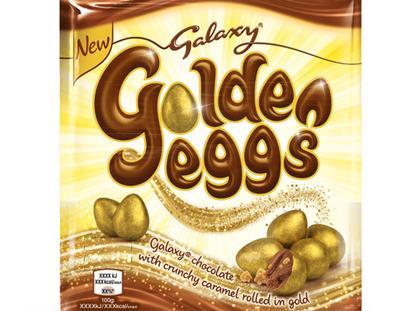
Meanwhile, competition is altering the marketing environment as Mars launches its new Galaxy Golden Eggs.

Knowing that approximately 80% of UK consumers purchase chocolate for Easter, Mars is targeting this large and lucrative market early--in direct competition with Cadbury Creme Eggs.

Wednesday, 29 April 2015

Market share and competition in UK grocery retailing

UK supermarkets are locked in an intense competitive battle that often focuses on price. According to Statista, Tesco maintains its market-share leadership with 28% of the UK market for groceries, followed by Asda, Sainsbury and Morrisons (12 weeks as of March 1, 2015). Aldi and Lidl are increasing their share as well, making the UK a highly competitive marketplace for all in the grocery industry.

Morrisons has just made a change in its marketing plan: It will replace many self-service tills for express checkout of small orders with tills operated by staff members. The change in strategy is due to negative customer feedback about using self-serve for a few items. Surveys show that customers enjoy conversing with staff and they want speedy checkout when shopping for only a few items.

The CEO says: 'These checkouts - and our very helpful staff - will offer a quick and personal service, helping to keep queues low and improving thousands of shopping trips'.

Price wars are still the most visible element in UK grocery retailing, but convenience and personalised service are also important to customers. Now Morrisons (and its rivals) will watch customer behaviour to see reaction.

Monday, 29 September 2014

Aldi and the UK price war in groceries

The UK supermarket price wars are intensifying as Tesco struggles with problems that range from hugely incorrect accounting to overambitious international growth.

Meanwhile, the discount grocer Aldi has been profiting from the latest round of price wars with the major grocery chains. Aldi's managing director says: 'The price cuts have encouraged consumers to think more about what supermarkets charge and have really shown that our everyday low prices can't be beaten'.

Everyday low prices, plus 'special buys' (announced via mobile app) that bring selected prices even lower, are helping to increase Aldi's market share week by week. Aldi is prepared to slash prices even further if necessary to attract new customers during the winter holiday shopping season.

In 2013, Aldi expanded by 42 new stores. In 2014, it is adding 54 new stores--and in 2015, more than 60 new stores. This runs counter to the current trend of retail chains slowing their store openings to focus on increasing revenues from existing stores.

However, Aldi has a definite growth strategy based on its competitive advantage of everyday low prices--and it will keep that advantage in the public eye no matter what competitors do. As its managing director says:
Whatever our competitors plan to do we know exactly what our response will be and our competitors do as well. We will not let them compete on price. We will not let them close the gap.

Thursday, 18 September 2014

Update on the Ferrari Train

Nuovo Trasporto Viaggiatori launched its Italo "Ferrari Train" high-speed rail service in 2012. The company competes with Trenitalia, the Italian state-owned railway, for passengers who want speedy, comfortable transport between major Italian cities.

NTV's stylish, modern trains introduced competition into an industry unaccustomed to rivalry. The company's long-term marketing goal is to carry 9 million passengers per year and capture as much as 25% of the market for high-speed rail service inside Italy.

However, NTV's Italo has not done as well as it had hoped in the first two years of operation. First, the European economy hasn't fully recovered from recession, which means fewer passengers in general and more intense competition for those who are willing to pay for high-speed train service. Second, NTV reportedly says that Trenitalia has set its prices at an unfairly low level. Third, Trenitalia is reportedly raising its operating network fees and the new, higher costs will further erode NTV's profit margins.

Although NTV is attracting passengers, it has lost about €156m in its initial two years of operation, and is looking at layoffs to cut costs. Achieving its market-share goal and becoming profitable will be extremely difficult unless NTV can overcome these challenges.

This post updates the case study about NTV Italo in chapter 7 of my Essential Guide to Marketing Planning.

Thursday, 24 July 2014

What happened when Tetley challenged a PG Tips advert claim?

Tetley Tea, owned by Tata Global Beverages, recently complained when a Unilever tea brand--PG Tips--aired an advert demonstrating one of its pyramid tea bags compared with a round tea bag. The advert said the pyramid tea bag gives PG Tips tea 'more room to move, freeing the great fresh taste'.

The stakes are high because tea bags are by far the favourite way for UK consumers to make tea. The UK tea market accounts for £500m in annual revenue. As a result, even a small gain in market share represents millions of pounds of revenue.

Brands battle for consumer attention and preference not only over taste but also over convenience, ease of use and shape/size of products. They watch each other's adverts and are alert to potentially misleading message points.

Tetley complained that the PG Tips ad was misleading and denigrated its brand. The Advertising Standards Authority checked into the situation, reviewing both Tetley's tests and PG Tips' tests. Its response:
  1. The pyramid tea bag demonstration would not be misinterpreted by consumers as a scientific experiment. PG Tips' tests supported the claim that infusion of tea at 40 seconds and two minutes into the brewing process was more efficient with a pyramid bag compared with a round bag.
  2. The pyramid shape was, according to PG Tips tests, more efficient at brewing. The shape of the tea bag did indeed give the tea 'more room to move'.
  3. Several brands market round tea bags. Therefore, the PG Tips ad wasn't specifically targeting Tetley in a negative way or denigrating the brand.
In other words, Tetley's complaints were not upheld and PG Tips was allowed to continue airing the advert.

Both are social brands: the Tetley Tea Folk have 525,000 Facebook likes, PG Tips has 437,000 likes.

Wednesday, 23 April 2014

Dell's Distribution Strategy in India

Dell was founded in 1984 by Michael Dell, a college student who sold build-to-order PCs from his dormitory room. Three years later, the fast-growing company opened its first international division, in the United Kingdom.

Today, despite intense competition from tech leaders like Apple, Lenovo and Hewlett Packard, Dell has ambitious marketing plans for future growth in overseas markets like India.

The PC market in India showed some growth in 2013 but 2014 is not expected to be as strong. Dell is the second-largest PC marketer in India, with an estimated market share of 13.2%. The largest PC marketer, Hewlett Packard, has an estimated market share of 28.5%, more than double Dell's share.

To increase share and boost brand availability outside of major urban areas, Dell's distribution strategy in India relies on two key elements:
  • Targeting consumers, the company is doubling the number of Dell-brand stores in small cities and villages. These smaller markets are where Dell expects growth to be strong in the coming years, because PC ownership is not as widespread as in major urban areas. In addition, Dell is assembling laptops to keep in inventory, so distribution centers can ship laptops to the stores very soon after customers place their orders. In the past, Dell's build-to-order process minimised inventory costs--now, customers will receive orders more quickly, which in turn should increase customer satisfaction.
  • Targeting businesses, including partners, Dell is using a roadshow approach to bring its experts and products to major commercial centres like New Delhi and Mumbai. The objective is to increase support for channel partners, expand market coverage and demonstrate its ability to provide full solutions to commercial customers.

Thursday, 26 September 2013

VW gears up for the future

Volkswagen's iconic camper-van, above, is not going to be part of the German company's product line for much longer. Because of the difficulty of adding airbags to protect all passengers, the van is being dropped in favor of newer models and technologies that will help in the drive for future growth. This is part of VW's long-term goal of becoming the world's number one automaker by 2018.

China is VW's most important market these days, so the company is boosting production of the Golf and other models to meet projected demand. It's also investing more heavily in its existing joint ventures inside China, where the ever-expanding middle class segment has the income to buy new vehicles.

Meanwhile, European car sales have been slow but as the economic recovery continues, volume is likely to rise. Thanks to VW's large portfolio of brands, it remains Europe's top-selling car company. Its truck brand, Scania, reports healthy sales as fleet operators get ready for stricter emissions rules.

Like other automakers, VW is increasingly active in engaging car buyers through social media. Its UK website has links to Facebook (404,000 likes), Twitter (63,000 followers), YouTube, and Flickr. VW US has a popular Pinterest board, as well.

Saturday, 23 June 2012

Market share challenges

Companies often announce their long-term market share goals, not only to guide strategy but also to signal competitive aggressiveness and give stakeholders (employees, customers, suppliers and more) a very positive view of the firm's future. Of course, once goals are set, the firms must also measure and explain their progress toward these future targets.

Actually determining market share isn't easy for some industries or products . . . but it's very easy in the automotive market, where performance measures such as the number of car registrations are readily available. Numbers alone don't tell the whole story: it's important to look at trends over time and see the big picture of what's happening in the overall market.

The auto lobby group ACEA believes European car sales will again shrink this year, which means automakers will be fighting each other for sales there rather than increasing the size of the overall market. Given the difficult economic situation and the intense competitive rivalry, achieving share increases will be a real challenge.

Opel has been losing share in Germany since 2005. Now it has set a goal of reversing the trend and attaining a 10% share of that market in the coming years. Can Opel turn that goal into reality?

Meanwhile, South Korea's Kia and Hyundai are putting extra marketing muscle into connecting with sports fans in Europe, with the result that their market share is going up. As they continue to move upmarket, how deeply will these companies cut into the share of European car firms that have traditionally been strong in their home market?