Showing posts with label new product ideas. Show all posts

Monday, 8 February 2016

Entrepreneurs give marketing advice

Startups often have big ideas but little money, so marketing is vital to survival and growth.

Here are quotes from entrepreneurs about their marketing ideas and insights.
  • 'My service isn’t for everyone, it is for those who appreciate it for what it is'. Melissa Curley, founder of SocialBee, which puts on afternoon tea events for clients, large and small. Her marketing insight is that the target market is not everyone, only people who understand the benefits and value and are willing to pay for her service. 
  • 'Look for collaboration and you will find opportunities to grow'. Aaron Jones, founder of Fikay Fashion, an ethical clothing company that puts profits towards reducing poverty. His insight is that marketers can leverage the resources and ideas of partners to become bigger--a good idea for businesses of all sizes. 
  • 'Having a pet pig is what I’m known for, it’s what people I meet always want to know about and I’d like to think my business has some of the best qualities of pigs - being smart, sociable and down-to-earth.' Why Katy Pollard named her business Listening Pig Communications is an interesting example of how to stimulate conversation about you and your offering. She didn't brand her service 'pig' but instead added words that would convey more about what her business does.
  • 'Usually the original has the greatest value, and will be sought out, and this is the thought, as original creators, that we must cling on to'. Gary Lancet created the Bookchair, a bookholder that would reduce neck strain. Then he began to worry about competitors copying his unique design. So his marketing insight is to protect the innovation but also remember that first-mover advantage has meaning to customers.

Wednesday, 30 December 2015

L’Oréal aims for one billion new customers

Millennials often like to shop in stores but first, they research products online. That's one of the insights L'Oreal is using to support its global marketing initiatives and ambitious long-term goals.

The beauty company, which owns such well-known brands as Lancome, the Body Shop and NYX, has put more emphasis on e-commerce during the past year--and shoppers are responding. The CEO recently said that total e-commerce sales in 2015 will exceed one billion euros, out of total revenues of more than 22 billion euros.

Shoppers in many nations know and trust L'Oreal brands, in part because the company adjusts its products for the needs and preferences of each consumer segment. In fact, L'Oreal features stories of multicultural innovations on its corporate website. Digital is increasingly important to the company as it seeks to attract 1 billion new customers while differentiating itself from competitors all over the planet.

No brand stays the same forever, because the marketing environment is constantly changing, including customer needs and competition, as well as regulations, environmental concerns, product possibilities and materials.

The CEO walked through a redone Body Shop store not long ago, and then told the fashion publication WWD: "The problem is that we have to represent the brand so that it looks new and it doesn’t look like the old Body Shop. That was The Body Shop of our mothers or the Millennials’ mothers and they [millennials] want their [own] brand." Which is why L'Oreal has revamped Body Shop so it represents its brand values in a way that's relevant to younger shoppers, emphasising ethical sourcing, value for price paid, function as well as fashion, natural ingredients and environmentally-friendly products and processes.

Monday, 7 December 2015

Marketing and creativity

Whether you're developing a marketing plan or looking for a new marketing idea, here are a few sites to check for inspiration and information:
  • Brand Republic's best digital campaigns - Shown at left, selected mobile, social media and online marketing campaigns.
  • Mobile Marketing Magazine's Innovation Lab - A weekly review of some of the week's tech innovations. Recent innovations pictured include cardboard guitars, sweat-powered clothing and invisible keyboards.
  • Think with Google's Creative gallery page - Articles and advice about advertising, social media, branding and other creative marketing activities.
  • The Drum's creative page - Articles and opinion about advertising, brand creativity and media innovations.

Monday, 2 March 2015

Unilever and Procter & Gamble crowdsource innovation

Unilever--known for its portfolio of food, personal care, and household products--has established a special crowdsourcing site to invite ideas for new products and new technology, as well as to invite applications for venture funding.

The Unilever Foundry is designed to accelerate acquisition and implementation of new crowdsourced products/technologies 'ten-fold' within 5 years. This Unilever site has a dedicated Twitter feed for news about innovation and venture funding.
Procter & Gamble, one of Unilever's key competitors, has its own innovation site, P&G Connect & Develop, also for crowdsourcing ideas to meet the company's needs, including marketing content.  P&G has a special Twitter account devoted to crowdsourcing, as well.

How far can companies go in crowdsourcing innovation?

Wednesday, 18 February 2015

New LEGO set: Crowdsourced Doctor Who

Finally, Doctor Who fans will be able to assemble the Tardis one LEGO brick at a time. LEGO crowdsourced this new product through its LEGO Ideas website, where brand fans are invited to submit ideas and then the community members vote for their favourites.

Product ideas that receive 10,000 or more votes move ahead to the next stage in the process: A formal review by LEGO's experts, who test each set, assess the potential marketing opportunity and determine how the new product might fit in the current product mix.

Only a handful of ideas are chosen for production during the year and this is the year for Doctor Who. Of course, LEGO had to negotiate a license, because the BBC owns the intellectual property rights. The current Doctor, Peter Capaldi, will be depicted on one of the minifigures, but other decisions (such as a companion figure and other characters) remain to be announced. Will Daleks be included with the set? Stone angels? Stay tuned.

Friday, 30 January 2015

Can new McDonald's CEO bring fresh ideas to fast food?

McRib sandwich, a limited-time menu item that's a cult favourite in UK and US markets
Under Steve Easterbrook as CEO, McDonald's UK has reinforced a more local brand positioning and tested new products and promotions for the changing customer profile.

Now Easterbrook is moving to America to become CEO of the entire McDonald's business, which faces significant challenges such as intense competitive pressure, overall sales declines and increased customer interest in healthy eating.

Many of the innovations that helped McDonald's build sales in the UK may be implemented across multiple markets. For example:
  • Crowdsourcing new products. McDonald's asked customers to build their ultimate beef burger, and then featured the 5 winning "My Burger" product ideas during autumn of 2014.
  • Increasing transparency about food sourcing. To help customers understand what's in McDonald's meals, it established a special section on its website called 'What Makes McDonald's?' In addition to posting videos about agriculture and other sources of production, McDonald's invited questions from the public. This is also being done at McDonald's Canada.
  • Healthier eating. McDonald's UK encourages healthier eating with 'Free Fruit Fridays'. Once a month, children get a free bag of fruit with the purchase of a Happy Meal.
Easterbrook sees potential in marketing meals customised for each customer: 'People’s desires are changing. They want to be treated as individuals, not as numbers'.

Tuesday, 13 January 2015

Among UK New Product Winners: Ella's Kitchen

The Grocer presents new product awards every year, for the best food and for non-food products introduced during the previous year. Entries for 2015 are now open. Categories include coffee and chocolate drinks, dairy drinks, fish products, frozen desserts, laundry products, infants' products, soups, and teas and infusions, among others.

Who were the winners in 2014? Both large and small marketers entered and won. Cadbury was a winner in the chocolate confectionery category; Persil won in the laundry category.

Among the smaller companies to win in 2014 was Ella's Kitchen (winner in the infants' category). Named after a real baby named Ella, the company markets a range of organic baby food.

Paul Lindley is the founder of Ella's Kitchen and also Ella's father. He had an idea for marketing nutritious, all-organic baby food products to delight 'tiny taste buds' and tempt even finicky babies to eat. He also knew he needed colourful packaging to 'sell from the shelf'. Once Sainsbury's began to stock his products, the company gained national distribution.

Lindley had worked for Nickelodeon before becoming an entrepreneur, and this connection enabled him to arrange for free TV promotion in exchange for some of the firm's profits. As a result, Ella's Kitchen gained brand recognition and established itself nationally.

When Ella's Kitchen undertook global expansion, however, Lindley experienced considerably more competitive pressure in the US market. He sold Ella's Kitchen to Hain Celestial, known for its all-natural food products, and remained as the division head, using the parent's marketing muscle to boost Ella's Kitchen.

Today, nearly a decade after its founding, Ella's Kitchen is active on social media to educate and inform parents about nutrition and, of course, explain how its products are good for baby. On YouTube, for instance, the company posts videos about feeding babies, weaning babies and other topics of interest to families with infants. It offers Q&A with experts on its Facebook page and its Twitter page.

Wednesday, 25 June 2014

Swatch waits on smart watches but goes social

Since its founding in 1983, Swatch has been a pop fashion accessory brand. Lately, however, it's been looking toward high fashion for more cachet.

Through its connection with the British Fashion Council, Swatch has participated in London Fashion Week and is using London's creative scene as inspiration for new products. Its pop-up shop inside Harrod's not only features upmarket Swatch watches, it also provides fashion advice (how to tie a bowtie) and a pinball machine for some retro fun.

Interestingly, in this era of smart watches that track fitness and read text messages, financial analysts still see strong demand for timepieces that simply tell time and look smart. Swatch constantly invests in research and development to stay ahead of trends and identify the next new thing. For now, Swatch is going to wait to see how smart watches do in the consumer market before introducing its own. The Group CEO says: 'If a market for smart objects on the wrist really develops, then we'll be there'.

Knowing that social media are popular with male and female fashionistas, Swatch is very social on:

Thursday, 14 November 2013

LEGO: Ready for the holidays and the movies

Just in time for the holidays, LEGO is once again showing sophisticated displays built of plastic blocks in Covent Garden. This year's winter display is a giant snow globe filled with miniature versions of the London Eye, Big Ben and other iconic sites of the UK. Last year, LEGO built an advent calendar out of plastic blocks...all to show the creativity and versatility of a toy that remains on most "must-have" lists. In fact, according to experts, the 2013 top holiday toy list includes the LEGO City Coast Guard block set.

Yes, LEGO designs are big business. A new display of LEGO architecture at the Paisley Museum recreates many familiar sites from around London, from Olympic Park to St Pancras Station. Visitors will appreciate the ingenuity of the designs and go home inspired to build their own versions, or assemble something from the many available kits.

LEGO, the world's 2d-largest toy maker, stays on top through constant innovation. Designers hoping for a LEGO job arrive in Denmark every year to participate in a challenging two-day "recruit workshop." They receive a bag of LEGO blocks with instructions to build something that fits with a current product-line theme; they're asked to design mini-figures; and all the projects must be completed within a strict time period, working alongside other competitors for the few LEGO jobs that are to be filled. 

What's next? Early in 2014, watch for the LEGO movie being released by Warner Bros. and promoted by social media.

Tuesday, 22 October 2013

Reckitt Benckiser's Vision: Healthier Lives, Happier Homes

The mission of multinational household/health products giant Reckitt Benckiser is to make a difference by giving people innovative solutions for healthier lives and happier homes. The company, known for brands such as Mucinex, Strepsils, Dettol, Durex and French's, operates according to four values: achievement, entrepreneurship, partnership and ownership.

Now, updating the preview example from chapter 1 of my Essential Guide to Marketing Planning, here's more about Reckitt Benckiser's marketing plan for future growth.

The company is launching innovative products under established brands such as Nurofen to build profitable turnover in emerging markets like Latin America. CEO Rakesh Kapoor says: 'Scarcity is the mother of invention'. His point is that an abundance of resources is not needed to stimulate innovation--in fact, people become more creative when they don't have everything they need to develop a new product.

What about communications and creativity? Reckitt Benckiser's brands are now reaching online audiences through captcha advertising activities.

As at left, when an Internet user has to show that he or she is a person, not a bot, the captcha at right achieves that goal with a touch of brand-related whimsy. Users drag the rusty penny into the Cillit Bang cleaner--linking the brand with its benefit.

Finally, Reckitt Banckiser is currently considering a major strategic change: Whether to sell its pharmaceuticals business, which is under pressure from lower-priced products.

Wednesday, 9 January 2013

Marketers invest in tomorrow's partners

Some of the biggest names in business are putting money into tiny firms that have the potential to become key partners or suppliers sometime in the future. The firms making the investments aren't banks--they're multinationals that want to benefit from new ideas and new processes that indie startups might develop.

Here are a few examples:
  • Unilever Ventures has an 'incubation' programme to help small UK businesses that are developing innovative ways for customers to interact with brands via smartphone and social media.
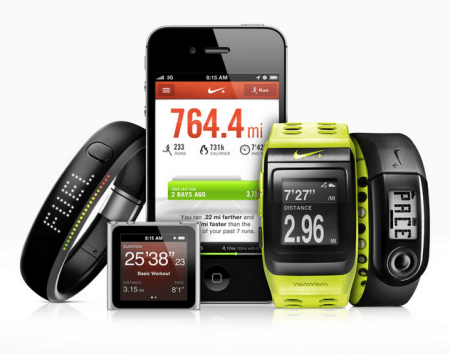
  • Nike is investing in tech companies that plan to use its Nike+ technology (see photo, right).
  • Procter & Gamble has joined with the University of Cincinnati in Ohio to fund a 'startup accelerator' for new businesses.
  • BMW has a New York-based venture capital unit to assist businesses that are developing mobile services offerings.
  • Intel Capital invests in firms that are working on new technologies, devices and software suitable for its chips.
What innovations will grow out of these investments? How many will be successful? And  will the marketers that invest in these startups gain a competitive edge from their association with the next new thing?

Monday, 29 October 2012

The trend toward multibranding

The company formerly known as Kraft (now Mondelez) is aggressively pursuing multibranding among its billion-dollar brands, such as by creating a chocolate bar combining its Oreo brand and its Cadbury brand. A Mondelez marketing director states: "Combining these two extremely popular brands to create Cadbury Dairy Milk with Oreo seemed like a natural fit and offers an exciting opportunity for retailers to help boost sales and capitalise on the phenomenal reputation of each brand individually."

Multibranding is also common among brands that aren't owned by the same parent company. For instance, Hindustan Lever is working with Future Group to create a cobranded line of baked goods for certain Big Bazaar stores in Mumbai.

This multibranding trend helps the brand owners build on image, recognition and loyalty to launch new products in the increasingly crowded marketplace. The brands may also combine financial and marketing resources to develop and launch new products, adding to their potential strengths. Finally, multibranding can help a new product attract the attention and support of retailers or other channel members, giving it a boost during introduction and beyond.

Thursday, 25 March 2010

New product ideas: think international


Think international! Marketers looking for new product ideas can get inspiration from unique products offered in other countries. These days, you can check out new products without leaving your keyboard--just search out blogs and web sites that feature products in different countries.

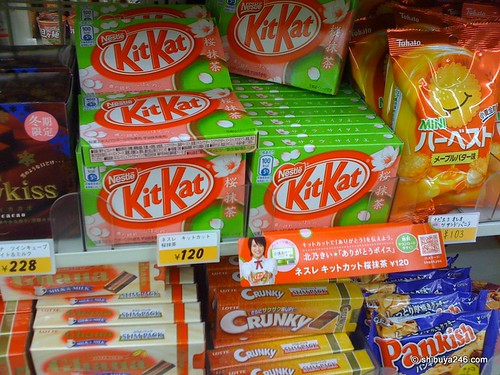
Here, for example, is a photo of Kit Kat bars in Japan, courtesy of the blog Shibuya246, maintained by Alan, a photographer and web consultant who has lived there for 20 years. These Kit Kats, new for the spring season, feature Sakura green tea flavor. Alan photographs new products every Monday and his blog can therefore be an endless source of ideas for snack products.

As another example, you can look at some of the latest new products worldwide by clicking through Mintel GNPD's photos. These only give you a taste of the products that Mintel covers in the full databases and reports available to subscribers. Still, browsing the photos alone can suggest starting points for new product possibilities.

Where in the world will your hunt for new product ideas take you?