Showing posts with label crowdsourcing. Show all posts

Monday, 3 October 2016

Inside the marketing plans of UK challenger banks

Challenger banks are recently-founded banks challenging the traditional UK high-street banks. As some high-street banks close branches and adapt IT systems to multichannel requirements, challengers begin with the latest technology and lessons learned by studying the established competitors.

Monzo is a challenger bank targeting digital-savvy customers. Originally named Mondo, Monzo operates no branches but instead delivers services electronically. Its marketing plan involves continuous customer input--asking for feedback on products for cocreation, and even soliciting ideas for the brand name Monzo. It hosts periodic get-togethers for customers to meet each other. 'People in corporates roll their eyes when startups talk about values and vision, but the brands who succeed are those who can define that for the people on the journey with them', says Monzo's head of marketing.


Another challenger is Metro Bank, founded by the experienced bank entrepreneur Vernon Hill, with retail branches that are open for extended hours every day of the week. Looking at the UK bank industry, he observes: 'There had been no entrepreneurial tradition in banking. Maybe there was 50-100 years ago, but there certainly hadn’t been one here for a long time'. So Metro bank's marketing plan is based on competing with convenience and friendly service, as well as multichannel marketing to allow customers to bank when and where they choose.

Also competing as a challenger bank is Atom Bank, which is digital-only, no branches. Its marketing plan relies on differentiation via customer focus. Customers can choose a personalised look for their Atom Bank app and even call the bank whatever they wish. Atom's CMO says: 'The traditional old banks constantly reference their relationship with its customers, but our brand strategy is about us helping people understand money much better'.

Saturday, 14 May 2016

The Art of the Trench in Its 7th Year

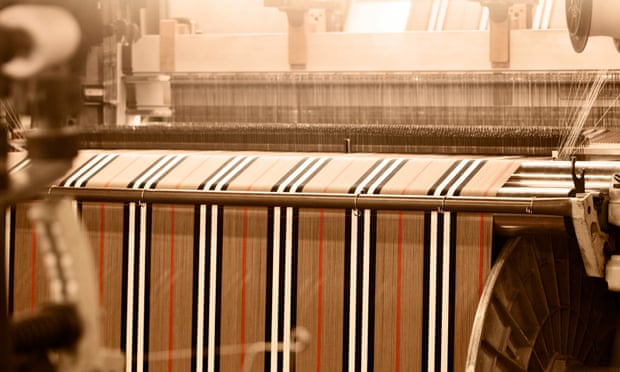
Burberry launched its crowdsourced Art of the Trench microsite in 2009. Anyone can submit a photo, as the above 'upload' detail indicates. The photos not only celebrate the trench, they also celebrate the art of personal style and the brand's heritage.

With the company investing heavily to build a new Leeds factory, 'Made in Britain' is both fashionable and a big boost to the local economy.

Trench coats remain in style decade after decade, with fashion updates. The Burberry trench is distinctive because of the careful hand-crafting of each detail, sewn in company factories by skilled workers who require as little as 6.5 hours to complete one trench, aided by tech extras.

Harrods, one of Burberry's channel partners, posted a style history of the trench last year. Focusing on the heritage and the craftsmanship supports the brand's upmarket image and reinforces the 'Made in Britain' message.

Friday, 6 May 2016

And the winner is . . . not Boaty McBoatface

RSS Sir David Attenborough
A new cutting-edge polar research ship is being built in the UK, and the public was asked to vote for a name (#NameOurShip).

Overwhelmingly, people voted for Boaty McBoatface but officials instead chose RRS Sir David Attenborough, which received far fewer votes but had strong backing from many. Yes, this is a dignified choice and quite appropriate.


Boaty McBoatface the sub
But Boaty will live on, as the name of a remotely operated yellow submarine carried aboard the new polar ship. Cheeky tweets about #BoatyMcBoatface suggested that the sub might be called Subby McSubface.

To see more about this unexpected ending to a highly public social media contest, just search for 'Boaty' on the Web or in Twitter.

The Science and Technology Committee will look into the contest results next week. The marketing lesson: Crowdsourcing doesn't always work the way you think. I still believe Boaty McBoatface should be licensed for children's toys, but Subby McSubface would work almost as well.

Monday, 18 April 2016

Boaty McBoatface sails into marketing history - as a brand license?

The votes are in and "Name of Vessel" is not going to be the name of this new polar research vessel.

The Natural Environment Research Council asked members of the public to suggest names for its new vessel, which will debut in 2019. It received a flood of suggestions--7,000 names--and the one that received the most votes was, yes, Boaty McBoatface.

Boaty was suggested by James Hand, once a BBC radio presenter. Whether the NERC will actually select Boaty as the name is in doubt, despite the 124,000 votes it received.

Crowdsourcing is often cited as a great way to increase customer engagement with a brand, product or company. And it has been used successfully by Walkers, for instance, during the popular 'Do us a flavour' promotions to choose the next new snack flavour. LEGO also likes crowdsourcing.

Will the NERC agree with the public vote and name its new vessel Boaty McBoatface? Maybe yes, maybe no. Either way, the new vessel will be in the public eye when it debuts.

My idea is to license Boaty McBoatface to a toy manufacturer. If Thomas the Tank Engine can be a big success, so can Boaty McBoatface the polar vessel. Wouldn't Boaty be a brilliant brand?

Boaty McBoatface is sailing into marketing history, in the 'crowdsource' chapter.

Monday, 2 March 2015

Unilever and Procter & Gamble crowdsource innovation

Unilever--known for its portfolio of food, personal care, and household products--has established a special crowdsourcing site to invite ideas for new products and new technology, as well as to invite applications for venture funding.

The Unilever Foundry is designed to accelerate acquisition and implementation of new crowdsourced products/technologies 'ten-fold' within 5 years. This Unilever site has a dedicated Twitter feed for news about innovation and venture funding.
Procter & Gamble, one of Unilever's key competitors, has its own innovation site, P&G Connect & Develop, also for crowdsourcing ideas to meet the company's needs, including marketing content.  P&G has a special Twitter account devoted to crowdsourcing, as well.

How far can companies go in crowdsourcing innovation?

Wednesday, 18 February 2015

New LEGO set: Crowdsourced Doctor Who

Finally, Doctor Who fans will be able to assemble the Tardis one LEGO brick at a time. LEGO crowdsourced this new product through its LEGO Ideas website, where brand fans are invited to submit ideas and then the community members vote for their favourites.

Product ideas that receive 10,000 or more votes move ahead to the next stage in the process: A formal review by LEGO's experts, who test each set, assess the potential marketing opportunity and determine how the new product might fit in the current product mix.

Only a handful of ideas are chosen for production during the year and this is the year for Doctor Who. Of course, LEGO had to negotiate a license, because the BBC owns the intellectual property rights. The current Doctor, Peter Capaldi, will be depicted on one of the minifigures, but other decisions (such as a companion figure and other characters) remain to be announced. Will Daleks be included with the set? Stone angels? Stay tuned.

Friday, 30 January 2015

Can new McDonald's CEO bring fresh ideas to fast food?

McRib sandwich, a limited-time menu item that's a cult favourite in UK and US markets
Under Steve Easterbrook as CEO, McDonald's UK has reinforced a more local brand positioning and tested new products and promotions for the changing customer profile.

Now Easterbrook is moving to America to become CEO of the entire McDonald's business, which faces significant challenges such as intense competitive pressure, overall sales declines and increased customer interest in healthy eating.

Many of the innovations that helped McDonald's build sales in the UK may be implemented across multiple markets. For example:
  • Crowdsourcing new products. McDonald's asked customers to build their ultimate beef burger, and then featured the 5 winning "My Burger" product ideas during autumn of 2014.
  • Increasing transparency about food sourcing. To help customers understand what's in McDonald's meals, it established a special section on its website called 'What Makes McDonald's?' In addition to posting videos about agriculture and other sources of production, McDonald's invited questions from the public. This is also being done at McDonald's Canada.
  • Healthier eating. McDonald's UK encourages healthier eating with 'Free Fruit Fridays'. Once a month, children get a free bag of fruit with the purchase of a Happy Meal.
Easterbrook sees potential in marketing meals customised for each customer: 'People’s desires are changing. They want to be treated as individuals, not as numbers'.

Friday, 6 June 2014

LEGO's marketing plan: new distribution, new products


On the last day of February, LEGO opened its largest European store on the grounds of Disneyland Village at Disney Paris. (The official Disney Paris site hasn't updated its 'coming soon' note about the new store, but the store's definitely open--it's listed in the LEGO store locator here.)

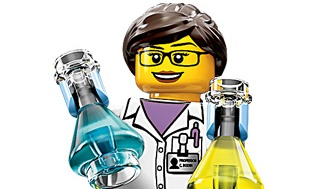
Increased distribution through company-branded stores is only part of LEGO's marketing plan for ongoing growth. The Danish company is also broadening its appeal by creating new minifigures featuring women as scientists (above, the chemist). The new minifigures were designed by a geochemist and submitted via LEGO's ideas crowdsourcing website, reviewed by the company's officials, and finally cleared for a new product introduction promotion in August.


Via this ideas website, several other new products are under consideration, including a Doctor Who block set, as shown above, and a set based on the US TV show Big Bang Theory. Watch for decisions in a few months. Given the immense popularity of these TV shows, new LEGO sets may tap into the adult market as a targeted segment, in addition to the traditional children's market for building blocks.

Wednesday, 6 February 2013

The international flavour of 'Do us a flavour'

Remember when consumers voted to add Builder's Breakfast (a flavour invented by a brand fan) to the Walkers crisps range in 2009? Although the flavour was discontinued a year later, the contest has continued to draw public and industry acclaim, winning awards and helping parent company PepsiCo benefit from the cocreation involvement of crisps fans across the continent and beyond.

Based on that initial success with Walkers, PepsiCo has held 'Do us a flavour' contests in more than a dozen countries, including Spain, Poland and Australia. When Lay's Belgium invited consumers to submit a flavour, the contest result was higher brand engagement and higher sales.

Currently, the contest is running in the US, where the finalist flavour will be announced later this year. Launched with a major media push in New York's Times Square last year, the Lay's contest will promote the winning flavour in connection with the brand's 75th anniversary.


This week, PepsiCo announced it would begin the contest in Canada, again making social media a central element for messaging and voting. 

Whether the crowdsourced flavours become permanent members of the product range is not the point. 'Do us a flavour' is intended to get brand fans involved in the fun and excitement of choosing a new flavour while reinforcing the brand's contemporary image.

Wednesday, 27 October 2010

Unilever and Crowdsourcing

Earlier this year, Unilever invited consumers to submit movies (really, commercials) focused on the values of its 13 major brands. You can read about its global partnership with MOFILM here.

The results are in, announced at the London Film Festival (and on Unilever's Web site, Twitter feed, etc), and the winners are quite impressive. This is not only a wonderful way to involve consumers in the company's brands, it also gives Unilever access to new creative ideas and approaches. Watch for more crowdsourcing by major companies in the future.

Thursday, 19 August 2010

The wisdom of crowdsourcing

Companies large and small around the world are trying crowdsourcing for new-product ideas, brand fine-tuning, and other marketing efforts. Waitrose is crowdsourcing its newest dessert. Unilever crowdsourced a TV advert for Peperami. BT crowdsourced the next plot turn in its Adam and Jane campaign. Trek Light Gear, a small business, crowdsources new product concepts.

Crowdsourcing is a popular way to get customers more involved in brands, hear the 'voice of the customer' unfiltered, save money and support the marketing planning process.

Customers are also using crowdsourcing to sift through marketing claims, seek brand recommendations, get peer reaction to products and more via social media. With the click of a mouse or a few taps on their mobiles, they can ask the crowd (or be part of the crowd providing marketing thoughts to companies).

Remember, however, that customers don't always know what they would like in a product or communication, and they can't always articulate their thoughts in a way that marketers can interpret correctly.

The bottom line: Although crowdsourcing can potentially lead to good insights, don't over-rely on the wisdom of crowds when researching and executing a marketing plan.