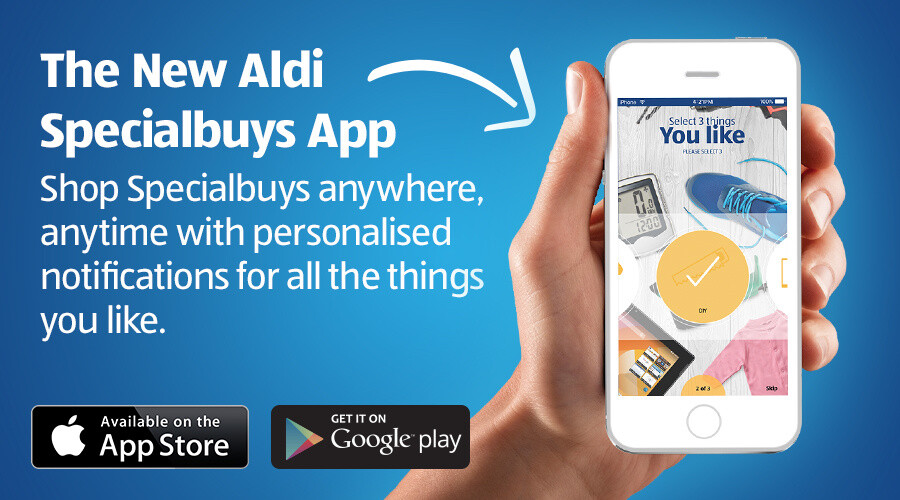
Aldi, the deep-discount grocery chain based in Germany, is known for low prices on brand names and on non-branded merchandise. In fact, Aldi offers a Shop Specialbuys app to alert shoppers when their favourite products are going on sale (get ready to 'swipe and shop').
A former exec who helped set up Aldi in Australia explains the retailer's strategy: '. . . the deal between the supplier and Aldi is; first Aldi will take a
larger pack size, often a pack size that is exclusive to Aldi so some
economy is represented here and that Aldi does not embarrass other
bigger retail customers . . . of the brand with its
selling price'.
Now Aldi's head in Australia notes how the company's expansion has affected retail pricing: 'Our prices are always the lowest, so we have observed the market getting
a little sharper in prices … at the same time as our competitors have
been lowering prices, we have as well'. Aldi's expects to continue acquiring market share in Australia, aiming for as much as 15% of that market within a few years.
One way competitors are fighting back is by not only increasing their private brands but in some cases, by blurring the line between national brands and private brands. Woolworths in Australia recently relaunched some of its store private brands without highlighting the retailer's brand ownership on the front label. Products formerly branded prominently as 'Woolworth's Gold' now bear the brand 'Gold' on the front label, for example, with the Woolworth name on the back label.
Woolworth says it has been fine-tuning its Australian private brands: 'Over the last year we sought insights from our customers as we looked to
enhance our range of products. Woolworths branded and non-branded
ranges reflect our commitment to quality and value'.
Meanwhile, Aldi's low-price grocery rival in Germany, Lidl, is moving further into markets where Aldi has established itself--such as the US market. 'We are in the early stages of our preparation to launch in the U.S., and
our focus right now is in our operations along the East Coast and
opening our first stores no later than 2018', says a Lidl exec. Lidl competes against Aldi by opening larger stores and stocking a wider assortment of merchandise compared with Aldi.
Watch for price wars when Aldi targets a market--and watch for competing stores to slash prices or risk losing shoppers who follow the bargains.
Monday, 7 November 2016
Friday, 4 November 2016
New pound coin, new update for UK marketing plans
Businesses and government agencies should already have new marketing plans in place as they prepare for the new pound coin, shown above. The coin was announced more than a year in advance, with occasional information updates released to the public.
From March 2017, this distinctive 12-sided coin will be legal tender for any purchase. This is an especially important issue for operators of vending machines, ticket machines and parking meters. Any marketer that operates any of those machines has to plan now to adapt to the new coin.
The old coins will still circulate until September 2017, giving businesses and consumers time to make the change. Machines don't have to accept both coins, just one or the other (and notify consumers which will work) during March through September.
This new coin introduction has nothing to do with Brexit, yet it also introduces an element of change into the marketing environment. Not only do machines have to be adapted to the new coin, banks and retailers must use internal marketing to educate their employees to respond to customer questions, requests and confusion.
From March 2017, this distinctive 12-sided coin will be legal tender for any purchase. This is an especially important issue for operators of vending machines, ticket machines and parking meters. Any marketer that operates any of those machines has to plan now to adapt to the new coin.
The old coins will still circulate until September 2017, giving businesses and consumers time to make the change. Machines don't have to accept both coins, just one or the other (and notify consumers which will work) during March through September.
This new coin introduction has nothing to do with Brexit, yet it also introduces an element of change into the marketing environment. Not only do machines have to be adapted to the new coin, banks and retailers must use internal marketing to educate their employees to respond to customer questions, requests and confusion.
Labels:
coin,
internal marketing,
marketing plan,
pound coin,
vending machine
Wednesday, 2 November 2016
How L'Oreal uses apps for product marketing
The global cosmetics giant L’Oréal markets dozens of beauty products in the luxury product category (such as Lancôme), professional products (such as Redken), mainstream consumer products (such as Maybelline New York) and active products (such as Vichy).
Now the company is leveraging apps to deliver information and product benefits to consumers and professional customers:
- Hair Color Genius and Makeup Genius are apps to help consumers try and select the best hair and skin products for the looks they want. Makeup Genius, available for several years, has been downloaded more than 20 million times worldwide.
- Targeting beauty professionals, the company's 'Style my hair' app shows the right products for each hairstyle and situation. Hair professionals select the client's face shape, virtually test cuts and colours, and demonstrate how to get that perfect look.
- Another app for professionals is 'Matrix Academy', a virtual reality simulator that helps professionals learn the latest techniques for contemporary hair styles.
- For consumers, L'Oreal offers a 'My UV Patch' app that works together with its La Roche-Posay sunscreen product, to monitor UV exposure and protect skin.
Labels:
apps,
beauty products,
L'Oréal,
marketing,
product trial,
targeting
Tuesday, 25 October 2016
Poundland's pricing strategy
From time to time, Poundland offered special deals over the one-pound price (see "Replay DVD" here). But recently, Poundland posted store signs announcing more value deals, meaning the sale of merchandise priced over the one-pound price.
Was the change in pricing strategy due to Brexit's impact on the pound? Poundland says Brexit is not to blame. The retailer is actually expanding its merchandise offerings: 'The rationale was to bring customers more value products than is possible at the £1 price point'.
In fact, Poundland is opening stores under the brand 'Poundland & More' to test the strategy of mixing £1 with a range of higher-priced value deals.
This post updates the Poundland example in the targeting and positioning section of Chapter 7 within my Essential Guide to Marketing Planning.
Labels:
Brexit,
positioning,
pound stores,
Poundland,
pricing,
retailing,
targeting
Thursday, 20 October 2016
What does a brand stand for?
Quick, what do you think of when you think of Kodak?
Maybe you remember Kodak's yellow and red film packaging...or other photography-related products.
Kodak is changing its brand associations, and today it describes itself this way: 'Kodak is a technology company focused on imaging'. For consumers, Kodak offers digital cameras, movie cameras, printers and more.
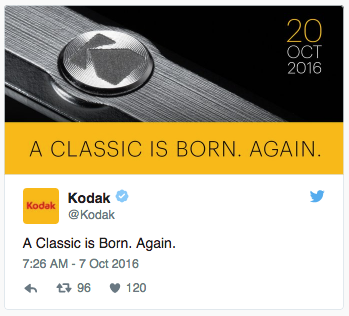
Can the Kodak brand be associated with smartphones? Kodak is aiming for that market. Last year, its brand appeared on a smartphone made by Bullitt. The phone didn't sell well. Now the Kodak brand is about to appear on a new smartphone, to be marketed as having a very good built-in camera. The new phone is called the Ektra.
Everyone takes photos with smartphones and tablets these days, right? Some famous photographers use their iPhones and rely on the quality, and Apple is definitely promoting the photography aspect for social media ease and professional use.
In other words, Apple has successfully associated its branded phones and tablets with high-quality photography.
Can Kodak do the same for its Ektra smartphone?
Maybe you remember Kodak's yellow and red film packaging...or other photography-related products.
Kodak is changing its brand associations, and today it describes itself this way: 'Kodak is a technology company focused on imaging'. For consumers, Kodak offers digital cameras, movie cameras, printers and more.
Can the Kodak brand be associated with smartphones? Kodak is aiming for that market. Last year, its brand appeared on a smartphone made by Bullitt. The phone didn't sell well. Now the Kodak brand is about to appear on a new smartphone, to be marketed as having a very good built-in camera. The new phone is called the Ektra.
Everyone takes photos with smartphones and tablets these days, right? Some famous photographers use their iPhones and rely on the quality, and Apple is definitely promoting the photography aspect for social media ease and professional use.
In other words, Apple has successfully associated its branded phones and tablets with high-quality photography.
Can Kodak do the same for its Ektra smartphone?
Labels:
Apple,
brand,
brand associations,
branding,
Ektra,
Kodak,
new product introduction,
smart phone
Friday, 14 October 2016
Product pricing and Brexit
Unilever and Tesco skirmished briefly about pricing this week.
As a result of Brexit, the value of the pound sterling has slumped, and Unilever is trying to increase the price of some products by an average of about 10% to compensate for the slump.
Inventory on Tesco's store shelves dwindled as the grocery giant fought Unilever over pricing. Media coverage of the battle raised the possibility that Tesco's shoppers might be unable to find beloved brands like Marmite and Ben & Jerry's.
Tesco resisted Unilever's price increase by emphasising its role as championing low prices on behalf of consumers. Unilever explained that its supply costs are increasing, profits are going to be affected and therefore product pricing must be adjusted.
After a 24-hour standoff, Tesco and Unilever announced that the dispute had been resolved and shelves would be full of the brands shoppers want.
Expect more announcements about wholesale pricing as other producers seek to counteract the slump of sterling by increasing prices, if possible.
As a result of Brexit, the value of the pound sterling has slumped, and Unilever is trying to increase the price of some products by an average of about 10% to compensate for the slump.
Inventory on Tesco's store shelves dwindled as the grocery giant fought Unilever over pricing. Media coverage of the battle raised the possibility that Tesco's shoppers might be unable to find beloved brands like Marmite and Ben & Jerry's.
Tesco resisted Unilever's price increase by emphasising its role as championing low prices on behalf of consumers. Unilever explained that its supply costs are increasing, profits are going to be affected and therefore product pricing must be adjusted.
After a 24-hour standoff, Tesco and Unilever announced that the dispute had been resolved and shelves would be full of the brands shoppers want.
Expect more announcements about wholesale pricing as other producers seek to counteract the slump of sterling by increasing prices, if possible.
Labels:
Brexit,
costs,
currency fluctuations,
grocery retailing,
pricing,
Tesco,
Unilever,
wholesaling
Thursday, 13 October 2016
What's in a brand?
Brands generally include a name and (in many cases) a symbol/logo. Branding identifies and communicates what the branded product stands for so customers can recognise it. Ultimately, marketers want consumers to understand the brand's identity and its meaning, respond to it and have an ongoing relationship with it via brand loyalty and repeat purchasing (see Chapter 8 of my Essential Guide to Marketing Planning).
If you've ever walked past a Marks & Spencer store, you know that the brand shown above the door is distinctive. The website shortens the name to M&S, but the typeface is the same as on the name above the door. Over the years, M&S has changed the look of its brand name, but the brand still stands for values like quality, choice and innovation.
Now some brands are trademarking words that they've used over and over in adverts. Specsavers, the well-known eyewear retailer, was able to trademark the word 'should've' which it uses in its adverts, as in the catchphrase 'should've gone to Specsavers'. This legal protection ensures that no one else will be able to use that particular wording for marketing purposes. Essentially, 'should've' becomes part of the brand associations for Specsavers.
Changing a brand symbol or logo is a big deal. BT is reportedly making changes to the look of its brand. Instagram changed its look earlier in 2016, with mixed reactions. Once people become accustomed to a brand or logo, and are loyal to that brand, not all will have a positive reaction to changes.
If you've ever walked past a Marks & Spencer store, you know that the brand shown above the door is distinctive. The website shortens the name to M&S, but the typeface is the same as on the name above the door. Over the years, M&S has changed the look of its brand name, but the brand still stands for values like quality, choice and innovation.
Now some brands are trademarking words that they've used over and over in adverts. Specsavers, the well-known eyewear retailer, was able to trademark the word 'should've' which it uses in its adverts, as in the catchphrase 'should've gone to Specsavers'. This legal protection ensures that no one else will be able to use that particular wording for marketing purposes. Essentially, 'should've' becomes part of the brand associations for Specsavers.
Changing a brand symbol or logo is a big deal. BT is reportedly making changes to the look of its brand. Instagram changed its look earlier in 2016, with mixed reactions. Once people become accustomed to a brand or logo, and are loyal to that brand, not all will have a positive reaction to changes.
Labels:
advertising,
brand,
brand logo,
brand name,
branding,
customer loyalty,
trademark
Monday, 10 October 2016
Start-up success requires product expertise, thoughtful targeting
Brighter Foods was recently named Wales Start-up of the Year. Founded in 2014, the company specialises in healthy snack foods. Brighter Foods was also named food and drink start-up of the year and manufacturing start-up of the year for 2016.
It targets consumers who seek out snacks that are healthy and taste good. Among its products are snacks with high fibre, low fat, no dairy and/or no gluten. This is a fast-growing segment of the market and a promising target opportunity for an ambitious business seeking to expand sales.
In addition to contract manufacturing, Brighter Foods developed and now markets its own Wild Trail brand of snack bars, which are gluten- and dairy-free.
Wild Trails is being marketed via a microsite and is also available at Tesco, a channel partner that can help build brand awareness quickly. What product innovations will Brighter Foods introduce in 2017 to maintain its growth momentum?
Friday, 7 October 2016
Purpose-driven marketing at Unilever
In other words, the consumer products giant believes in purpose-driven marketing.
One year ago Marketing Week named the top 100 firms for brand purpose--and at the top was Unilever.
Just weeks ago, Unilever arranged to buy Seventh Generation, a US-based brand of household cleaners known for sustainability.
Unilever's executive vice president for global marketing notes that brands need to be activist as part of their purpose: 'Consumers are really expecting brands to create movements. They want to be part of those movements', she explains.
Yes, the firm's brands seek to make a positive difference (via social responsibility, sustainability and so forth). And in the process, Unilever benefits by meeting customers' needs, increasing public trust and, ultimately, improving the bottom line. 'Fifty percent of Unilever's growth today is coming from brands that are acting on their purpose', the EVP says.
Monday, 3 October 2016
Inside the marketing plans of UK challenger banks
Challenger banks are recently-founded banks challenging the traditional UK high-street banks. As some high-street banks close branches and adapt IT systems to multichannel requirements, challengers begin with the latest technology and lessons learned by studying the established competitors.
Monzo is a challenger bank targeting digital-savvy customers. Originally named Mondo, Monzo operates no branches but instead delivers services electronically. Its marketing plan involves continuous customer input--asking for feedback on products for cocreation, and even soliciting ideas for the brand name Monzo. It hosts periodic get-togethers for customers to meet each other. 'People in corporates roll their eyes when startups talk about values and vision, but the brands who succeed are those who can define that for the people on the journey with them', says Monzo's head of marketing.
Another challenger is Metro Bank, founded by the experienced bank entrepreneur Vernon Hill, with retail branches that are open for extended hours every day of the week. Looking at the UK bank industry, he observes: 'There had been no entrepreneurial tradition in banking. Maybe there was 50-100 years ago, but there certainly hadn’t been one here for a long time'. So Metro bank's marketing plan is based on competing with convenience and friendly service, as well as multichannel marketing to allow customers to bank when and where they choose.
Also competing as a challenger bank is Atom Bank, which is digital-only, no branches. Its marketing plan relies on differentiation via customer focus. Customers can choose a personalised look for their Atom Bank app and even call the bank whatever they wish. Atom's CMO says: 'The traditional old banks constantly reference their relationship with its customers, but our brand strategy is about us helping people understand money much better'.
Monzo is a challenger bank targeting digital-savvy customers. Originally named Mondo, Monzo operates no branches but instead delivers services electronically. Its marketing plan involves continuous customer input--asking for feedback on products for cocreation, and even soliciting ideas for the brand name Monzo. It hosts periodic get-togethers for customers to meet each other. 'People in corporates roll their eyes when startups talk about values and vision, but the brands who succeed are those who can define that for the people on the journey with them', says Monzo's head of marketing.
Another challenger is Metro Bank, founded by the experienced bank entrepreneur Vernon Hill, with retail branches that are open for extended hours every day of the week. Looking at the UK bank industry, he observes: 'There had been no entrepreneurial tradition in banking. Maybe there was 50-100 years ago, but there certainly hadn’t been one here for a long time'. So Metro bank's marketing plan is based on competing with convenience and friendly service, as well as multichannel marketing to allow customers to bank when and where they choose.
Also competing as a challenger bank is Atom Bank, which is digital-only, no branches. Its marketing plan relies on differentiation via customer focus. Customers can choose a personalised look for their Atom Bank app and even call the bank whatever they wish. Atom's CMO says: 'The traditional old banks constantly reference their relationship with its customers, but our brand strategy is about us helping people understand money much better'.
Subscribe to:
Posts (Atom)