Showing posts with label Netflix. Show all posts

Thursday, 26 October 2017

Halloween haunts marketing campaigns

Halloween is an increasingly popular holiday in the UK. By one estimate, Halloween spending by consumers will reach £320 million this year.

Not surprisingly, to catch the eye of their targeted audiences and encourage viral sharing, more UK marketers are adding Halloween themes to their marketing. For example:
  • Coca-Cola's Fanta soft drink invites brand fans to use its 'spooky' Snapchat lenses and filters for Halloween messages (see above). Users scan the code on a Fanta can in order to participate. The head of marketing for Coke GB says: 'Halloween is a fast-growing sector in the UK and this is largely driven by millennials--Fanta's key demographic--making it the perfect occasion to engage with our fans'.
  • Top Shop is weaving Halloween themes into its in-store marketing. The retailer launched a clothing line based on Netflix's Stranger Things series, along with a limited-time pop-up shop recreating some sets from the series.
  • Spooky treats are traditional this time of year, and Marks & Spencer is marketing Colin the Caterpillar cakes in Halloween colors, with a bit of red icing for ghoulish fun.
  • Budweiser beer has a Halloween party pack for retail support that includes a variety of 'King of Fears' masks (given away by stores that sell the 'King of Beers'). The beer brand is also sponsoring a three-day holiday event at London's Magic Roundabout, featuring music, food and more.

Friday, 19 February 2016

Competitors as Stakeholders, Collaborators and Customers

COMPETITORS ARE STAKEHOLDERS


No matter what business you're in, your competitors are, without question, stakeholders. I've written extensively about this topic, including identifying the top four reasons here.

Remember, stakeholders are people and groups that can directly or indirectly influence or be influenced by a company's performance.

More and more marketers are viewing competitors as potential collaborators and certainly as customers, in the right situation.

Natalie Massenet, founder of the highly successful online luxury retailer Net-A-Porter, writes in Wired that this year, 'the most successful businesses will be characterised by collaboration between businesses in the same sector, different sectors or with their customers'. Her bottom line: 'Competition creates win-lose scenarios, but collaboration benefits us all'.

Netflix competes with Amazon in the market for streaming entertainment, yet Netflix buys its cloud storage services exclusively from Amazon Web Services. Why? Because Amazon has already solved the most challenging problems that Netflix would face if it built a cloud system on its own--and Amazon continuously improves the services that Netflix buys. So Netflix turns out to be an excellent customer for Amazon, and the relationship benefits both.

Notice that I'm not suggesting competitors collude to set prices or do anything else that is unethical or illegal. Competitors can and should be fierce rivals. Still, they can also consider collaborating when both parties would benefit or buy from each other when the situation makes sense.

Thursday, 6 March 2014

Entertainment streaming goes mainstream

Roku has just introduced a new product, the Streaming Stick, that plugs into a TV's HDMI port and allows easy streaming of programmes and movies via the BBC iPlayer, Netflix and more.

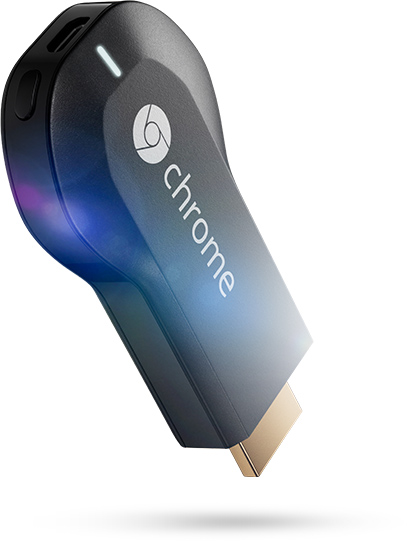
Like the Google Chromecast, which is widely available in the US but not yet on the market in the UK, the Roku's HDMI access is intended to replace a bulkier set-top box.

Apple TV competes with Roku and Chromecast, offering a compact unit that will stream content from iTunes, YouTube, Vimeo, Netflix and other sources.

In other words, more consumers are choosing to stream entertainment, accelerating trends reported in Ofcom's 2013 analysis of the media market. Consumers still watch TV but they also use a lot of devices to access content. And, of course, the tradition of watching TV live is eroding little by little. With on-demand content available for streaming at any hour, the viewing habits of the world are definitely changing. What will this mean for marketers who typically rely on TV adverts to communicate with viewers? Stay tuned.

Monday, 29 November 2010

Are DVDs Going, Gone, Gone?

Today's Guardian reports that the DVD industry is in crisis as sales of disks slump while consumers turn to on-demand viewing and downloads to networked devices such as iPads, iPods, video game consoles and other gadgets.

Just a few years ago, the DVD industry was extremely worried about piracy. Yet much of the download/on-demand entertainment viewing is paid, not free or pirated.

Despite the downward trend in sales, DVD rental sites such as LoveFilm and Tesco DVD Rental continue to attract customers in part because of the flexibility of delivery they offer. And stand-alone rental kiosks have some appeal, capturing impulse customers who want to take a DVD home for the day.

In the US, Netflix (see above) is a major market leader that has transformed the DVD rental industry and is using pricing to encourage online viewing rather than by-mail rentals. Recently it raised its by-mail subscription prices and introduced a budget-priced instant-viewing subscription option that will help the firm cut postal and delivery costs.

However, the outlook for DVD sales isn't entirely bleak. Videogames are a bright spot. All in all, reports of the DVD's demise are premature.