Showing posts with label digital music. Show all posts

Tuesday, 21 August 2018

Trends in UK consumer media usage

https://www.ofcom.org.uk/about-ofcom/latest/media/media-releases/2018/decade-of-digital-dependency
No surprise: UK adult consumers continue to be online for many hours of the day. According to Ofcom, which regulates UK telecommunications, they are online, on average, more than 24 hours every week. One in five UK adults is online 40 hours per week.

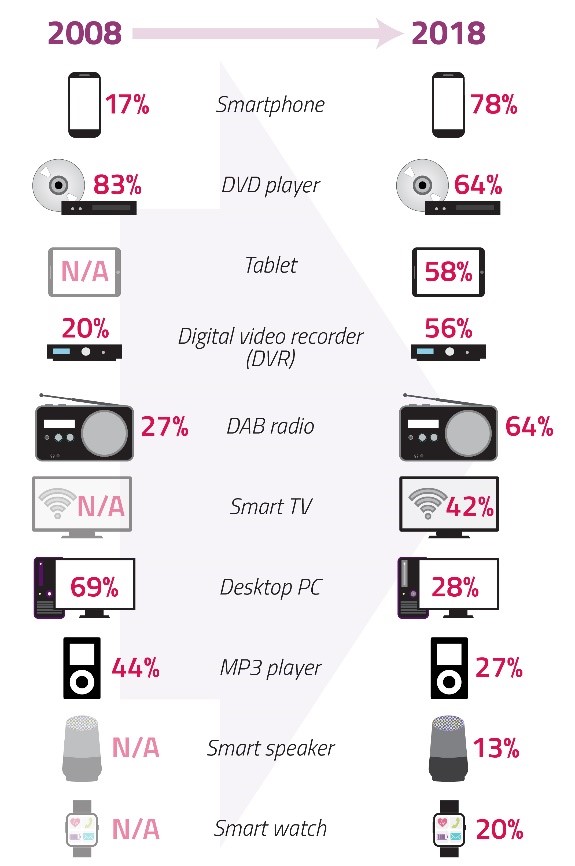
As shown in the chart above, fewer UK consumers are using desktop PCs. Instead, they're using mobile devices like smartphones and tablets (which were in their infancy in 2008).
Similarly, both smart watches and smart speakers are gaining in popularity--products that weren't available a decade earlier.

On the other hand, DVD players are losing ground, as are MP3 players.

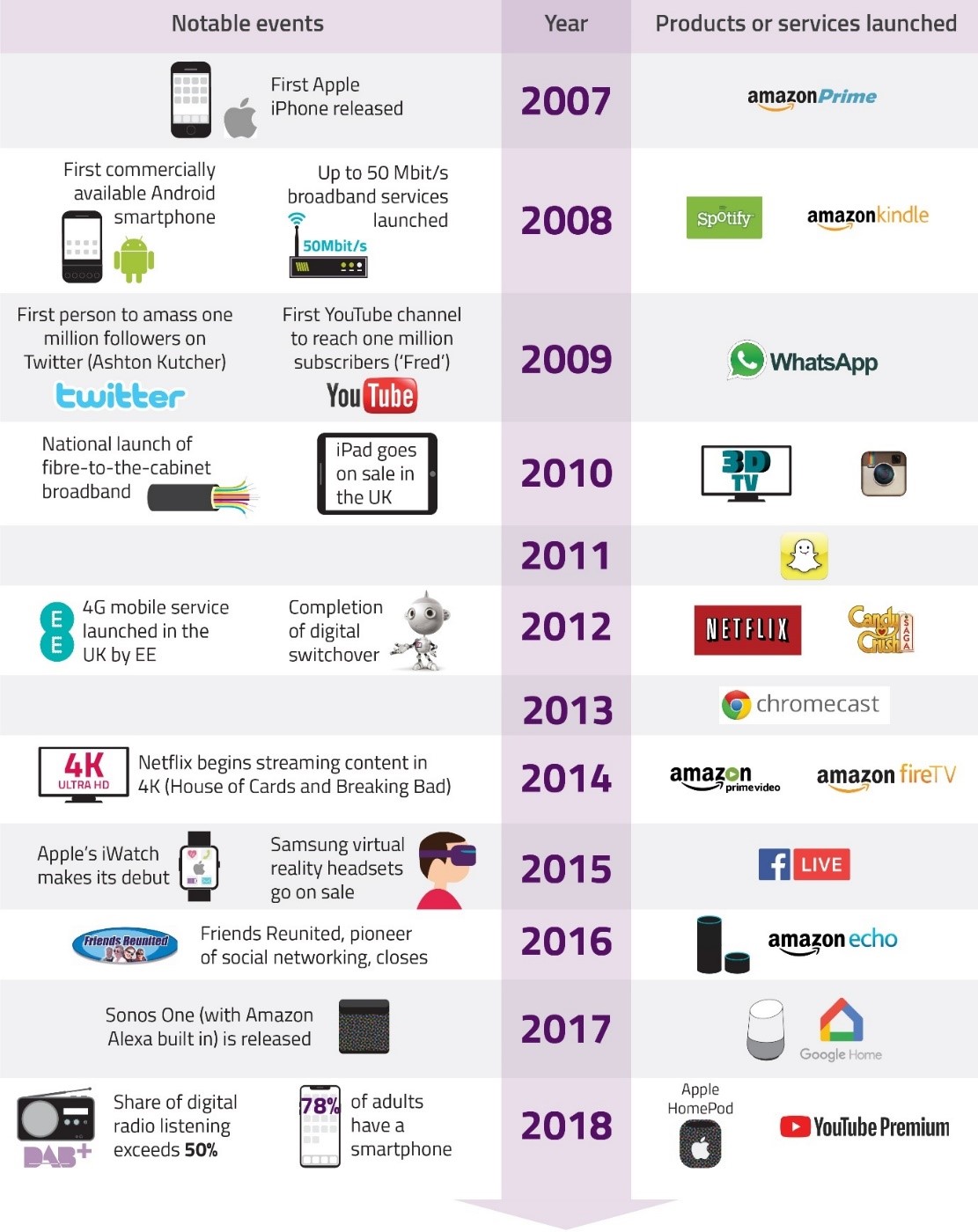
Ofcom presents this timeline showing what products and services were introduced, and when.

How many of the products and companies named in this infographic will still be going strong in 2028?

Note that eMarketer recently reported that UK consumers consume media for 9 hours and 23 minutes per day, on average. This covers books and newspapers, not just broadcast and digital media. No growth since the previous year, indicating overall media consumption is not growing. However, mobile usage is up, within that 'flat' media usage statistic.

Monday, 25 September 2017

Competing technologies in the digital age

https://en.wikipedia.org/wiki/Video_Killed_the_Radio_Star
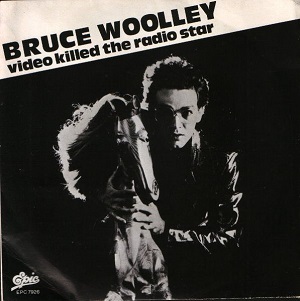
Sure, Video Killed the Radio Star. This isn't the only example of competition from new technologies, of course. Cassettes eclipsed reel-to-reel audio tape, then CDs eclipsed cassettes, then digital music eclipsed CDs, then vinyl returned in a wave of audiophile nostalgia, followed by cassettes. Streaming continues strong as many consumers enjoy music via multiple technologies.

Currently, vinyl sales in the UK market are 30% higher than at this time last year. Vinyl and other mature entertainment technologies have become popular enough in the digital age that eBay recently introduced a marketplace specifically for books, music, games and video.

Another product category affected by technology: postcards. Before the end of the 20th century, consumers were sending an estimated 20 million postcards every year. Now, however, competition from social media has resulted in barely 5 million postcards sent per year. Why pay for a postcard and postage, take time to write a message and pop it into the post for delivery days later--when you can post a photo or message immediately on Instagram, Pinterest, Facebook or another site? Postcard publisher J Salmon, founded in 1880, is therefore leaving the business.

Perhaps consumers will someday see postcards as unique communication vehicles and give them a go again, the way vinyl and cassettes have become newly popular. Meantime, marketers need to carefully monitor consumer behaviour trends and the impact on the business environment as competing technologies enter the marketplace.


Monday, 4 August 2014

Hello smart phone, goodbye camera, music player, sat nav . . .

The smart phone has become the go-to gadget for so many functions that it is pushing some established products into the decline stage of the product life cycle.

An article in today's Guardian lists a number of products and technologies that are in decline, thanks to the smart phone, including:
  • Mobiles. Plain vanilla mobiles are increasingly uncommon. Within six months, 80% of the UK market will be using a smart phone, rather than an ordinary mobile. A fraction of UK consumers will resist smart phones and retain their mobiles, but this type of phone is clearly in decline.
  • Landlines and pay phones. Who needs them? Landlines are more common than pay phones, of course. But even landlines are in decline as text takes over. As for the absence of pay phones, let's just say the Tardis will stand out in modern-day cities.
  • Cameras. Sales of inexpensive, stand-alone cameras are really in decline as consumers point and shoot with their smart phones. However, upmarket, feature-rich cameras (such as the new smart cameras and specialty 3D cameras) may attract photo enthusiasts, even those with a smart phone.
  • Music players. The Walkman is long gone, and sales of iPods are down, down, down. Apple's most recent results definitely show fewer iPod units being purchased, although a price cut for the iPod Touch has helped recent sales of that product. (Cutting price to prolong the product life cycle is a classic technique.) Smart phones are music players, so why carry an extra gadget?
  • Portable tape recorders. Remember when reporters used small cassette recorders to capture what interviewees said? There's not much market for a separate recorder when your smart phone can record voice or any other sound.
  • Netbooks. Small, portable, inexpensive. But now almost extinct.
  • Sat nav devices. With free sat nav apps available for smart phone users, individual sat nav devices are losing market share. No wonder the biggest sat nav brands have their own apps.

Wednesday, 2 January 2013

Vinyl album sales are up: Back to the future

What happened to album sales in the UK from 2008 to 2012? As shown above, overall album sales dropped, especially in CD form. Digital downloads, however, are much more popular than ever before--reaching £1bn last year for the first time.

The downward trend in album sales has been reported for some time, so it's not new news. Nor is this a UK-only trend: Around the world, digital downloads are surpassing CD sales.

Yet vinyl has become the music format of choice for many. In 2011, LP sales increased in the UK for the first time since 2005. In 2012, vinyl continued to gain in popularity, especially for collectible singles or albums. With special events such as Record Store Day, new and vintage vinyl should continue to sell well during 2013 and beyond as today's fans enjoy the retro look and acoustical quality of LPs.