Thursday, 1 October 2015

Marketing Byte Night 2015


Byte Night takes place Friday, 2 October. Thousands of people all over the UK (associated with large firms like Accenture, Dell and BT plus many smaller, local firms) will sleep out to raise money for Action for Children charity. The first Byte Night was in 1998, and this year, the charity aims to raise more than a million.

One key element of Byte Night's marketing is its social media presence. On Twitter, the group has 2,000 followers; on Facebook, it has 1,100+ likes; and on LinkedIn, more than 900 members. Action for Children has Byte Night digital marketing leading up to the event, as well. The campaigns use #ByteNight as a unifying hashtag.

Publicity is another key element, with news articles covering the event itself (where will sleepers be? what venues are participating? what is the money to be used for?) and individuals or firms that participate. Plus each firm has its own marketing to promote its involvement in Byte Night and encourage employees and customers to get involved. Harvey Nash has a page on its site explaining all about Byte Night, for instance. Fourth Day has its own page about Band Night.

All these marketing efforts (multiple messages, multiple media, one focus) work together to build awareness and engagement, encourage positive attitudes and actions, with the ultimate goal of raising money. Good marketing for a good cause, #ByteNight!

Monday, 28 September 2015

Online marketers and ad blockers

Online advertisers and content marketers are unhappy with ad blocking software that so many consumers have installed to filter out, well, ads. Annoyed by non-targeted or simply irrelevant ads, or impatient to see content they are waiting to see, 39% of UK consumers in a recent study were found to be using ad blockers to keep ads out of sight. When Apple recently released an updated iPhone operating system, ad blocker apps skyrocketed to the top of the App store ranking. 

But this means web sites don't have as many visitors who count as 'viewers' or 'exposures' to adverts. As a result, some are fighting back by blocking consumers who use ad blockers. At the very least, a number of sites are explaining why consumers shouldn't use ad blockers--namely, because ad revenue helps support quality content, and blocking those ads means revenue is lost to the sites that need it. With lower revenue, sites may have to reduce the quality content they post or find other revenue sources (such as subscriptions).

Other avenues exist for marketers to reach out to consumers in creative ways, with non-ad messages that build brands and reinforce image. Instagram is increasingly used by Nike and other brands, and Pinterest recently added a 'buy' button to facilitate shipping in the US. 

Watch for more innovations as ad blockers continue to be popular and marketers test ideas for engaging consumers in multiple digital media.

Friday, 25 September 2015

How UK advertising is changing

The UK market is the first in the world where £1 in every £2 of advertising spend goes to digital (online, tablet, and--significantly--mobile). In part, this is due to the unique ad-free nature of so much of the UK broadcast media (think BBC).

The full chart, from eMarketer, shows that below the 50% mark for the UK, digital in Norway is 45% of total ad spend, followed by China, with nearly 44% of total ad spend. For comparison, digital is only 31% of ad spend in the US--and a mere 28% in South Korea.

Worldwide, mobile advertising is expected to reach £100 billion by the end of next year, accounting for 51% of all digital ad spend. UK TV advertising continues strong, but print ads are not as strong.

Overall UK advertising spend is also increasing, exhibiting the fastest increase in four years. According to the Advertising Association/Warc Expenditures report, UK advertising spend reached £18,553 billion in 2014, with more than 5% growth projected in 2015 and 2016.

At the same time, UK marketers are choosing to work on some ad projects in-house, which will lead to higher consolidation among ad agencies and fewer agencies overall.

What will ongoing technological advances and changes in consumer behaviour mean for advertising in two years or five years in the future?

Monday, 21 September 2015

The art and science of marketing forecasts

Every marketing plan requires some kind of marketing forecast--usually, sales forecasts on a product by product OR brand by brand OR market by market basis. But how do you develop a reasonable forecast, especially when you're looking at something new or somewhat unpredictable?

Tetlock and Gardner, authors of Superforecasting: The Art and Science of Prediction, researched people who are more often correct than incorrect in their forecasts, and concluded that three things can improve a forecast:
  1. Don't make up your mind in advance. Instead, be open to new ideas and critically evaluate information. If you want to examine the market for doughnut shops in London, media coverage of National Doughnut Week's top trends can help you think about the ascendancy of doughnuts after years of the cupcake craze, for instance. Try not to rule out information that contradicts your initial thoughts on the forecast--instead, ask hard questions to test the data before relying on it.
  2. Identify the various elements that can influence the forecast. It's difficult to predict exactly how many doughnut shops will open in London next year, but easier to start by calculating the number of residents of London, the number who typically buy doughnuts and the number of doughnut shops already in existence. These statistics will help you consider what drives trends affecting consumption and business formation.
  3. Look at what others are forecasting. Find authoritative sources of information, examine their forecasts (element by element if possible) and see how your forecast compares. Here, you might track the number of new London-area shops opened by Krispy Kreme and other doughnut retailers, analyse how the number of new openings has changed by chain over the years and link this information to other developments in the marketing environment that affect doughnut consumption and retail expansion.

Saturday, 19 September 2015

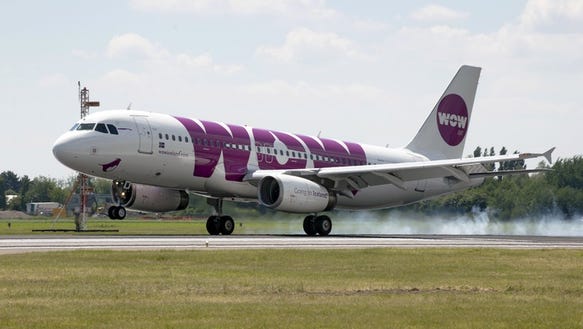
WOW uses low price for differentiation

Have you heard of WOW Air? It's a young no-frills airline in Iceland that offers bargain fares from London's Gatwick airport to two U.S. cities (via Reykjavik, Iceland, of course) and to a growing number of European destinations.

The three-year-old startup uses only Airbus A 320 and A321 aircraft, for standardisation and for fuel efficiency. Entrepreneur SkĂșli Mogensen recognises that costs are especially favourable at this moment for two key reasons: first, 'historically very low oil prices' and second, it's a buyer's market for aircraft, which 'is a great opportunity for us'.

As a result of low costs and for marketing differentiation, WOW offers highly discounted fares to attract cost-conscious passengers who are willing to pay extra for extras such as checking luggage and reserving a particular seat in advance.

Why use price as a competitive advantage? Mogensen explains: 'You ask people what’s important to them and they say things like seat pitch – but when they go online to book they don’t get any information like that: 80% of passengers just go for price'. The deepest discounts are offered on a very few selected flights and for limited periods, to encourage immediate customer response and reinforce the bargain image.

Yet competition in the airline industry is notoriously intense, and price wars can sap the profitability of any carrier. Even with a well-crafted positioning and lots of low-cost social media marketing (Twitter, Facebook, Pinterest, YouTube), can WOW Air break through the marketing clutter and fly high for the long term?

Monday, 14 September 2015

Using the Wayback Machine to Explore Online Marketing

If you're studying marketing, you should know about the Internet Archive Wayback Machine. It's a tool for understanding how different websites have changed over time--which means, in essence, how companies and NGOs have marketed themselves online on different dates.

Tesco is a good example. Above is a screen capture from the Wayback Machine, showing how Tesco's home page looked in July, 2004. The familiar Tesco logo and strapline are in place at the top of the page. Graphics are minimal, with the emphasis on links to specific product categories and services.

Tesco's marketing evolved and by July, 2007, it was relying more heavily on images to attract attention (see screen capture at right). Notice the "RSS" at the bottom, allowing online visitors to subscribe to a Tesco 'feed'.

By the summer of 2009, Tesco's home page looked like the screen capture at left. The strapline 'Every little helps' is now in the lower right side of the home page.

In the summer of 2013, Tesco's home page looked different than it had in 2009, with social media icons prominently displayed at the top of the screen (see capture below).
Compare these home pages with Tesco's current home page, to see how Tesco's online marketing has evolved since these pages were captured and stored in the Wayback Machine.

Monday, 7 September 2015

Marketing Movies and Merchandise: Force Friday

Star Wars fans are looking forward to the new movie Star Wars Episode VII: The Force Awakens. Since Disney purchased Lucas Film a few years ago, there has been even more precise coordination of marketing between the movies and the merchandise.

4 September was Force Friday, a day when new Star Wars-related merchandise appeared on store shelves and websites. It was a day for secrets revealed (names of new characters, for instance) and for fans to come together in person and online in a community celebration of a brand franchise they love.

Disney Stores and retail partners around the world had special promotions at midnight leading into Force Friday. For instance, two British stars of the new movie visited the Disney Store in London to sign autographs, appear in selfies and help build excitement. Outside, costumed fans waited for the special event and discussed the latest news (or rumours) about the new movie.

Disney and its marketing partners used #forcefriday to unify the campaign and trend on social media sites. Disney also promoted Youtube 'unboxing' videos of people unwrapping their new Star Wars merchandise, everywhere on the planet.

Not all buyers unboxed their merchandise--collectors kept things intact, hoping to cash in on the global craze for Star Wars originals in original condition.

Tuesday, 1 September 2015

McDonald's newest marketing ideas

NEW IN MARKETING AT MCDONALD'S
McDonald's is going hyper-local to satisfy food tastes in certain regions--and to reassure customers of the purity of its ingredients. It's also adjusting its marketing strategy to better differentiate itself and attract new customers, while maintaining the loyalty of current customers who are tempted by the many fast-casual alternatives.

On the McDonald's Japan site, you can see a photo of the newest sandwich, a 'burger with an egg on top' that features cheese from the region of Hokkaido plus a strip of bacon and a dab of secret sauce. Not only does this product introduction fit with changing consumer tastes--such as a preference for eating locally-produced foods--it also fits with a seasonal moon-viewing festival in the autumn, when round-shaped foods are in favour.

Another new marketing idea for McDonald's is table service. After experiments in France, Australia and other nations, McDonald's is testing in-restaurant service in Manchester. The UK market is a bright spot in the McDonald's global empire, because sales continue to increase in the UK even as they've plateaued in the US, where competition is extremely intense and other casual-dining chains are growing quickly.

McDonald's knows that many of its customers are mobile-savvy, so it's preparing its mobile ordering and payment strategy for more convenience and speed in China, among other markets.

Thursday, 27 August 2015

The pound store phenomenon: high demand for low prices

As the BBC programme "Pound Shop Wars" demonstrates, shopping for bargains continues to be a key aspect of consumer behaviour--and competition for customers is intense. Pound stores are a relatively recent retail development. Poundland was founded in 1990, 99p Stores was founded in 2001. One reason that pound stores were able to expand so rapidly was the demise of Woolworths, which left many high street retail locations vacant.

Another reason for the pound store phenomenon is that middle-income shoppers are increasingly concerned about the price of their household items and want to stretch their budgets. This results in high demand for low prices. Online shoppers are also bargain hungers: Poundshop.com was founded as an online retailer in 2014, for example.

Soon, 99p Stores will be rebranded because it has been acquired by competitor Poundland. The acquisition will mean Poundland operates 800 stores. Despite its size, the retailer will still have to compete with the mighty Aldi, Asda and other large-scale rivals that promote deep discounts to attract shoppers.

As the recession recedes, many shoppers will continue the routine of hunting for bargains. Therefore, the pound stores must now increase their efforts to attract new customers, retain existing customers and clarify their value propositions for meaningful differentiation.

Tuesday, 25 August 2015

Fast Fashion and Sustainability

Is sustainability compatible with fast fashion? Even though fast fashion is based on speedier fashion cycles and adoption of new styles and clothing items, H&M, Zara and their competitors recognise that 'throw away' fashion is not just wasteful, it can contribute to environmental damage.

H&M, based in Sweden, is increasing its focus on sustainability. It has a Chief Sustainability Officer to keep the retailer on track toward green goals. And it issues a sustainability report to demonstrate what it's doing to save the planet and reassure customers of its commitment to the natural environment.

Further, H&M has added clothing made from sustainable materials and, just as important, it actively encourages recycling inside and outside the organisation. Among other initiatives is a fashion collection programme to encourage consumers and designers to make the most of garments by reusing materials, passing garments along for use by others or turning used garments into something else.