The UK economy is growing, which helps the UK advertising business rebound. As of 2018's first quarter, advertisers increased investments in digital advertising by more than 10%, not a surprise. What was a surprise was the increase of 12.5% in spending on radio advertising by 12.5%, a very strong result for this medium.
Another surprise was the increase in national newspaper advertising. Newspaper advertising spend had been decreasing since the end of 2010--until now.
Digital is, of course, a major focus for many advertisers. Yet transparency and trust remain a concern. The UK Competition and Markets Authority recently warned several influencers that any sponsored/commissioned posts on social media must be clearly marked as such.
Because celebrities and social media stars have millions of followers, what they post can make a difference in brand recognition, awareness and preference. That's why, says the senior director of the CMA, consumers should be 'clearly told whether a celebrity is promoting a product because they have bought it themselves, or because they have been paid or thanked in some way by the brand'.
Meanwhile, the Advertising Standards Authority is looking closely at marketers targeting children. It recently told Cadbury, Chewits, Squashies, KFC and Kellogg's to stop targeting children with digital adverts for foods that contain large amounts of fat, sugar or salt. For more about how the ASA protects children and vulnerable audiences, and for examples of banned adverts, see its explanation here.
Showing posts with label advertising. Show all posts
Showing posts with label advertising. Show all posts
Friday, 7 September 2018
Monday, 18 June 2018
Unilever improves transparency in influencer marketing

When a major marketing power like Unilever takes a stand, the advertising and social media ecosystems take notice.
Unilever's chief marketing officer says the company's brands will neither buy followers nor have a marketing relationship with influencers who buy followers. The company is also prioritising relationships with digital platforms that promote transparency.
The background: Unilever respects and appreciates the close, organic connection between influencers and their followers. After all, that's why these influencers have an influence on consumers. So Unilever wants brand fans to know it will not be associated with those who buy followers to boost their numbers on social media.
This is the next step in Unilever's initiative to increase trust and integrity in influencer marketing whilst also reducing 'toxic content' online. Read more about Unilever's pledge to improve transparency here.

Tuesday, 13 March 2018
Unilever makes marketing more productive, transparent
Higher productivity of marketing spend and assets would result in more efficiency and a cost savings that could be put towards more marketing, higher frequency or extended audience reach.
Firstly, the global company has decided to handle some promotional tasks in-house rather than paying agencies to do that work. Because its in-house experts know the products so well and can quickly check with decision-makers for approvals or changes, the company gains a bit more control over the marketing content and saves money at the same time. It also can handle its own pre- and post-implementation analysis, quantifying results quickly to assess marketing performance.
Also, Unilever is reassessing its digital marketing and will invest only in platforms that have a positive societal impact. In other words, it won't tolerate social media platforms that tolerate hate speech or other negativity. Unilever brands have built up consumer trust over the decades and won't risk losing trust due to a negative platform experience. This adds to transparency, as well as the company's blockchain initiative (with IBM) to improve digital ad placement info and combat fraud.
Apparently, Unilever will change its headquarters structure. For many decades, it has been an "Anglo-Dutch" multinational. News reports indicate the company may change to a single HQ in Netherlands. This should slim bureaucracy and speed decision-making, whether or not it's related to Brexit.
Sunday, 25 February 2018
Brands, transparency and social media
 Brands are understandably concerned about how consumers view marketing activities on social media and, actually, how social media influence consumers and society.
For instance, are brands transparent about who they are and what they do in advertising and social media? Among UK consumers responding to a recent survey, more than half say brands are not transparent about their use of social-media influencers. This is a small part of a larger challenge that has been developing in recent years.
The company recently outlined a three-point pledge to publicly demonstrate its commitment to positive communications and transparent digital interaction.
- Unilever will not do business with any social media platform that fails to protect children or that fans the flames of societal divisions.
- Unilever will continue to fight stereotypes and promote diversity through initiatives like its #unstereotype campaign.
- Unilever will support digital channels that make a good customer experience their priority.
Thursday, 23 November 2017
Primark keeps up the social media marketing momentum

A quick look at its social media accounts shows fashions for men, women, children, and home...giving brand fans more reasons to shop at their local Primark store more often.
Above, Primark's Twitter post about its Hogwarts merchandise for home and gifts. With 217k Twitter followers, Primark posts a constant stream of photos and promos to keep consumers excited about what's next.
Primark has an amazing 5.2m Facebook followers. In addition to merchandise promos, the company posts job openings to attract brand fans as employees. Who better to talk with shoppers than brand fans?
Fashion is a natural for Primark's Pinterest boards, which have 86k followers--many repinning Primark fashions for later review or to get hints for how to wear the latest accessories. Similarly, 5.2m people follow Primark's Instagram account. That's a big audience, and because they choose to follow Primark, it's clear that they're interested in the company, its products and its latest promotions.
And of course the company's Primania section of its website continues to attract user-contributed photos of Primark fashions in action, more than 15k photos in all. As 2017 winds down, Primark is well positioned for social media marketing momentum into the new year.
PS: This post, my 802nd post, updates the opening example in Essential Guide to Marketing Planning 4th edn. More posts are on the way!
Thursday, 9 November 2017
Retailers reveal holiday adverts for 2017

Above, one of the holiday adverts released by Argos, showing elves preparing toys for Santa's fleet of sleighs. One toy nearly misses being shipped, but a dedicated elf puts it into place on the sleigh just in time. 'We love this edge-of-your-seat, high-energy Christmas campaign, which aims to surprise and delight', notes Argos marketing director. This advert has been posted on the Argos Facebook page (which has 1.2m likes) with the hashtag #ReadyForTakeOff.
 Like Argos, Marks and Spencer also posted its holiday advert on Facebook (where the retailer has 5m likes). This year's feel-good advert focuses on Paddington, with #LoveTheBear as the hashtag spreading on social media. Not coincidentally, the new Paddington 2 movie will be in UK cinemas tomorrow.
 And, in the holiday spirit, Marks and Spencer is going to make a charitable contribution for each copy of Paddington and the Christmas Visitor bought by customers.
Wednesday, 14 June 2017
Ad blockers and consumer behaviour
If you're among the 22% of UK consumers using an ad blocker, you already know that some content-heavy sites (like The Guardian) will allow you to see what they publish but will also request (not require) that you turn off the ad blocker or pay.
And you know that some sites will block you for using an ad blocker--requiring you to turn it off when viewing their pages. If the ad blocker remains on, the content will not load.
Now Google is going to release its own Chrome-based ad blocking software in 2018. The idea is to give consumers more control over ads that are particularly annoying or that don't fit Google's guidelines for some other reason. Why? Because 'it's far too common that people encounter annoying, intrusive ads on the web - like the kind that blare music unexpectedly, or force you to wait 10 seconds before you can see the content on the page', says a Google exec.
Google will also allow content providers to either require that consumers turn off their blockers for those sites or levy a fee for viewing the content.
Consumers who want to access content will have to change their behaviour. Already, content sites are educating visitors that content costs money, one way or the other, and turning off the ad blocker allows a site to continue receiving advertising revenue without any direct payment from the consumer.
Will the new Chrome ad blocker change consumer behaviour and increase the number of UK users? The answer may depend, in part, on whether the blocker comes preinstalled and in place. We'll have to wait a little longer for the details.
And you know that some sites will block you for using an ad blocker--requiring you to turn it off when viewing their pages. If the ad blocker remains on, the content will not load.
Now Google is going to release its own Chrome-based ad blocking software in 2018. The idea is to give consumers more control over ads that are particularly annoying or that don't fit Google's guidelines for some other reason. Why? Because 'it's far too common that people encounter annoying, intrusive ads on the web - like the kind that blare music unexpectedly, or force you to wait 10 seconds before you can see the content on the page', says a Google exec.
Google will also allow content providers to either require that consumers turn off their blockers for those sites or levy a fee for viewing the content.
Consumers who want to access content will have to change their behaviour. Already, content sites are educating visitors that content costs money, one way or the other, and turning off the ad blocker allows a site to continue receiving advertising revenue without any direct payment from the consumer.
Will the new Chrome ad blocker change consumer behaviour and increase the number of UK users? The answer may depend, in part, on whether the blocker comes preinstalled and in place. We'll have to wait a little longer for the details.
Friday, 7 April 2017
Coca-Cola's changing product mix

Sales of Coke Life had dwindled, and now Coke wants to more clearly define its soft drinks and their benefits. 'As we look to drive no-sugar sales even more and make it clearer for consumers to differentiate between sugar and no-sugar options now feels the right time to phase out Coca-Cola Life from the UK market and focus on our three leading and iconic cola variants', says the GM of Coke GB.
Coke may also have been looking ahead to 2018, when a UK sugar tax is supposed to go into effect for sugary soft drinks. Such legal and regulatory changes make a difference in how Coke and its competitors develop and adjust marketing plans for today and tomorrow.
To introduce more UK consumers to Coke Zero, there has been an ongoing campaign featuring billboards and transit ads, TV adverts and other brand communications. This summer's campaign will include extensive sampling to induce 'try and buy' consumer behaviour.
The iconic Coke brand has more than 103 million Facebook likes, more than 2 million YouTube followers, 140k Twitter followers and thousands of other social media fans, giving it a popular platform for dialogue with consumers.
Friday, 24 February 2017
'Versus' marketing strengthens positioning
Marketing magazine has a thought-provoking opinion piece by Mark Ritson, about positioning for competitive advantage. Here's one quote:
It's not enough to say 'my brand is the best'. But if you position versus traditional brands--as one example--or versus a specific competitor, you help customers understand what your brand stands for and why it's the best choice.


Here are two examples of positioning versus traditional competitors:
One last thought: If you use advertising to highlight differences between your brand and another, be sure the comparisons are fair and not misleading.
The versus position is one in which we make it clear what we stand for to customers by highlighting the differences between ourselves and others.Remember, positioning is in the mind of the customer--how the customer thinks or feels about your brand and competing brands. Your role is to put forth a 'versus' fitting for your product or brand, one that is compelling enough to influence thought and feeling, compelling enough to encourage a purchase.
It's not enough to say 'my brand is the best'. But if you position versus traditional brands--as one example--or versus a specific competitor, you help customers understand what your brand stands for and why it's the best choice.

Here are two examples of positioning versus traditional competitors:
- Ben & Jerry's website and packaging showcase the brand's social responsibility. The company (owned by Unilever) knows that customers expect ice cream to taste good. Ben & Jerry's stands for more than just good-tasting ice cream. Its positioning relies on the brand being good for the planet, good for workers, good for social causes--not a claim that every competitor can make.
- Innocent positions itself as 100% pure, no additives, no 'nasty' stuff, just healthy, fresh ingredients. This is in contrast to traditional soft drinks that are carbonated and sugary, or that use artificial sweeteners. Plus Innocent (owned by Coca-Cola) is 'sourced sustainably' and gives 10% of profits to charity. Again, not every competitor does what Innocent does.
One last thought: If you use advertising to highlight differences between your brand and another, be sure the comparisons are fair and not misleading.
Monday, 23 January 2017
Account planning: more important than ever
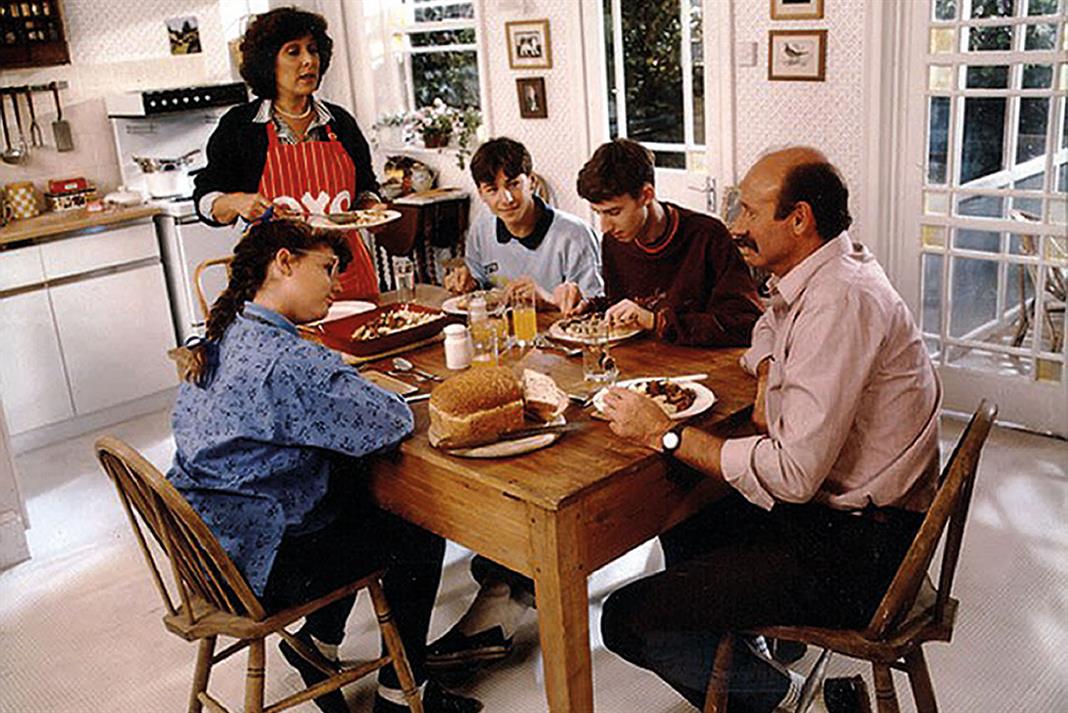
Is account planning relevant today? Yes, even more so in the age of Big Data.
Account planning can and should still be the "voice of the customer" informing message and media creativity, major decisions at any time. Data aren't people--and being with people can help planners understand the differences and similarities that characterize customer behaviour and reveal underlying needs and motivations.
Ogilvy & Mather has been sending planners from its London base to every corner of the UK, seeking real everyday interactions with real people. 'So, as planners, if we never leave London, how can we hope to connect? The best ideas are those that get talked about in the street, at work, in the pub or in your kitchen', explains O&M's chief strategy officer.
Account planning can offer the insights that enable marketing, advertising and branding breakthroughs via innovative ideas linked to cultural and social trends. Account planning can spark inspiration and differentiation. Yes, support the insights and creativity and implementation with Big Data, but keep account planning in the equation to represent the real-life voice of the customer.
Sunday, 15 January 2017
Maltesers, Braille and shrinkflation

Model Maltesers were used to spell out, in Braille, this message at one London bus shelter: 'Caught a really fast bus once, turns out it was a fire engine'.
Maltesers has a long-running ad theme #LookontheLightSide and this bus-shelter ad is part of the inclusiveness campaign as well as celebrating World Braille Day. More than 1.5 million people like the Maltesers Facebook page, where this photo was posted.
Meanwhile, Mars is reacting to higher commodities costs by shrinking some of its products. Malteser 'sharing' packages will contain 15% less than today but sell for today's price.
What Mars has done by reducing the contents of the Malteser package is part of a trend dubbed 'shrinkflation'. Mars competitor Mondelez recently changed the shape of its Toblerone chocolate so it contains less chocolate but sells for the same price as before, to avoid increasing the retail price.
Other chocolate marketers are also deciding between reducing the amount of product and raising the price. Because so many consumers are so price sensitive, shrinking the product may be more acceptable to buyers than increasing prices...for now.
Wednesday, 4 January 2017
The latest in McDonald's marketing

McCafe is challenging Costa and Starbucks and all the others selling gourmet and special coffees in the UK. Also, to be an integral part of local UK communities, the McDonald's site has a special section on grassroots football. Did you see McDonald's holiday advert, featuring Juliette the vintage wooden doll? Fun.
In addition, McDonald's just opened a fast-food outlet a few steps from the Vatican--touching off a controversy. In response to negative comments, the company announced: 'As is the case whenever McDonald’s operates near historic sites anywhere in Italy, this restaurant has been fully adapted with respect to the historical environment'.
BTW, McDonald's UK is highly social: 68m Facebook likes, hundreds of thousands of Twitter followers and lots of videos on YouTube. Working hard to engage customers!
Thursday, 29 December 2016
Unilever's unstereotype initiative
One of the most notable of 2016's marketing initiatives, according to Campaign Live, has been Unilever's #Unstereotype campaign, headed by the company's SVP of global marketing, Aline Santos.
 Unilever's research revealed the need to make changes in how its brand
advertising depicts people. Among the brands affected by this new change is
Axe (also known as Lynx). Santos explains:
'The stereotype of men that we been portraying for years isn't relevant
any more. Not only was it not relevant, it wasn't right.'
Unilever's research revealed the need to make changes in how its brand
advertising depicts people. Among the brands affected by this new change is
Axe (also known as Lynx). Santos explains:
'The stereotype of men that we been portraying for years isn't relevant
any more. Not only was it not relevant, it wasn't right.'
In June, 2016, Unilever posted the following about its #Unstereotype initiative:

In June, 2016, Unilever posted the following about its #Unstereotype initiative:
Gender identity is changing. Our advertising has not changed enough – up until now. We've listened to consumers and looked at the way we portray gender in our advertising and realised we need to do things differently. We understand that by using our influence responsibly, we can contribute to positive cultural change as well as making better connections with people through our advertising. That's why we've asked every one of our brands to challenge itself to move away from unhelpful stereotypical portrayals of gender, especially for women, and to deliver fresh campaigns that are more relevant to today’s consumer. We call this movement #UNSTEREOTYPE – and it is already making a difference.The #Unstereotype campaign resonates in an industry where stereotyping is often in evidence (especially in advertising messages to or including women). In fact, Kantar Futures head J Walker Smith says this is the way of the future:
The advertising and marketing industry has got a lot of ground to make up to simply project a realistic, contemporary picture of female identity, so keeping up with and pre-empting its evolution will be no easy task. The good news is that Unilever has now shown that it pays dividends, and that those brands brave enough to move their strategy forward have a great opportunity for growth, disruption and creativity.
Tuesday, 15 November 2016
Introducing Christmas 2016 adverts (and their hashtags)
In the coming days, you'll see more and more of this year's Christmas adverts on every screen (telly, tablet, mobile). Building anticipation is part of the fun and a smart marketing strategy too.
Here are links to just three of the recently introduced retailer adverts playing on screens across the UK.
- Aldi's advert features #KevinTheCarrot (above) and ends with the strapline 'everyday amazing' to reinforce the retailer's low-price positioning. One million online views in one week.
- The new John Lewis #BusterTheBoxer advert has been viewed 15 million times on YouTube in just the first four days. Not only is Buster an adorable toy, 10% of the price goes to charity.
- Marks & Spencer features Mrs Claus in #LoveMrsClaus, its 2016 holiday advert. In four days, this advert has been viewed online 4.6 million times.
Thursday, 13 October 2016
What's in a brand?

If you've ever walked past a Marks & Spencer store, you know that the brand shown above the door is distinctive. The website shortens the name to M&S, but the typeface is the same as on the name above the door. Over the years, M&S has changed the look of its brand name, but the brand still stands for values like quality, choice and innovation.
Now some brands are trademarking words that they've used over and over in adverts. Specsavers, the well-known eyewear retailer, was able to trademark the word 'should've' which it uses in its adverts, as in the catchphrase 'should've gone to Specsavers'. This legal protection ensures that no one else will be able to use that particular wording for marketing purposes. Essentially, 'should've' becomes part of the brand associations for Specsavers.
Changing a brand symbol or logo is a big deal. BT is reportedly making changes to the look of its brand. Instagram changed its look earlier in 2016, with mixed reactions. Once people become accustomed to a brand or logo, and are loyal to that brand, not all will have a positive reaction to changes.
Monday, 12 September 2016
Growth in digital ad spending
AD BUDGETS in 2017
Digital video ads are a small percentage of all digital ad spending right now, but projected to grow in the future as content marketing and other digital elements become increasingly important.
Looking towards the future, UK spending on social media advertising is expected to increase at the expense of spending on ads appearing in news vehicles.
Then there's UK mobile ad spending...projected to grow quite rapidly in the coming months and years. Marketers are experimenting and shifting money into mobile budgets to reach mobile users where and when purchasing decisions are made. But you probably already knew that, because you've noticed mobile marketing on your cell. Right?
Monday, 8 August 2016
Top adverts have heart
In marketing communications, facts can be less persuasive than emotion, as the 'top adverts' lists suggest.
Take a look at Adweek's 'ad of the day' and you'll see many adverts that appeal through humour, inspiration and heart-warming emotions. For example, here's an uplifting Samsung advert created to celebrate the Rio Olympics.
Read what Campaign says about the emotion-driven adverts so many brands are producing for the Rio Olympics. Human truths over product features is one of the phrases that stands out in Campaign's analysis. In other words, consider emotional appeals rather than rational appeals for certain adverts and campaigns.
Also look at the Best ads on TV site, where fun, inspiration and other emotional appeals are often showcased in the featured adverts.

When Campaign selected the best Easter 2016 adverts, its picks included lots of humour to stand out from the crowd. It also liked the all-chocolate 'pop-up' bar that Carlsberg beer established temporarily during the Easter season--playing on the love of chocolate.
Take a look at Adweek's 'ad of the day' and you'll see many adverts that appeal through humour, inspiration and heart-warming emotions. For example, here's an uplifting Samsung advert created to celebrate the Rio Olympics.
Read what Campaign says about the emotion-driven adverts so many brands are producing for the Rio Olympics. Human truths over product features is one of the phrases that stands out in Campaign's analysis. In other words, consider emotional appeals rather than rational appeals for certain adverts and campaigns.
Also look at the Best ads on TV site, where fun, inspiration and other emotional appeals are often showcased in the featured adverts.
When Campaign selected the best Easter 2016 adverts, its picks included lots of humour to stand out from the crowd. It also liked the all-chocolate 'pop-up' bar that Carlsberg beer established temporarily during the Easter season--playing on the love of chocolate.
Friday, 1 April 2016
Marketing on April Fool's Day

- PR Week highlights the April Fool prank marketing by Mumsnet Jobs, which is teaming with the European Space Agency and NASA to recruit a mum and baby for space pioneering. It also shows Honda's emoji registration plates (above).
- Kotaku features the best of Japan's April Fool prank marketing. My fave is the Coca-Cola battery. Kit-Kat sushi is a close second.
- The Guardian shows a diverse group of April Fool pranks, including transforming two of the London Eye capsules into penthouses in the sky.
Monday, 21 March 2016
Unilever's social, mobile and digital future

With market demographics and behaviours changing, the Unilever exec says companies should not worry about having different strategies for seniors and Millennials, two customer segments that his brands target.
Unilever's well-known brands continue to use traditional adverts but some--such as Knorr--are also experimenting with artificial intelligence to give customers the information they need, precisely when needed. As an example, Knorr's Chef Wendy invites consumers in Asia and Africa to text for recipe ideas based on the foods they have on hand.
Looking toward the future, Unilever is part of a new coalition that will share market-research data with the goal of helping all better prepare for sustainability, address income inequality and eliminate poverty.
In addition, the Unilever Foundry project is focusing on five areas where startups can make a difference in 2016: (1) retail, (2) content creation, (3) data insights and innovation, (4) sustainability and (5) new technologies.
Sunday, 6 March 2016
Marketing WWF's Earth Hour


This worldwide effort, which began in Sydney in 2007, increases awareness of our role in protecting the planet's precious natural resources, not just wildlife.
The social media campaign by WWF UK includes:
- #PassthePanda and #EarthHourUK hashtags to encourage participation on Twitter, Facebook and other sites
- YouTube videos
- Incredible nature photos on Instagram
- Pinterest posts
- A Facebook app to 'donate your social power' by posting about local environmental issues and sharing information with people in other areas
Subscribe to:
Posts (Atom)