Showing posts with label Japan. Show all posts

Tuesday, 5 January 2016

Lucky bags and consumer behaviour

In Japan, a highly popular tradition at New Year's is rushing to buy lucky bags, which contain desirable merchandise sold at a super-bargain price. Shoppers wait for hours to be able to buy these deeply-discounted items, sight unseen, in a 'lucky red' sack.

Another element driving consumer behaviour: Quantities are limited, which makes the tradition even more appealing to shoppers who enjoy the hunt as much as they enjoy the big savings.

Department stores all offer lucky bags, as do specialty stores, food retailers (including supermarkets) and even fast-food outlets like McDonald's and Mister Donut. Apple stores also offer lucky bags.

Check out these Getty Images of crowds rushing to buy lucky bags.

Wednesday, 22 January 2014

Sweet marketing for KitKat in Japan

Inside the Seibu department store at the Ikebukuro train station in Tokyo is a new chocolate boutique featuring one of Japan's favourite brands: Nestle's KitKat. The brand name has become associated with good luck because it sounds like the phrase 'I hope you will win'. Students in Japan buy KitKats with the thought that it will help them do well on exams.

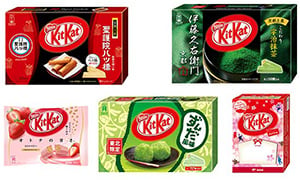
Not surprisingly, KitKat uses marketing to build on this good luck perception. The new boutique sells some exclusive KitKat flavours created by chocolatier Takagi for Nestle, including Sublime Bitter, Special Sakura Green Tea and Special Chilli. The boutique is already selling out its limited-edition products daily, but revenues aren't the only reason for this retail venture: It's actually a high-profile brand-builder. Simply type "KitKat Chocolatory" or "KitKat Japan" into a search engine and you'll see the boutique's worldwide media coverage.

From 2007, Nestle has developed KitKat variations only for Japan. In fact, depending on where in Japanese consumers buy KitKats, they will find flavours not available in other areas (like Purple Potato). Most KitKat packaging features English (the brand and the brand owner) as well as Japanese, adding a 'global' angle that enhances the product's sweet marketing appeal.


Friday, 25 January 2013

Marketing chocolate in Japan (and beyond)

The market for chocolate in Japan is growing year after year, fueled by consumer interest in new flavours, status brands and personality plus.

Nestle makes unusual Kit Kat flavour combinations for Japan, but the product name is also meaningful: It sounds like kitto katsu or, roughly translated, 'surely win'. That's why so many students nibble on Kit Kat bars for good luck before taking their uni exams.

International brands with a luxury image are particularly desirable, in chocolate as in nearly every other product category in Japan. The upmarket French chocolatier Frederic Cassel recently created a kimono of chocolate to showcase its premium products, sold through three company stores in Japan.

La Maison du Chocolat is known in Japan for its ganache. Tailoring its products to local tastes, La Maison du Chocolat emphasises mild milk chocolate and caramel in Japan rather than the darker bittersweet flavours that sell so well in its French stores. Yes, this brand is on Facebook.

Sapporo-based Royce' is expanding beyond Asia, with creamy, fresh chocolates sold through company-owned shops in Brunei, Vladivostock and New York City. This brand's unique selling proposition is quality, including the use of farm-fresh milk sourced from farms surrounding its Hokkaido factory. Just getting started in New York, Royce' has only a few Facebook likes for that location.


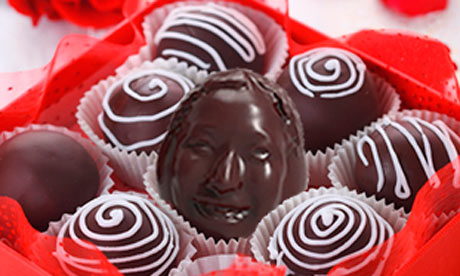
Finally, with Valentine's Day only weeks away, an unusual new twist on chocolate has been emerged: The ability to mold chocolates with 3-D printed faces of the giver or the recipient. Not surprisingly, the chocolate faces have gotten a lot of media attention lately.

Wednesday, 26 December 2012

Japan's many brand mascots

Mascots from Fukushima prefecture
Hello Kitty is only the tip of the cute brand iceberg in Japan. Many prefectures, cities, companies and causes have their own cuddly mascots, adding brand personality with a high cuteness factor much appreciated in Japan. Mascots can attract attention and encourage positive attitudes, paving the way for marketing places, ideas and activities.

Recently the fifth annual mascot competition was held, with 244 mascots from around Japan (including the two shown above) competing to be named the cutest. More than 70,000 attendees posed for photos with their favourite mascots and enjoyed the festivities.

Japan's national tax agency has its own cuddly mascot, designed to promote electronic filing of tax forms. The Liberal Democratic Party is about to introduce a mascot designed for the country's new prime minister. Train lines have their own mascots, too.

Japan is home to what is possibly the only mascot school in the world, where people inside costumes learn to interact with children, how to walk and how to project kindness or evoke other feelings.

Cute may be, well, cute, but it also leaves audiences smiling, and that's a good marketing approach for any product or brand.

Wednesday, 13 April 2011

Japan and the Global Supply Chain

Last month's terrible earthquake, tsunami, and nuclear disaster in Japan caused untold human misery (and will have unknown health and social repercussions for years to come). It also ruptured the supply chain for local and global marketers, affecting their ability to acquire parts and materials and to produce goods for domestic and international consumption.

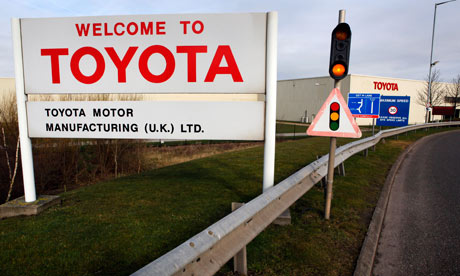
For example, Toyota's UK plants are temporarily shut because they can't get sufficient parts from Japan to continue production. Nissan and Ford have slowed or halted production at some factories, due to parts shortages. Manufacturers of other products that use Japan-made computer chips are worried about disruptions, as well.


Chip factories in Japan are working hard to bring production back to normal, but it will simply take time. As Japanese business inches towards normalcy, the economy will slowly improve and connections with the global supply chain will improve, too.

Thursday, 17 March 2011

Helping Japan

Last week's earthquake and tsunami hit Japan incredibly hard, and relief efforts will certainly continue for months, even after the nuclear crisis has passed. Financial firms with Japanese offices moved quickly to make big donations in the days following the disaster.

Other UK businesses are finding ways to help Japan and suggest how their employees and customers can help.

Two examples:

  • Ocado's co-founder (left) donated 20,000 pounds and set up a special Justgiving Web page for donations.
  • Virgin Money Giving set up a special page where people can click to donate to six charities helping with the emergency.
Although Red Nose Day is tomorrow, people are already giving generously to help Japan as well. Thank you.

Monday, 10 May 2010

Soy sauce Kit Kat bars?


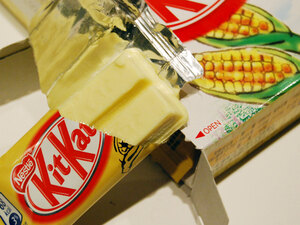
Yes. In Japan, Nestle caters to the craze for seasonal and limited edition flavors by releasing some unusual chocolate-bar combinations. Shown above are the soy sauce version and, below it, the corn version.

Distribution is limited, meaning that all bars are not available in all stores. Some of the bars are marketed as limited edition tributes to a national holiday or an athletic competition.

Nestle hopes that consumers will buy the range as gifts or souvenirs, not just for a quick sweet snack. Shoppers never know exactly which Kit Kats they'll find at the local store, so this strategy adds to the "treasure hunt" experience and encourages buyers to try the latest when they see it.