Marketers have identified a trend in recent years, based on evolving consumer behaviour such as saving money and making time for family. The trend is towards planning a 'big night in' instead of a traditional 'big night out'.
Rather than splashing out on a restaurant meal and cinema tickets, many consumers are making plans to enjoy food and entertainment at home. Pizza, anyone? New Year's Eve was a 'big night in' this year for consumers in Wales, research shows.
Targeting this occasion, Sainsbury's and other marketers, offer snacks, drinks and more. Above, Sainsbury's online store, with a 'big night in' page offering 'easy cook' meals, snack foods, DVDs and video on demand. Poundland wants to attract shoppers interested in snacks for a big night in, whether the entertainment is a movie or a sleepover.
'Big night in' is influencing multiple marketing elements. For example, snack products are increasingly packaged in larger sizes for family sharing. 'Generally, the packaging is bold and often piggy-backs a cinematic theme
as families try to create a movie going experience without actually
leaving home', says one packaging expert.
Showing posts with label packaging. Show all posts
Wednesday, 11 January 2017
Friday, 23 September 2016
Brand personality builds marketing impact
Brand personality is a key ingredient in any marketing plan--especially for small businesses that want to grow quickly. Differentiation communicated with personality, including perhaps a bit of humour, attracts attention on a small budget to build brand awareness and preference.

For example, Jimmy's Iced Coffee is a fast-growing business based in Dorset. Its brand personality shines through all of its marketing, from the logo to the product packaging and beyond.
The packaging shows a tagline ("Keep your chin up") from the first Jimmy's YouTube rap-beat promotional video, which attracted 3.5 million views in a year. It also echoes elements from Jimmy's brand history. Jimmy's has, in fact, expanded distribution by emphasising its brand personality and is now on the shelves of Tesco, Sainsbury and other major UK grocery chains.
What's Jimmy's secret to social media marketing? 'The good thing about online, if you do something offline you should be able to just put it online and show people what you’re doing. It’s not just pack shots of our cartons on Instagram all day long', he tells Management Today.
Take a look at how brand personality is showcased on Jimmy's social media: Instagram, YouTube and Facebook.

For example, Jimmy's Iced Coffee is a fast-growing business based in Dorset. Its brand personality shines through all of its marketing, from the logo to the product packaging and beyond.The packaging shows a tagline ("Keep your chin up") from the first Jimmy's YouTube rap-beat promotional video, which attracted 3.5 million views in a year. It also echoes elements from Jimmy's brand history. Jimmy's has, in fact, expanded distribution by emphasising its brand personality and is now on the shelves of Tesco, Sainsbury and other major UK grocery chains.
What's Jimmy's secret to social media marketing? 'The good thing about online, if you do something offline you should be able to just put it online and show people what you’re doing. It’s not just pack shots of our cartons on Instagram all day long', he tells Management Today.
Take a look at how brand personality is showcased on Jimmy's social media: Instagram, YouTube and Facebook.
Thursday, 19 May 2016
UK tobacco packaging goes plain
In February, I wrote about the latest controversies surrounding tobacco packaging that must carry large and explicit health warnings--and minimal marketing content.
The UK High Court just ruled in a lawsuit filed by the major tobacco manufacturers. The marketers argued that the government was effectively taking away their trademarked intellectual property rights, leaving them unable to display marketing and branding symbols they've invested in and protected legally against competitive use for many decades.
The judge ruled against the tobacco marketers, saying:
The UK High Court just ruled in a lawsuit filed by the major tobacco manufacturers. The marketers argued that the government was effectively taking away their trademarked intellectual property rights, leaving them unable to display marketing and branding symbols they've invested in and protected legally against competitive use for many decades.
The judge ruled against the tobacco marketers, saying:
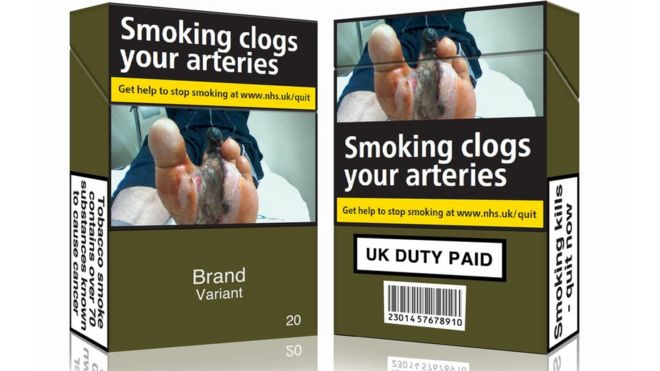
'The essence of the case is about whether it is lawful for states to prevent the tobacco industry from continuing to make profits by using their trade marks and other rights to further what the World Health Organisation describes as a health crisis of epidemic proportions and which imposes an immense clean-up cost on the public purse . . . In my judgment the regulations are valid and lawful in all respects'.In his decision, the judge noted that marketing symbols and brand designs exert 'a causal effect upon consumer behaviour and encouraged smoking'. In addition to requiring plain packaging on cigarettes sold in the UK, certain types of packaging (such as 'lipstick' packs targeting female smokers) will be banned. Retailers are allowed to continue selling current inventory of branded packaging until stocks are depleted. After that, packs such as the one shown above will be the standard, with branding allowed but only within strict guidelines.
Wednesday, 20 April 2016
New tax on sugary sodas, new Coca-Cola Zero Sugar
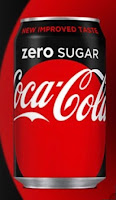
Now Coca-Cola is renaming its Zero soft drink, after learning that half of British consumers weren't aware the soda is sugar-free. Watch for the new cans on shelves this summer, part of the marketing strategy to give packaging a 'one brand' look featuring the famous red so strongly associated with Coke.
The rebrand will also include a reformulation so the soda tastes more like regular (non-zero-sugar) Coca-Cola.
Coca-Cola faces lower demand for its soft drinks among European and North American consumers. It is also examining its pricing policies in Asia, where price decreases have boosted sales.
Tuesday, 12 April 2016
Domino's UK: new research, new packaging and more
Domino's UK has introduced a new box--two boxes--a clever way to reinforce the brand logo (shown at left). One pizza box is red, one is blue, and both are recyclable.
The packaging redesign is based on research showing that 96 percent of all Domino's UK pizza orders involve two pies. So the new packaging doesn't just echo the branding, it subtly communicates the two-for promotion.
Domino's UK's latest results show that nearly 8 in 10 pizzas are ordered via e-commerce--and half of those orders flow through the company's popular app. The brand is highly social, with 1 million Facebook likes, 262k Twitter followers and hundreds of thousands of views for each YouTube post. Clearly, Domino's knows its target market, and keeps its brand in front of the audience in different digital ways. The company also gets customers involved in its social responsibility and environmental activities (such as Pennies become pounds).
Outside the UK, Domino's has made headlines lately for its test of a delivery robot, not an April Fool's joke.
The packaging redesign is based on research showing that 96 percent of all Domino's UK pizza orders involve two pies. So the new packaging doesn't just echo the branding, it subtly communicates the two-for promotion.
Domino's UK's latest results show that nearly 8 in 10 pizzas are ordered via e-commerce--and half of those orders flow through the company's popular app. The brand is highly social, with 1 million Facebook likes, 262k Twitter followers and hundreds of thousands of views for each YouTube post. Clearly, Domino's knows its target market, and keeps its brand in front of the audience in different digital ways. The company also gets customers involved in its social responsibility and environmental activities (such as Pennies become pounds).
Outside the UK, Domino's has made headlines lately for its test of a delivery robot, not an April Fool's joke.
Wednesday, 10 February 2016
Fighting for sweet share of Easter purchases
Cadbury's traditional Creme Egg was part of the reason that sales of the company's Easter product range was lower in 2015 by £10 million. What happened? Parent firm Mondelez changed the recipe, angering loyal fans.
Contrast that to 2009, when Cadbury's sales were on the rise as UK consumers had a hearty appetite for chocolate Easter eggs.
Now Cadbury is fighting hard for a higher share of 2016 chocolate purchases as this year's Easter season approaches.
'To strengthen our positioning, we will continue to invest in power brands, launching new seasonal products and a brand new Easter pack design', says the marketing manager. To keep awareness high, the company recently launched a pop-up Creme Egg Cafe in London.
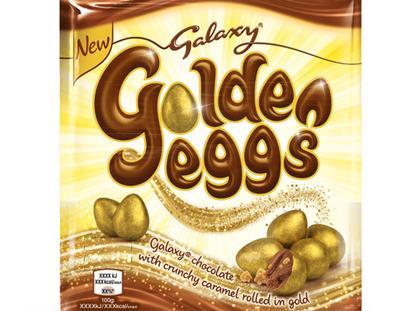
Meanwhile, competition is altering the marketing environment as Mars launches its new Galaxy Golden Eggs.
Knowing that approximately 80% of UK consumers purchase chocolate for Easter, Mars is targeting this large and lucrative market early--in direct competition with Cadbury Creme Eggs.
Contrast that to 2009, when Cadbury's sales were on the rise as UK consumers had a hearty appetite for chocolate Easter eggs.
Now Cadbury is fighting hard for a higher share of 2016 chocolate purchases as this year's Easter season approaches.
'To strengthen our positioning, we will continue to invest in power brands, launching new seasonal products and a brand new Easter pack design', says the marketing manager. To keep awareness high, the company recently launched a pop-up Creme Egg Cafe in London.
Meanwhile, competition is altering the marketing environment as Mars launches its new Galaxy Golden Eggs.Knowing that approximately 80% of UK consumers purchase chocolate for Easter, Mars is targeting this large and lucrative market early--in direct competition with Cadbury Creme Eggs.
Labels:
Cadbury,
chocolate,
Easter purchases,
market share,
Mars,
Mondelez,
packaging,
pop-up shops,
seasonal products
Tuesday, 12 January 2016
Colourful new look for McDonald's packaging
McDonald's is updating its take-away packaging for a modern, 21st-century look. 'Every day 69 million customers visit McDonald’s around the world and this new packaging will be a noticeable change', says the company's senior director of global marketing.
Notice the use of the Golden Arches as the M in McDonald's? And the updated colours that are bold, a little playful and positive? This new packaging was created by a global team of designers who were brought together for one week to brainstorm. Their ideas were then presented to consumers for input and reaction.
Finally, the core ideas were provided to a Chicago-based design firm for refinement. The result: Simpler, less frenetic graphics that instantly convey the brand and the affect behind the brand.
The new packaging is part of an ongoing marketing effort to generate higher sales for McDonald's worldwide.
Notice the use of the Golden Arches as the M in McDonald's? And the updated colours that are bold, a little playful and positive? This new packaging was created by a global team of designers who were brought together for one week to brainstorm. Their ideas were then presented to consumers for input and reaction.
Finally, the core ideas were provided to a Chicago-based design firm for refinement. The result: Simpler, less frenetic graphics that instantly convey the brand and the affect behind the brand.
The new packaging is part of an ongoing marketing effort to generate higher sales for McDonald's worldwide.
Labels:
brand image,
global brands,
global marketing,
McDonald's,
packaging
Friday, 11 December 2015
Coca-Cola and Christmas marketing
Coca-Cola's iconic red-and-white logo is almost as Christmasy as can be. At holiday time, the brand uses special marketing to encourage consumers to try, buy and enjoy its soft drinks for parties and for any occasion.
At right, Coca-Cola's photo of its famous truck criss-crossing the UK during holiday season. The field marketing tour began in Inverness and ends in Leicester Square, London, two days before Christmas.
At each stop, consumers can enjoy free samples of Coke soft drinks amidst a wintery season backdrop, complete with festive lights. To increase anticipation and bring consumers to the lorry stop, Coke used the hashtag #holidaysarecoming and promoted the tour on its website and via publicity. Coke's UK FB page has more than 94m likes and its Twitter account has 126k followers, adding up to a huge audience for social media marketing.
This year, Coke is celebrating another marketing milestone: The 100th anniversary of its instantly recognisable contour bottle, which was introduced in 1915.
Now Coke has launched another packaging innovation: a bottle label that converts to a holiday bow. The idea is to encourage consumers to leave Coke bottles on the table and 'unwrap' the novelty bow as part of their holiday meals.
The strapline for this year's UK holiday campaign is: 'Bring happiness home'.
For more images of Coke's Christmas adverts of the past, see its online gallery here.
At right, Coca-Cola's photo of its famous truck criss-crossing the UK during holiday season. The field marketing tour began in Inverness and ends in Leicester Square, London, two days before Christmas.
At each stop, consumers can enjoy free samples of Coke soft drinks amidst a wintery season backdrop, complete with festive lights. To increase anticipation and bring consumers to the lorry stop, Coke used the hashtag #holidaysarecoming and promoted the tour on its website and via publicity. Coke's UK FB page has more than 94m likes and its Twitter account has 126k followers, adding up to a huge audience for social media marketing.
This year, Coke is celebrating another marketing milestone: The 100th anniversary of its instantly recognisable contour bottle, which was introduced in 1915.
Now Coke has launched another packaging innovation: a bottle label that converts to a holiday bow. The idea is to encourage consumers to leave Coke bottles on the table and 'unwrap' the novelty bow as part of their holiday meals.
The strapline for this year's UK holiday campaign is: 'Bring happiness home'.
For more images of Coke's Christmas adverts of the past, see its online gallery here.
Wednesday, 12 August 2015
Coca-Cola's One Brand Strategy
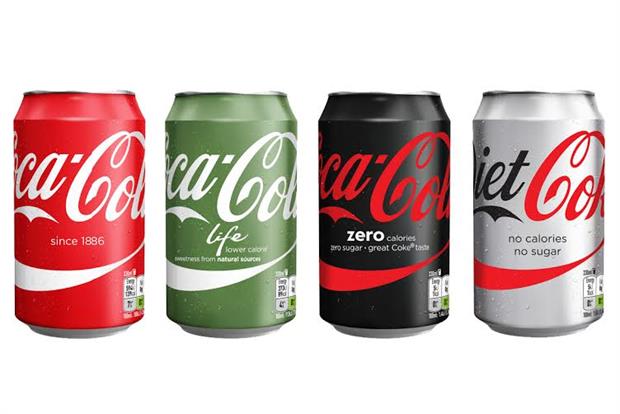
Even though Coca-Cola isn't changing its name or any of its products' names, the company launched a 'one brand' strategy in the UK market earlier this year. From May, Coca-Cola will be the company brand and individual product lines (such as Diet Coke and Coca-Cola Zero) will be variants or subsets of the company brand.
The purpose is to increase awareness of the low- and no-cal product variants and -- by 2020 -- achieve the goal of having 50% or more of Coca-Cola sales in Great Britain come from these variants.
Now the Coca-Cola company brand will be the most salient aspect of packaging, with variant names featured below the main brand in this redesign. Ads will focus on the Coca-Cola brand and benefits, with individual variants pictured or mentioned briefly. The aim here is to emphasise the brand's heritage and associations as an umbrella for all variants.
This approach has the potential to strengthen all variants by association with the well-known, well-liked company brand and increase awareness of the low- and no-cal variants as choices available to Coca-Cola fans.
However, changes to packaging (as shown above) can also be risky because consumers may not recognize the variant they prefer in its new packaging or may be confused by the new brand and packaging offers. Meanwhile, Coca-Cola is introducing the one brand strategy in more nations and supporting it with advertising and distribution activities to motivate purchase.
The purpose is to increase awareness of the low- and no-cal product variants and -- by 2020 -- achieve the goal of having 50% or more of Coca-Cola sales in Great Britain come from these variants.
Now the Coca-Cola company brand will be the most salient aspect of packaging, with variant names featured below the main brand in this redesign. Ads will focus on the Coca-Cola brand and benefits, with individual variants pictured or mentioned briefly. The aim here is to emphasise the brand's heritage and associations as an umbrella for all variants.
This approach has the potential to strengthen all variants by association with the well-known, well-liked company brand and increase awareness of the low- and no-cal variants as choices available to Coca-Cola fans.
However, changes to packaging (as shown above) can also be risky because consumers may not recognize the variant they prefer in its new packaging or may be confused by the new brand and packaging offers. Meanwhile, Coca-Cola is introducing the one brand strategy in more nations and supporting it with advertising and distribution activities to motivate purchase.
Labels:
advertising,
brand,
branding,
Coca-Cola,
company brand,
packaging,
parent brand,
product line,
product variants
Monday, 8 June 2015
Greener packaging for soft drinks
Coca-Cola has been highlighting its green-tech credentials through the development of earth-friendlier packaging such as the PlantBottle. Just a few days ago, Coca-Cola displayed the latest version of the PlantBottle, which 'looks and functions just like traditional PET plastic, but
has a lighter footprint on the planet and its scarce resources'.
The soft-drink company first introduced PlantBottle in 2009, and began selling beverages in it in UK markets in 2011. Now it has distributed more than 25 billion 'green' bottles worldwide, as the infographic shows.
When influential brands such as Coca-Cola commit to environmental efforts on a large scale, they not only encourage consumers to participate but also add a new point of differentiation for competitive purposes. And that's exactly what happened in this case.
Not long after Coca-Cola launched PlantBottle, which was originally made in part from plant-based material, PepsiCo announced its own 'green' beverage packaging that was 100% plant-based. This kind of competition surely benefits the planet: Coke's latest bottle is now 100% plant-based--and it is using its corporate resources to continue developing additional packaging that will biodegrade instead of lingering in landfills.
The soft-drink company first introduced PlantBottle in 2009, and began selling beverages in it in UK markets in 2011. Now it has distributed more than 25 billion 'green' bottles worldwide, as the infographic shows.
When influential brands such as Coca-Cola commit to environmental efforts on a large scale, they not only encourage consumers to participate but also add a new point of differentiation for competitive purposes. And that's exactly what happened in this case.
Not long after Coca-Cola launched PlantBottle, which was originally made in part from plant-based material, PepsiCo announced its own 'green' beverage packaging that was 100% plant-based. This kind of competition surely benefits the planet: Coke's latest bottle is now 100% plant-based--and it is using its corporate resources to continue developing additional packaging that will biodegrade instead of lingering in landfills.
Labels:
Coca-Cola,
competition,
environmental issues,
green marketing,
packaging,
PepsiCo
Wednesday, 4 March 2015
Coca-Cola integrates marketing for consistent brand identity
Coca-Cola UK will participate in the company's centenary celebration of the iconic hourglass bottle, designed in 1915. The promotion, scheduled from 30 March, will feature both the distinctively-shaped bottle and famous people who have enjoyed Coke over the years.
The iconic bottle was originally designed to help differentiate the brand from competing colas and help the product stand out wherever soft drinks were sold. After a century of being part of pop culture, the packaging alone is enough to communicate the brand name.
Coke has long been careful to integrate its marketing efforts so that advertising, for instance, reinforces the brand's look (its packaging too) for a consistent identity. Even Coke's UK headquarters borrows the brand's colours and styling for a unique working environment.
When Coke began sponsoring the London Eye, it applied its specific brand of red to the lighting and other elements, conveying the brand's involvement with the attraction.
Coke UK reaches out to its target audience by being active in social media, including 20,000 Facebook likes and hundreds of thousands of YouTube views for its adverts and videos.
The iconic bottle was originally designed to help differentiate the brand from competing colas and help the product stand out wherever soft drinks were sold. After a century of being part of pop culture, the packaging alone is enough to communicate the brand name.
Coke has long been careful to integrate its marketing efforts so that advertising, for instance, reinforces the brand's look (its packaging too) for a consistent identity. Even Coke's UK headquarters borrows the brand's colours and styling for a unique working environment.
When Coke began sponsoring the London Eye, it applied its specific brand of red to the lighting and other elements, conveying the brand's involvement with the attraction.
Coke UK reaches out to its target audience by being active in social media, including 20,000 Facebook likes and hundreds of thousands of YouTube views for its adverts and videos.
Monday, 26 January 2015
Cadbury changes its Creme Egg
Cadbury UK--which enjoys 609,000 likes on its FB page--is making headlines, but not in a positive way.
The company's iconic Creme Eggs, a sweet Easter tradition for four decades, are undergoing two key changes.
The first is a packaging change that affects pricing. Now the number of eggs in each package is now 5 instead of 6. Cadbury explains that this change, which effectively increases the product's price, is due to rising costs (of chocolate, among other ingredients).
The second change, which is just as controversial, is to the recipe for the chocolate shell, which was similar to Dairy Milk. Cadbury in Canada will still offer the standard Dairy Milk shell, but Creme Eggs sold in the UK will have a different chocolate shell.
One change not under Cadbury's control is that its products made in the UK will no longer be imported to the US. Why? Because Hershey legally has use of the Cadbury brand and product names in the US market. Cadbury and Hershey use different recipes for products that carry the same name (such as Creme Eggs and Kit Kat bars). Therefore, Hershey says consumers will be confused by the dueling UK-made and US-made products.
After some legal back-and-forth, the importer that had been distributing UK-made Cadbury products in US markets must halt its importing. US fans are unhappy because many prefer the taste of UK-made Cadbury (made by Cadbury) to the taste of US-made Cadbury (made by Hershey).
The company's iconic Creme Eggs, a sweet Easter tradition for four decades, are undergoing two key changes.
The first is a packaging change that affects pricing. Now the number of eggs in each package is now 5 instead of 6. Cadbury explains that this change, which effectively increases the product's price, is due to rising costs (of chocolate, among other ingredients).
The second change, which is just as controversial, is to the recipe for the chocolate shell, which was similar to Dairy Milk. Cadbury in Canada will still offer the standard Dairy Milk shell, but Creme Eggs sold in the UK will have a different chocolate shell.
One change not under Cadbury's control is that its products made in the UK will no longer be imported to the US. Why? Because Hershey legally has use of the Cadbury brand and product names in the US market. Cadbury and Hershey use different recipes for products that carry the same name (such as Creme Eggs and Kit Kat bars). Therefore, Hershey says consumers will be confused by the dueling UK-made and US-made products.
After some legal back-and-forth, the importer that had been distributing UK-made Cadbury products in US markets must halt its importing. US fans are unhappy because many prefer the taste of UK-made Cadbury (made by Cadbury) to the taste of US-made Cadbury (made by Hershey).
Tuesday, 13 January 2015
Among UK New Product Winners: Ella's Kitchen
Who were the winners in 2014? Both large and small marketers entered and won. Cadbury was a winner in the chocolate confectionery category; Persil won in the laundry category.Among the smaller companies to win in 2014 was Ella's Kitchen (winner in the infants' category). Named after a real baby named Ella, the company markets a range of organic baby food.
Paul Lindley is the founder of Ella's Kitchen and also Ella's father. He had an idea for marketing nutritious, all-organic baby food products to delight 'tiny taste buds' and tempt even finicky babies to eat. He also knew he needed colourful packaging to 'sell from the shelf'. Once Sainsbury's began to stock his products, the company gained national distribution.
Lindley had worked for Nickelodeon before becoming an entrepreneur, and this connection enabled him to arrange for free TV promotion in exchange for some of the firm's profits. As a result, Ella's Kitchen gained brand recognition and established itself nationally.
When Ella's Kitchen undertook global expansion, however, Lindley experienced considerably more competitive pressure in the US market. He sold Ella's Kitchen to Hain Celestial, known for its all-natural food products, and remained as the division head, using the parent's marketing muscle to boost Ella's Kitchen.
Today, nearly a decade after its founding, Ella's Kitchen is active on social media to educate and inform parents about nutrition and, of course, explain how its products are good for baby. On YouTube, for instance, the company posts videos about feeding babies, weaning babies and other topics of interest to families with infants. It offers Q&A with experts on its Facebook page and its Twitter page.
Thursday, 1 January 2015
Private brands continue strong
Even as the economy recovers, private brands (also known as private label, brands owned/marketed by retailers and/or wholesalers) are thriving.
Market research by Nielsen confirms that private brands account for 54% of UK grocery purchases.
Why? Because consumers perceive these as being good quality and good value. Retailers have carefully marketed their private brands as the equal of any manufacturer's brand--and maybe even superior. At one time, many shoppers believed that by buying private brands they were 'trading down'--but today, more shoppers buy these brands even when they can afford nationally-advertised brands, because of the quality and value.
Marketing plans for private brands place great emphasis on in-store visibility because that's where buying decisions are made. Thus, the packages for Tesco's private-brand bird seed and feeders (shown above) were recently redesigned for eye-catching attractiveness, targeting young families.
Yet the store brands are also doing well because their owners are investing in new varieties and new features that meet customer needs. 'As with manufacturer brands, retailers have, over time, successfully built equity into their own-brand products by investing in product innovation, further developing ranges and increasing marketing activity' says a Nielsen exec.
Market research by Nielsen confirms that private brands account for 54% of UK grocery purchases.
Why? Because consumers perceive these as being good quality and good value. Retailers have carefully marketed their private brands as the equal of any manufacturer's brand--and maybe even superior. At one time, many shoppers believed that by buying private brands they were 'trading down'--but today, more shoppers buy these brands even when they can afford nationally-advertised brands, because of the quality and value.
Marketing plans for private brands place great emphasis on in-store visibility because that's where buying decisions are made. Thus, the packages for Tesco's private-brand bird seed and feeders (shown above) were recently redesigned for eye-catching attractiveness, targeting young families.
Yet the store brands are also doing well because their owners are investing in new varieties and new features that meet customer needs. 'As with manufacturer brands, retailers have, over time, successfully built equity into their own-brand products by investing in product innovation, further developing ranges and increasing marketing activity' says a Nielsen exec.
Wednesday, 3 December 2014
Packaging must sell from the shelf
From your own experience, you know that packages in any retail setting have only a few seconds to capture your attention, communicate a mood or benefit or brand, stimulate you to pick one up--and ultimately encourage you to buy.
Yes, packaging must protect the product, allow for safe transport, enable convenient storage in stores and in households and help in using or measuring the product. Sometimes packaging prevents theft. And of course products must carry labels that inform, warn, explain and comply with rules and regulations.
But the best packaging does a brilliant job of selling from the shelf, coordinates with other marketing elements and contributes to customer satisfaction. Ideally, it's also earth-friendly and adaptable to other uses.
Buzzfeed collected images of clever packaging last year--see them here. Packaging of the World features good packaging examples from everywhere.
Above, an example of a Coca-Cola bottle customized with given names for the Australian market. This 'Share a Coke' campaign resulted in sales of 250 million Coke bottles and cans just in Australia.
The campaign was expanded globally and was repeated in the UK this year, with more names plus 'Mum' and 'Dad' and 'Bestie' to attract consumers who wanted to share a Coke with family members and friends. The success of the campaign illustrates the power of good packaging with marketing as a priority.
Yes, packaging must protect the product, allow for safe transport, enable convenient storage in stores and in households and help in using or measuring the product. Sometimes packaging prevents theft. And of course products must carry labels that inform, warn, explain and comply with rules and regulations.
But the best packaging does a brilliant job of selling from the shelf, coordinates with other marketing elements and contributes to customer satisfaction. Ideally, it's also earth-friendly and adaptable to other uses.
Buzzfeed collected images of clever packaging last year--see them here. Packaging of the World features good packaging examples from everywhere.
Above, an example of a Coca-Cola bottle customized with given names for the Australian market. This 'Share a Coke' campaign resulted in sales of 250 million Coke bottles and cans just in Australia.
The campaign was expanded globally and was repeated in the UK this year, with more names plus 'Mum' and 'Dad' and 'Bestie' to attract consumers who wanted to share a Coke with family members and friends. The success of the campaign illustrates the power of good packaging with marketing as a priority.
Wednesday, 15 October 2014
Shopper marketing: selling from the shelf
When shopping, why do we reach for one package instead of another? The answer, say the experts at UK design consultancy Elmwood, is the influence of biomotive triggers.
Shoppers may pause for only a few seconds before moving on to the next item in a store--so packaging must work its magic quickly, attracting our attention, identifying the brand and a key benefit and then encouraging us to pick that product.
Clearly, in-store elements of shopper marketing can make all the difference in a product's sales. In particular, cusps and curves are two biomotive triggers that can affect consumer behaviour.
Elmwood's Simon Preece explains the influence of cusp and curve in a recent Packaging News interview:
Elmwood is responsible for the redesigned Andrex packaging shown at top (read its commentary on the packaging here). Toilet tissue should be soft, and the curves convey that important benefit. The puppy's eyes are looking right at the shopper, asking to be taken home--biomotive triggers that sell from the shelf.
Shoppers may pause for only a few seconds before moving on to the next item in a store--so packaging must work its magic quickly, attracting our attention, identifying the brand and a key benefit and then encouraging us to pick that product.
Clearly, in-store elements of shopper marketing can make all the difference in a product's sales. In particular, cusps and curves are two biomotive triggers that can affect consumer behaviour.
Elmwood's Simon Preece explains the influence of cusp and curve in a recent Packaging News interview:
- Cusps are sharp pointy shapes and they get our attention, signaling fear danger and caution.
- Curves suggest safety, softness and comfort; they make us feel secure and encourage interaction.
Elmwood is responsible for the redesigned Andrex packaging shown at top (read its commentary on the packaging here). Toilet tissue should be soft, and the curves convey that important benefit. The puppy's eyes are looking right at the shopper, asking to be taken home--biomotive triggers that sell from the shelf.
Labels:
biomotive trigger,
brand image,
design,
packaging,
retailing,
shopper marketing
Tuesday, 12 August 2014
Packaging: the fifth P
Product, price, place and promotion--those are the classic 4 Ps of marketing. Many experts say that packaging is the fifth P because it reflects and integrates the other four elements. With engaging packaging, brands can convey their emotional sides without sacrificing storage functions.
Browse the case studies on Packaging News and you'll see how packaging has been designed to 'sell from the shelf', add value through specific benefits that target specific audiences, convey brand values and more.
For example, Yorkshire-based bakery brand Grandma Wild's commissioned unique packaging for its biscuit and fudge products, with the idea that the nostalgic camper-van packages would not only attract attention in stores, they could be toys after the baked goods are gone. Packaging has been a vital element in Grandma's marketing tool kit for decades as it addresses the needs of particular target markets.
Take a look at packaging created by award-winning designers, as featured on the Design Intellect site. These packages show creativity in helping to sell products from the shelf, reinforcing brand logos, highlighting product benefits and accomplishing other marketing objectives in addition to protecting products and keeping them safe and convenient.
When you're in London, you can visit the Museum of Brands and see more packaging from the past 100+ years, along with advertising. Visit its Facebook page for the latest info.
Browse the case studies on Packaging News and you'll see how packaging has been designed to 'sell from the shelf', add value through specific benefits that target specific audiences, convey brand values and more.
For example, Yorkshire-based bakery brand Grandma Wild's commissioned unique packaging for its biscuit and fudge products, with the idea that the nostalgic camper-van packages would not only attract attention in stores, they could be toys after the baked goods are gone. Packaging has been a vital element in Grandma's marketing tool kit for decades as it addresses the needs of particular target markets.
Take a look at packaging created by award-winning designers, as featured on the Design Intellect site. These packages show creativity in helping to sell products from the shelf, reinforcing brand logos, highlighting product benefits and accomplishing other marketing objectives in addition to protecting products and keeping them safe and convenient.
When you're in London, you can visit the Museum of Brands and see more packaging from the past 100+ years, along with advertising. Visit its Facebook page for the latest info.
Monday, 31 March 2014
Packaging--The view from the shelf
What does the package say about the product? It has to present legally required information, of course, and both protect and store the contents in a convenient size and shape, whether on the shelf or in the home.
Shoppers move through supermarkets at a fast pace and the package must attract attention and arouse interest quickly. As a result, marketing communication is one of the driving forces behind today's decisions about packaging. One study found that 64% of shoppers bought something new simply because the packaging caught their attention. In fact, 36% of the shoppers in this survey said they had actually changed brands because of packaging preferences.
So take a look at the packaging designs of the 1970s, recently in the news because a locked pantry was opened for the first time in decades. Heinz was recognisable, but Bold detergent looked dated (which makes sense, because it was updated in 2004). And that's part of the point: Marketers want their products to stand out on the shelf, make an instant connection with shoppers and represent the brand personality, not simply protect, store and inform.
A recent Marketing Week article mentions biomotive triggers designed into packaging--visual cues such as animals that will catch the eye and put a smile on your face. The packaging for Andrex toilet tissue features an adorable puppy that even has its own Facebook page (617,000 likes). The puppy is so much a part of the brand's personality that it's a convenient and positive shortcut for shoppers--see the puppy, recognise the brand and react by reaching for the product on the shelf, all in just a second or two.
Packaging changes can delight, intrigue, annoy, confuse or even anger shoppers, which is why marketers test and retest to understand possible reactions before rolling out new packages. In many cases, companies like Heinz post information to explain their packaging innovations so shoppers are aware and ready for new colours, shapes, sizes and materials. If new packaging is more earth-friendly, it can be a showcase for marketing sustainability, as well.
For more on design in packaging, browse the news in Design Week.
Shoppers move through supermarkets at a fast pace and the package must attract attention and arouse interest quickly. As a result, marketing communication is one of the driving forces behind today's decisions about packaging. One study found that 64% of shoppers bought something new simply because the packaging caught their attention. In fact, 36% of the shoppers in this survey said they had actually changed brands because of packaging preferences.
So take a look at the packaging designs of the 1970s, recently in the news because a locked pantry was opened for the first time in decades. Heinz was recognisable, but Bold detergent looked dated (which makes sense, because it was updated in 2004). And that's part of the point: Marketers want their products to stand out on the shelf, make an instant connection with shoppers and represent the brand personality, not simply protect, store and inform.
A recent Marketing Week article mentions biomotive triggers designed into packaging--visual cues such as animals that will catch the eye and put a smile on your face. The packaging for Andrex toilet tissue features an adorable puppy that even has its own Facebook page (617,000 likes). The puppy is so much a part of the brand's personality that it's a convenient and positive shortcut for shoppers--see the puppy, recognise the brand and react by reaching for the product on the shelf, all in just a second or two.
Packaging changes can delight, intrigue, annoy, confuse or even anger shoppers, which is why marketers test and retest to understand possible reactions before rolling out new packages. In many cases, companies like Heinz post information to explain their packaging innovations so shoppers are aware and ready for new colours, shapes, sizes and materials. If new packaging is more earth-friendly, it can be a showcase for marketing sustainability, as well.
For more on design in packaging, browse the news in Design Week.
Wednesday, 22 January 2014
Sweet marketing for KitKat in Japan
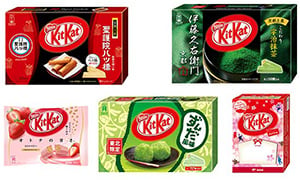
Inside the Seibu department store at the Ikebukuro train station in Tokyo is a new chocolate boutique featuring one of Japan's favourite brands: Nestle's KitKat. The brand name has become associated with good luck because it sounds like the phrase 'I hope you will win'. Students in Japan buy KitKats with the thought that it will help them do well on exams.
Not surprisingly, KitKat uses marketing to build on this good luck perception. The new boutique sells some exclusive KitKat flavours created by chocolatier Takagi for Nestle, including Sublime Bitter, Special Sakura Green Tea and Special Chilli. The boutique is already selling out its limited-edition products daily, but revenues aren't the only reason for this retail venture: It's actually a high-profile brand-builder. Simply type "KitKat Chocolatory" or "KitKat Japan" into a search engine and you'll see the boutique's worldwide media coverage.
From 2007, Nestle has developed KitKat variations only for Japan. In fact, depending on where in Japanese consumers buy KitKats, they will find flavours not available in other areas (like Purple Potato). Most KitKat packaging features English (the brand and the brand owner) as well as Japanese, adding a 'global' angle that enhances the product's sweet marketing appeal.
Not surprisingly, KitKat uses marketing to build on this good luck perception. The new boutique sells some exclusive KitKat flavours created by chocolatier Takagi for Nestle, including Sublime Bitter, Special Sakura Green Tea and Special Chilli. The boutique is already selling out its limited-edition products daily, but revenues aren't the only reason for this retail venture: It's actually a high-profile brand-builder. Simply type "KitKat Chocolatory" or "KitKat Japan" into a search engine and you'll see the boutique's worldwide media coverage.
From 2007, Nestle has developed KitKat variations only for Japan. In fact, depending on where in Japanese consumers buy KitKats, they will find flavours not available in other areas (like Purple Potato). Most KitKat packaging features English (the brand and the brand owner) as well as Japanese, adding a 'global' angle that enhances the product's sweet marketing appeal.
Tuesday, 16 October 2012
Cadbury wins battle for purple
Cadbury has been fighting Nestlé for four years over which company has the legal right to use a particular colour of purple on product packaging. Cadbury filed a trademark on Pantone 2685C in 2008, touching off the legal battle with Nestlé, which was using the purple for its Wonka brand.
In December, 2011, Cadbury won a court ruling that gave it the legal right to trademark the purple. Then Nestlé appealed that ruling, saying a colour isn't trademarkable.
Two weeks ago, the High Court ruled that Cadbury is entitled to trademark the colour for use on milk chocolate bar packaging.
The judge noted: 'In my judgment it would not be right to say that the colour purple is distinctive of chocolate generally'.
In fact, Nestlé points out that the ruling actually 'protects our brands by further limiting the range of goods for which Cadbury’s application may be registered'.
Cadbury is already promoting 'our famous colour purple' and introducing new chocolate bars with its purple packaging.
Will the two food companies continue battling over colours in the future?
Subscribe to:
Posts (Atom)