Saturday, 9 February 2013

What's in store for private brands?

Private brands continue to sell well as bargain-hunting buyers seek out savings, not just in groceries but also in other categories. Already, grocery-store brands account for 45% of all UK supermarket sales. Looking ahead, one survey found that shoppers will increase their purchases of private brands by 22% during 2013.

Not surprisingly, stores are putting marketing power behind their private brands, because promotions add visibility and highlight the value benefits.
  • Tesco reintroduced its range of private-brand baby products as 'Tesco Loves Baby'. The idea is to encourage shopper loyalty among new parents. Think about the extra revenue and profits if new parents adopt Tesco brands for baby's early years, and buy extras while in the store. Plus the parents club will provide input to help Tesco improve its products.
  • Waitrose's website features its 'essential' range of 1,500 products, everything from pet food and pasta to coffee and crisps. The retailer describes its private brand this way: 'At the heart of our essential range is the belief that you shouldn’t have to compromise your standards, even on the everyday items you depend on'. (Waitrose has 93,000 Facebook likes.)
  • Morrisons is launching a new private brand of children's clothing and 'essentials' clothing for everyone. Margins on such products tend to be better than the margins on food, so this move is expected to help the bottom line if customers buy and clothing revenue is strong.
  • Asda was a pioneer of private brand fashions in its stores--its George brand appears on everything from baby clothes and blazers to shoes and socks. The George Style blog keeps brand fans updated on the latest styles. Of course George has more than 120,000 Facebook likes.

Wednesday, 6 February 2013

The international flavour of 'Do us a flavour'

Remember when consumers voted to add Builder's Breakfast (a flavour invented by a brand fan) to the Walkers crisps range in 2009? Although the flavour was discontinued a year later, the contest has continued to draw public and industry acclaim, winning awards and helping parent company PepsiCo benefit from the cocreation involvement of crisps fans across the continent and beyond.

Based on that initial success with Walkers, PepsiCo has held 'Do us a flavour' contests in more than a dozen countries, including Spain, Poland and Australia. When Lay's Belgium invited consumers to submit a flavour, the contest result was higher brand engagement and higher sales.

Currently, the contest is running in the US, where the finalist flavour will be announced later this year. Launched with a major media push in New York's Times Square last year, the Lay's contest will promote the winning flavour in connection with the brand's 75th anniversary.


This week, PepsiCo announced it would begin the contest in Canada, again making social media a central element for messaging and voting. 

Whether the crowdsourced flavours become permanent members of the product range is not the point. 'Do us a flavour' is intended to get brand fans involved in the fun and excitement of choosing a new flavour while reinforcing the brand's contemporary image.

Tuesday, 5 February 2013

B2B: Marketing high-speed hand dryers

Sir James Dyson is best known for his vacuums, but his innovations also extend to fans, heaters and high-speed hand dryers for public restrooms. The B2B market: businesses, restaurants, schools, government agencies, tourist attractions and buildings that have restroom facilities for employees or customers.

His UK company's latest invention is the Dyson Airblade Tap (left) which makes hand washing and drying more efficient by completing both processes in about 12 seconds. This would eliminate the need for paper towels, saving money and time, not to mention trees. His marketing points out that the Airblade Tap would also mean a neater, safer restroom--no water dripped across the floor, less bacteria sprayed all over.

The Airblade Tap costs £999.99, so Dyson helps business customers look beyond the purchase price and evaluate the long-term cost benefits. Its website includes an interactive feature to "calculate your savings" (above right, the initial step in the process). Another good marketing idea: Dyson has a "request a meeting" link where prospects can request a demonstration or a sales call. (You can also find Dyson on Facebook, where it has 56,000 likes, and on YouTube, where it has more than 4.6 million video views.)

One of Dyson's US competitors is Excel, which markets made-in-America high-speed commercial hand dryers for public restrooms. Excel's strap line: "Time to throw in the towel."

Excel also provides a convenient calculator (including "green" savings) to help businesses evaluate the financial implications of buying its products. Apart from the product benefits, the point about its products being manufactured in America is mentioned in nearly every news story about Excel.

Now Excel is reportedly readying its own all-in-one hand washer/dryer. No word yet on the cost, but it will likely be marketed on the basis of sustainability and long-term cost savings. Excel's Xlerator hand dryer currently has just 360 Facebook likes--but that may change as Excel increases its marketing during 2013.

Tuesday, 29 January 2013

Coffee culture heats up

The Italian coffee company Lavazza will open dozens of Lavazza Espression coffee shops around London in the coming years, part of its intense focus on the UK market.

Italian-style coffee has been trendy in the UK for some time, with Whitbread's Costa operating 1,300 shops, Starbucks operating 760 shops and Caffe Nero operating 400 shops. Add it all up, and one expert says these three chains hold a combined 52% of the UK coffee-shop market. These chains revived the UK coffee culture and helped educate consumers about great tasting espresso, capuccino and other hot (and cold) coffees that have become favourites.

Even so, if the market share numbers are correct, and coffee consumption continues to increase as strongly as in previous years, there's opportunity for innovation by independent shops and small chains that emphasise high quality.

The Independent recently listed the 50 best UK coffee shops, including indies like Allpress Espresso, Caravan and 6/8 Kafe, highlighting friendly service, superior coffee, special events and comfortable cafe ambiance. After all the years of enjoying chain coffee, many consumers are seeking out different places and tastes, partly for the novelty and partly to be among the first to discover something new and different.

One fast-growing new entrant is Harris & Hoole (above), which has 10 coffee shops and multimillion-pound backing from Tesco. Although the Tesco investment has sparked some controversy, the founders of Harris & Hoole explain that they had difficulty obtaining funding and Tesco's money doesn't represent a controlling interest. Watch for more H&H shops popping up all over London and beyond--and for independents that make great coffee or offer great ambiance.


Friday, 25 January 2013

Marketing chocolate in Japan (and beyond)

The market for chocolate in Japan is growing year after year, fueled by consumer interest in new flavours, status brands and personality plus.

Nestle makes unusual Kit Kat flavour combinations for Japan, but the product name is also meaningful: It sounds like kitto katsu or, roughly translated, 'surely win'. That's why so many students nibble on Kit Kat bars for good luck before taking their uni exams.

International brands with a luxury image are particularly desirable, in chocolate as in nearly every other product category in Japan. The upmarket French chocolatier Frederic Cassel recently created a kimono of chocolate to showcase its premium products, sold through three company stores in Japan.

La Maison du Chocolat is known in Japan for its ganache. Tailoring its products to local tastes, La Maison du Chocolat emphasises mild milk chocolate and caramel in Japan rather than the darker bittersweet flavours that sell so well in its French stores. Yes, this brand is on Facebook.

Sapporo-based Royce' is expanding beyond Asia, with creamy, fresh chocolates sold through company-owned shops in Brunei, Vladivostock and New York City. This brand's unique selling proposition is quality, including the use of farm-fresh milk sourced from farms surrounding its Hokkaido factory. Just getting started in New York, Royce' has only a few Facebook likes for that location.


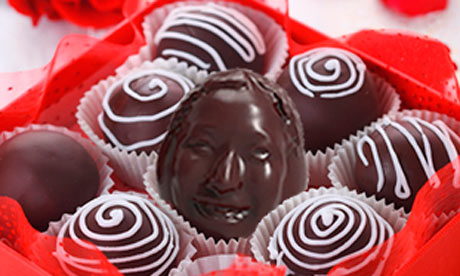
Finally, with Valentine's Day only weeks away, an unusual new twist on chocolate has been emerged: The ability to mold chocolates with 3-D printed faces of the giver or the recipient. Not surprisingly, the chocolate faces have gotten a lot of media attention lately.

Wednesday, 23 January 2013

Will Ocado be a success?

Founded in 2000, the online grocery retailer Ocado wants to be known for 'quality groceries that won't cost the earth'.

Despite a promising start, including early adoption of apps for mobile ordering, the company has struggled financially over the years. This week, Sir Stuart Rose (formerly of Marks & Spencer) was named to replace outgoing chairman Lord Grade as Ocado moves ahead with a plan to open a second of its highly automated warehouses.

This change at the top adds yet more retail expertise and experience to help Ocado compete with multichannel powerhouses like Tesco, a difficult challenge for any company. Still, Ocado gets high marks from happy customers. It also makes the most of its high-tech know-how, with 127,000 Facebook likes and services such as texting customers with delivery reminders.

When will Ocado report a profit? By some estimates, this won't happen until 2015.

Monday, 14 January 2013

No noise = No-logo branding

Selfridges is running an interesting 'No noise' campaign right now, with a select group of products being marketed minus the logo.

Here are just three of the no-logo products. Test yourself! Just in case, the brand names are shown at the end of this posting.

The inspiration for this unique retail initiative is the founder's Silence Room, originally opened in 1909. Today's shoppers will be invited to switch off their mobiles and enjoy a few minutes of calm and quiet in the newly renovated Silence Room in London.


And now, for those brand names . . .

|
|
|

From left: Heinz, Heinz and Clinique.

But you knew that, just by looking at the labels and package shapes.


Sunday, 13 January 2013

Is brand loyalty still alive?

According to a 2012 study by Ernst & Young, brand loyalty is influential in developing markets but diminishing in Western nations, where consumers are willing to switch brands. A new UK shopper survey by Bain & Company and Kantar Worldpanel concludes: On average, 50% of a brand’s ‘loyal’ users will not be with them the following year.

Yet brand loyalty is still alive. Consider that 96% of UK adults are members of at least one loyalty programme. Even if these customers buy only occasionally, they're interested enough to enroll--and therefore represent significant opportunity for brands that make the effort to connect by:
  • Providing tiers to reward higher loyalty. Virgin Atlantic Airways offers red, silver and gold reward levels for frequent travelers. Tier points depend on the type of ticket purchased (Upper Class, etc) and the length of the flight (going to Australia earns more points than trans-Atlantic). This way, all members can feel rewarded in some way for their loyalty and those who are close to the next tier may be motivated to move up by consolidating their travels with Virgin.
  • Engaging and rewarding brand fans. Domino's discounts pizzas and other menu items each time a particular hashtag is retweeted on Twitter. This means brand fans have to be watching the Domino's Twitter feed and spring into action with the hashtag. The reward--lower prices--lasts for a very limited time, which drives immediate purchasing.
  • Personalising the programme and access choices. It's a multichannel world, with customers using all kinds of devices when and where they please. Marketers are using 'Big Data' to dig into customer info, understand preferences and customise programme details and/or rewards. Tablet and mobile access are the norm, so marketers must be sure their communications look good on these screens, too.
  • Gamification. It doesn't have to be Angry Birds or Bubble Witch Saga. Gamification simply makes loyalty programmes more fun, more challenging and more satisfying. Who doesn't want to win or at least move up a level?

Wednesday, 9 January 2013

Marketers invest in tomorrow's partners

Some of the biggest names in business are putting money into tiny firms that have the potential to become key partners or suppliers sometime in the future. The firms making the investments aren't banks--they're multinationals that want to benefit from new ideas and new processes that indie startups might develop.

Here are a few examples:
  • Unilever Ventures has an 'incubation' programme to help small UK businesses that are developing innovative ways for customers to interact with brands via smartphone and social media.
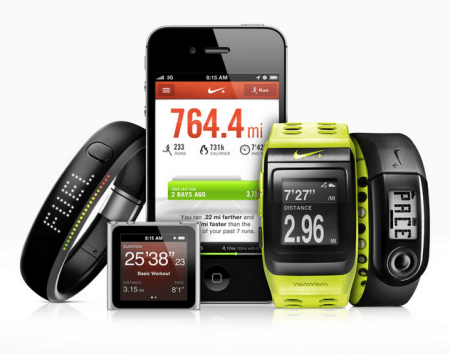
  • Nike is investing in tech companies that plan to use its Nike+ technology (see photo, right).
  • Procter & Gamble has joined with the University of Cincinnati in Ohio to fund a 'startup accelerator' for new businesses.
  • BMW has a New York-based venture capital unit to assist businesses that are developing mobile services offerings.
  • Intel Capital invests in firms that are working on new technologies, devices and software suitable for its chips.
What innovations will grow out of these investments? How many will be successful? And  will the marketers that invest in these startups gain a competitive edge from their association with the next new thing?

Saturday, 5 January 2013

Now open in London: Bosideng

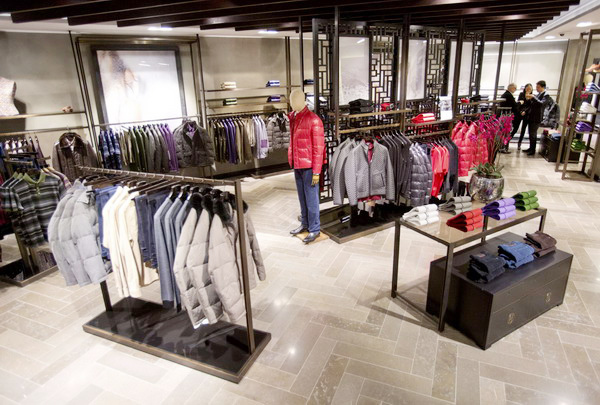
Bosideng, one of China's largest fashion retailers, has opened a new store on South Moulton street in London to support a more upmarket positioning. Below, a view of clothing on display for the grand opening

Bosideng is also negotiating to create boutiques in fashionable London department stores and may start an online store for UK shoppers later in 2013. The target market for its retail strategy: tourists, students and expats from China who visit or live in London.

With 10,000 stores and millions of brand fans in its home country, Bosideng is well known for selling down-filled clothing (some 450 million jackets every year). Its London styles will offer an "east meets west" look, according to Bosideng's top UK exec.

The London store is a long-term project, with millions of pounds of investment and an opportunity to research retail trends outside China before the company expands into Western Europe, North America and possibly beyond.

Will Bosideng's retailing expertise, manufacturing prowess and financial strength translate to success in London?