Specsavers, the multinational chain of more than 2000 retail shops, appeals to consumers on the basis of local expertise, fashion design and affordable pricing. The company's multichannel strategy appeals to multiple market segments.
Local Specsavers shops examine the external marketing environment for spectacles and other eyewear products and offer products and services to meet the needs of their retail clientele.
Specsavers particularly wants to be known for its community involvement and social responsibility. So, for example, some UK stores recently participated in charity efforts like fundraising for Brain Tumour research.
The UK Specsavers organisation is highly social...and has attracted hundreds of thousands of views for its YouTube videos over the years. Its Twitter account, opened eight years ago, has nearly 40k followers. Its Instagram page features stylish eyewear for men and women, a complement to the pricing promotions in other media.
In Africa, nearly 300 franchised Specsavers shops emphasise affordable eyewear via social media such as Facebook and Twitter. The organisation offers free try-on of glass frames by mail, so customers can see how frames look at home.
In Australia, the Specsavers organisation uses the strapline 'Good looking styles at feel good prices' on its website. Its Instagram account asks brand fans to 'snap a spec selfie' and upload with the tag #LoveGlasses for a chance to win a prize. Its Facebook page has more than 110k followers and its YouTube account has nearly 1000 followers. The Australian Specsavers stores support hundreds of local community causes.
This updates the Specsavers example in the chapter on Analysing Customers and Markets, in my book Essential Guide to Marketing Planning.
Showing posts with label multichannel strategy. Show all posts
Friday, 4 May 2018
Monday, 19 June 2017
Beauty brands seek multichannel availability
Consumer behaviour is changing, and so beauty brands are changing their distribution strategies to be where consumers want to browse and buy. As department stores
consolidate and shoppers seek out specialty shops and online outlets,
brands like Nyx are opening their own UK stores for direct customer
contact. Nyx, for example, recently opened a flagship UK retail location with digital elements designed to appeal to Millennials.
Beauty-sample subscription businesses like Birchbox give consumers more access to more new products. This is another channel for brands to reach consumers who like variety or want to test different items before becoming a loyal buyer of a particular brand/product.
Birchbox is, in fact, considering a UK store as another channel to supplement its online-only business model. 'Physical retail enhances the relationship with the brand, but it has to be profitable in their own right, it’s not just a marketing activity for us', says cofounder Katia Beauchamp. If Birchbox opens a store, the brands it distributes gain yet another channel of access to retail customers.
Yet the Birchbox cofounder's question is very important for multichannel strategy: Will brick-and-mortar retail shops be profitable on their own? The answer depends, in part, on how consumers adapt their browsing and buying habits in a crowded multichannel marketing environment.
Beauty-sample subscription businesses like Birchbox give consumers more access to more new products. This is another channel for brands to reach consumers who like variety or want to test different items before becoming a loyal buyer of a particular brand/product.Birchbox is, in fact, considering a UK store as another channel to supplement its online-only business model. 'Physical retail enhances the relationship with the brand, but it has to be profitable in their own right, it’s not just a marketing activity for us', says cofounder Katia Beauchamp. If Birchbox opens a store, the brands it distributes gain yet another channel of access to retail customers.
Yet the Birchbox cofounder's question is very important for multichannel strategy: Will brick-and-mortar retail shops be profitable on their own? The answer depends, in part, on how consumers adapt their browsing and buying habits in a crowded multichannel marketing environment.
Thursday, 18 May 2017
Luxury brands move toward omnichannel marketing
Consider LVMH, the €37.6 billion French-based group marketing top-quality, upmarket brands like Louis Vuitton, Bulgari, Tag Heuer and more than 65 other brands (soon to include Christian Dior Couture).
LVMH had a previous ecommerce venture, eLuxury, but eight years ago, during the great recession, the company closed the retail function and transformed the site into a digital fashion magazine.
Now LVMH is launching a new ecommerce venture. This new business (both online and app version) is 24 Sèvres, named for the firm's Paris street address. The business will go live in mid-June.
'Increasingly consumers want pictures over words', says LVMH's chief digital officer, Ian Rogers, mentioning the rapid rise of Instagram and Snapchat. Therefore, he says, 'if you look at our site, we lean far further toward visually-led merchandising than the more editorial skew of our competitors'.
Instead of brand-specific sites and apps, this new online retail platform will feature multiple LVMH brands--and some non-LVMH brands as well, with a visually innovative customer experience. Rogers says: 'There is . . . currently a major focus on omnichannel and experience, and we are moving from a mass culture to a mass of niches'.
Monday, 3 October 2016
Inside the marketing plans of UK challenger banks
Challenger banks are recently-founded banks challenging the traditional UK high-street banks. As some high-street banks close branches and adapt IT systems to multichannel requirements, challengers begin with the latest technology and lessons learned by studying the established competitors.
Monzo is a challenger bank targeting digital-savvy customers. Originally named Mondo, Monzo operates no branches but instead delivers services electronically. Its marketing plan involves continuous customer input--asking for feedback on products for cocreation, and even soliciting ideas for the brand name Monzo. It hosts periodic get-togethers for customers to meet each other. 'People in corporates roll their eyes when startups talk about values and vision, but the brands who succeed are those who can define that for the people on the journey with them', says Monzo's head of marketing.
Another challenger is Metro Bank, founded by the experienced bank entrepreneur Vernon Hill, with retail branches that are open for extended hours every day of the week. Looking at the UK bank industry, he observes: 'There had been no entrepreneurial tradition in banking. Maybe there was 50-100 years ago, but there certainly hadn’t been one here for a long time'. So Metro bank's marketing plan is based on competing with convenience and friendly service, as well as multichannel marketing to allow customers to bank when and where they choose.
Also competing as a challenger bank is Atom Bank, which is digital-only, no branches. Its marketing plan relies on differentiation via customer focus. Customers can choose a personalised look for their Atom Bank app and even call the bank whatever they wish. Atom's CMO says: 'The traditional old banks constantly reference their relationship with its customers, but our brand strategy is about us helping people understand money much better'.
Monzo is a challenger bank targeting digital-savvy customers. Originally named Mondo, Monzo operates no branches but instead delivers services electronically. Its marketing plan involves continuous customer input--asking for feedback on products for cocreation, and even soliciting ideas for the brand name Monzo. It hosts periodic get-togethers for customers to meet each other. 'People in corporates roll their eyes when startups talk about values and vision, but the brands who succeed are those who can define that for the people on the journey with them', says Monzo's head of marketing.
Another challenger is Metro Bank, founded by the experienced bank entrepreneur Vernon Hill, with retail branches that are open for extended hours every day of the week. Looking at the UK bank industry, he observes: 'There had been no entrepreneurial tradition in banking. Maybe there was 50-100 years ago, but there certainly hadn’t been one here for a long time'. So Metro bank's marketing plan is based on competing with convenience and friendly service, as well as multichannel marketing to allow customers to bank when and where they choose.
Also competing as a challenger bank is Atom Bank, which is digital-only, no branches. Its marketing plan relies on differentiation via customer focus. Customers can choose a personalised look for their Atom Bank app and even call the bank whatever they wish. Atom's CMO says: 'The traditional old banks constantly reference their relationship with its customers, but our brand strategy is about us helping people understand money much better'.
Monday, 20 June 2016
Do online stores need a physical presence?
Many online stores have, since their first days, been digital only, without a physical presence on the high street or in the shopping centre.
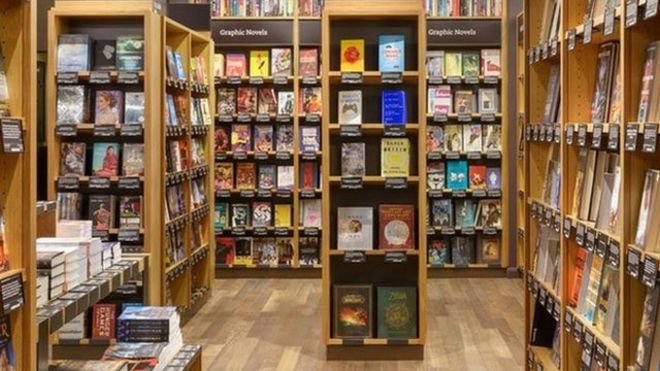
The obvious example is Amazon, which pioneered online-only retailing and is making a major marketing effort in the UK to sell groceries online. But in the US, Amazon is currently experimenting with book stores in two locations, and planning additional book stores in the future.
Amazon can learn a lot about shoppers by observing how they browse, what catches their attention in the store, what sells well in a store compared with online only, and so forth. It can also experiment with covers, shelf placement, pricing, adjacencies and other details.
In Canada, several online-only retailers are opening physical stores. The goal is to provide a physical space in which to express the brand image and showcase branded products. Indochino, which originally marketed online-only bespoke men's wear, now generates half of its turnover from the physical stores it operates.
Even brands that sell through other retailers are opening their own branded stores. Upmarket outerwear company Canada Goose, well known for its goose-down jackets and other apparel, is opening its own stores in New York and Toronto.
As the global economy improves, will more online-only retailers become multichannel?
The obvious example is Amazon, which pioneered online-only retailing and is making a major marketing effort in the UK to sell groceries online. But in the US, Amazon is currently experimenting with book stores in two locations, and planning additional book stores in the future.
Amazon can learn a lot about shoppers by observing how they browse, what catches their attention in the store, what sells well in a store compared with online only, and so forth. It can also experiment with covers, shelf placement, pricing, adjacencies and other details.
In Canada, several online-only retailers are opening physical stores. The goal is to provide a physical space in which to express the brand image and showcase branded products. Indochino, which originally marketed online-only bespoke men's wear, now generates half of its turnover from the physical stores it operates.
Even brands that sell through other retailers are opening their own branded stores. Upmarket outerwear company Canada Goose, well known for its goose-down jackets and other apparel, is opening its own stores in New York and Toronto.
As the global economy improves, will more online-only retailers become multichannel?
Sunday, 3 January 2016
Marketing predictions for 2016
Marketing experts have a number of predictions for the year ahead. Keep these developments in mind if you're creating or refining a marketing plan in 2016:
- Trust will be more important than ever. Brands must take care to keep earning it with every transaction, every marketing action. Customers still want transparency and authenticity, not just the right product at the right price.
- Omnichannel is no longer merely an option, it's a basic requirement as customers expect personalisation and relevant marketing communications and offerings across platforms, online and offline. Customers who buy online should be able to return products in a store without fuss.
- Real-time analysis of Big Data wins. Customers leave traces everywhere they digitally go. It's up to marketers to interpret wants and needs by tracking behaviour and offering ads, content and other information at the moment consumers need and want it.
- Virtual reality is a reality. Brands and entertainment marketers need to have communications and services for cutting-edge technology, especially for millennial consumers.
- 'Alternative' has gone mainstream. Goods and services that were once on the margins are increasingly popular. Customers want 'unique', and retailers want to differentiate themselves by offering something other than the usual.
- 'Buy it now' is the new social media reality. See it on Pinterest or Instagram, buy with a swipe or click. Is your brand ready to take advantage of this trend?
Friday, 7 November 2014
Battle of the holiday adverts begins
With the yearend holiday shopping season about to begin, UK retailers are unveiling their new adverts and warm-hearted campaign themes.
The first was John Lewis, which put an adorable child and best friend, Monty the penguin, into the spotlight. Posted on YouTube, the advert attracted 4.5 million views in less than 48 hours.
This new holiday advert follows the animal friends theme that won John Lewis's bear and hare advert so many holiday views in 2013. Strong on emotion, no hard-sell, focus on positive attitudes and feelings.
Next was Marks & Spencer, which renamed itself Magic & Sparkle as it revealed its holiday fairies advert with a tweet:
Marks & Spencer is relying more heavily on social media this holiday season to capture the attention of tablet and mobile users who browse and buy with a click or fingertip.
Multichannel strategies are a must for 2014 holiday success. Watch for more social media marketing and more special adverts as countdowns to the holidays (and, earlier, the special window displays) continue.
The first was John Lewis, which put an adorable child and best friend, Monty the penguin, into the spotlight. Posted on YouTube, the advert attracted 4.5 million views in less than 48 hours.
This new holiday advert follows the animal friends theme that won John Lewis's bear and hare advert so many holiday views in 2013. Strong on emotion, no hard-sell, focus on positive attitudes and feelings.
Next was Marks & Spencer, which renamed itself Magic & Sparkle as it revealed its holiday fairies advert with a tweet:
Introducing a little Christmas Magic and Sparkle. #FollowTheFairies
https://t.co/yE2NJi8Rwx
— M&S (@marksandspencer) November 7, 2014
Marks & Spencer is relying more heavily on social media this holiday season to capture the attention of tablet and mobile users who browse and buy with a click or fingertip.
Multichannel strategies are a must for 2014 holiday success. Watch for more social media marketing and more special adverts as countdowns to the holidays (and, earlier, the special window displays) continue.
Thursday, 9 October 2014
Why Retailers Run into Trouble
From Comet to Blockbuster, Phones4U and beyond, some UK retailers have run into trouble from a variety of challenges related to changes in the marketing environment, including:
Increasingly, retailers are looking to multichannel marketing as a key to attracting new customers and retaining existing customers who enjoy shopping via tablet or mobile, not just in a high-street store.
- Economic conditions
- New consumer tastes
- New shopper behavior
- Population shifts
- Industry consolidation
- Management issues
- Financial woes
- Technology
Friday, 2 May 2014
Clicks and bricks evolve
Multichannel marketing continues to evolve as retailers, in particular, test combinations of online ordering and physical store locations that might give them a competitive edge in attracting and serving customers. Clicks and bricks strategies for UK marketers include:
- Buy online, pick up in a store. An example is John Lewis's Click and Collect service, which allows buyers to have purchases waiting for them at a nearby John Lewis, Waitrose or Click+ location. The new John Lewis 'convenience' outlet, opening in London's St Pancras Station this fall, will be a collection site and a retail store stocking high-demand items like home fashions and electronic gadgets. Already, 33% of John Lewis's online sales combine clicks and bricks--meaning one-third of the customers who buy online opt to pick up in a store.
- Independent online retailers test store openings. Here, the idea is to compete more effectively, increase sales and reach customers who don't buy online or prefer to see merchandise before ordering. Remember, the high number of high street vacancies means e-businesses have more opportunities to try operating a store in a good location.
- Pop-up shops allow for testing new products and markets. Clicks and bricks can include a limited-time pop-up shop for a specific occasion, product category and/or market. The temporary nature of pop-ups allows for flexibility and affordability. If the location attracts shoppers, the pop-up may be extended or used in another place or at another time.
- Integrating digital with non-digital in other markets. Tesco, for example, shows how its clicks and bricks approach supports global growth (see below). The UK retail giant's South Korean business combines retail stores and online buying, with savvy use of digital media and customisation. It was a pioneer of the concept of virtual stores featuring shopping via mobile.
- What about social media and shopping? Stores open on a social media site appear to be perceived as slightly less trustworthy, according to a YouGov study. Still, social media content is vitally important for brand-building and awareness, even if shoppers don't actually click to buy via social media. Social media can influence, inform and persuade!
Tuesday, 29 April 2014
Visual recognition apps help fashion fans buy
See a frock or shoe, snap a photo or click a button, add it to the app and instantly see where to buy it.
Shopping for clothing and accessories couldn't be faster or easier. And that's the point.
Increasingly popular visual recognition apps like Snap Fashion (above) and Style-Eyes (right) enable fashion fans to identify an item they see (on someone else, for instance, or on a website) and immediately locate a retail outlet where it can be purchased.
Some visual recognition apps will match by colour alone (Snap Fashion's ColourPop is an example). Want a pair of shoes to match that fuchsia skirt you spotted in a friend's photo? This app will help.
The idea is to help consumers shift into shopping mode in a seamless way. The apps don't necessarily promote online buying, because if users know a garment is available at a certain store--such as Topshop or Debenhams--they can still visit the store in person, a multichannel option. Consumers like choice, and that's what makes the apps even more beneficial for users and retailers alike.
Shopping for clothing and accessories couldn't be faster or easier. And that's the point.
Increasingly popular visual recognition apps like Snap Fashion (above) and Style-Eyes (right) enable fashion fans to identify an item they see (on someone else, for instance, or on a website) and immediately locate a retail outlet where it can be purchased.
Some visual recognition apps will match by colour alone (Snap Fashion's ColourPop is an example). Want a pair of shoes to match that fuchsia skirt you spotted in a friend's photo? This app will help.
The idea is to help consumers shift into shopping mode in a seamless way. The apps don't necessarily promote online buying, because if users know a garment is available at a certain store--such as Topshop or Debenhams--they can still visit the store in person, a multichannel option. Consumers like choice, and that's what makes the apps even more beneficial for users and retailers alike.
Monday, 28 April 2014
Multichannel Marketing for Hello Kitty's 40th Birthday at McDonald's
In the past, such promotions prompted crowding and near-riots as collectors rushed to get their favourite kitty at a local McDonald's restaurant. This year, the promotion is a very digital event, with Facebook photos and posts, online ordering at the McDonald's Singapore website and more.
On the first day of sale, online purchasing was interrupted when the website crashed due to high volume. Demand remains strong, which is why McDonald's is limiting the number of sets available to each buyer.
Although offering Hello Kitty as a sales promotion is intended to increase footfall and food purchasing, McDonald's is wise to avoid logistical problems with a multichannel strategy of optional online ordering. The restaurant chain has also teamed up with SingPost, Singapore's postal service, to deliver sets to collectors at home or at pick-up stations, a smart channel choice to relieve crowding in the restaurants.
In fact, SingPost is joining the Hello Kitty birthday celebration by selling special stamps and other merchandise. Watch for more Hello Kitty merchandise worldwide as the iconic brand continues its celebration.
Labels:
brand,
delivery,
Hello Kitty,
logistics,
multichannel strategy,
Singapore
Wednesday, 8 January 2014
Tesco, Hudl and multichannel marketing
Now that Tesco is out of its disastrous Fresh & Easy US convenience store chain, the UK retail giant is (like every smart retailer) focusing on multichannel marketing strategy. It's also thinking global and looking beyond retailing to enhance relationships with consumers.
- Tesco has been introducing drive-through grocery pickup at select locations. Shoppers log onto the Tesco website to buy, indicate a two-hour window for pickup and then collect their groceries from the store or pickup location of their choice.
- Supporting its online grocery sales, Tesco has opened its sixth warehouse for picking and packing customer orders.
- Tesco is getting good reviews for its Hudl budget-priced tablet computer (right), and plans a new model this year. Putting the spotlight on tech updates the retailer's image and reinforces its commitment to multichannel marketing. It also helps Tesco compete against Asda, which has its own Lifetab tablet.
- Tesco is moving ahead in India, a continuation of its partnership with Tata that began in 2008, to build sales and gain experience in this unusual retail environment.
- Years after launching Tesco Bank, the company has begun offering a current account, which in combination with its mortgage offerings will raise the firm's profile and attract new interest. Especially with the "easy switch" banking rules now in effect, Tesco Bank sees new opportunity to deepen its relationships with consumers who shop in its stores.
Monday, 16 December 2013
Multichannel marketing and the 'last mile' challenge
Customers want to be able to buy in a store or online or via app, from anywhere, at any time. Perhaps the most problematic aspect of multichannel marketing is actually getting products to buyers--the 'last mile' challenge.
Different retailers are tackling the 'last mile' challenge in different ways, as Marketing Week points out in its yearend review of UK marketing.
- Waitrose is storing grocery purchases in temperature-controlled lockers that buyers unlock with a code delivered via mobile. This allows the grocery chain to serve customers in areas where it has no stores.
- Ebay purchased Shutl in October, with the goal of speeding purchases to customers in a growing number of markets worldwide.
- Asda's 'click & collect' program adds convenience by encouraging shopping via app and convenient pickup from locations near customers' homes or offices.
- Amazon has announced plans to investigate the use of drones (Octocopters) for delivery within 30 minutes of online ordering. Really.
Labels:
apps,
ASDA,
eBay,
last mile,
logistics,
multichannel strategy,
online retailing,
retailing,
Shutl,
Waitrose
Tuesday, 5 November 2013
Digital sparkle for Marks and Sparkle
Marks and Sparkle--er, Marks and Spencer--has adopted a digital-first marketing strategy.

Whatever it does, it does on social media or online first. Like its Holiday 2013 advert (see at right), which went live on YouTube before appearing anywhere else. As the economy improves, M&S wants its ads to sparkle and capture the magic of the holiday season.
Digital-led marketing is part of M&S's strategy to capture younger shoppers and let them browse and buy in a multichannel manner. Apps? Yes. Shop Your Way, the M&S program offering buy-by-mobile, buy with a call, buy online, order in a store, and so on, is leading the way towards a 28.5% multichannel sales increase. However, profits are lower as M&S invests in stores and marketing.
Social media marketing is a battleground for retailers and upscale brands these days. Here's where M&S stands with social media fans:

Whatever it does, it does on social media or online first. Like its Holiday 2013 advert (see at right), which went live on YouTube before appearing anywhere else. As the economy improves, M&S wants its ads to sparkle and capture the magic of the holiday season.Digital-led marketing is part of M&S's strategy to capture younger shoppers and let them browse and buy in a multichannel manner. Apps? Yes. Shop Your Way, the M&S program offering buy-by-mobile, buy with a call, buy online, order in a store, and so on, is leading the way towards a 28.5% multichannel sales increase. However, profits are lower as M&S invests in stores and marketing.
Social media marketing is a battleground for retailers and upscale brands these days. Here's where M&S stands with social media fans:
- Facebook: 1.4 million likes
- Twitter: 270,000 followers
- YouTube: nearly 4,000 subscribers; some videos have 346,000+ views
- Pinterest: 8,700 followers
Wednesday, 9 October 2013
Supermarket shopping expands on Boxing Day
In today's multichannel world, shoppers can click to buy online or via mobile or on a tablet computer. They can use QR codes or UPC codes or browse virtual products. In short, store shopping isn't the only way to buy.
Yet some supermarkets are already announcing that they'll open more stores on Boxing Day, accelerating a trend that began after the turn of the century (this century!).
Back in 2007, Asda opened NO stores on Boxing Day, while rival Tesco opened a few dozen of its supermarkets. Fast-forward to 2010, when Asda opened 105 of its stores, Tesco opened 410 supermarkets and Sainsbury opened 236 stores.
For 2013, Morrisons will be opening grocery stores on Boxing Day--a first for that chain--while Asda, Sainsbury and Tesco will continue adding to the number of stores they open. Given the slow pace of economic recovery and the intense competition for shoppers, this isn't surprising. A Morrisons manager explains: 'We believe these opening hours mean customers will come to us rather than a competitor'. . .
Supermarket competition is especially intense because, according to a Payments Council study, 58p of every pound spent at a retailer goes to a UK supermarket. Those pence add up, and every grocery chain wants to get their share.
Two more factors are driving these Boxing Day openings: Bargain hunters are shopping at giant deep-discounters such as Aldi and more shoppers are seeking convenience. So even though grocery purchases are forecast to rise in the coming years, supermarkets will be fighting to hold onto their store shoppers every day, including Boxing Day.
Yet some supermarkets are already announcing that they'll open more stores on Boxing Day, accelerating a trend that began after the turn of the century (this century!).
Back in 2007, Asda opened NO stores on Boxing Day, while rival Tesco opened a few dozen of its supermarkets. Fast-forward to 2010, when Asda opened 105 of its stores, Tesco opened 410 supermarkets and Sainsbury opened 236 stores.
For 2013, Morrisons will be opening grocery stores on Boxing Day--a first for that chain--while Asda, Sainsbury and Tesco will continue adding to the number of stores they open. Given the slow pace of economic recovery and the intense competition for shoppers, this isn't surprising. A Morrisons manager explains: 'We believe these opening hours mean customers will come to us rather than a competitor'. . .Supermarket competition is especially intense because, according to a Payments Council study, 58p of every pound spent at a retailer goes to a UK supermarket. Those pence add up, and every grocery chain wants to get their share.
Two more factors are driving these Boxing Day openings: Bargain hunters are shopping at giant deep-discounters such as Aldi and more shoppers are seeking convenience. So even though grocery purchases are forecast to rise in the coming years, supermarkets will be fighting to hold onto their store shoppers every day, including Boxing Day.
Labels:
ASDA,
grocery retailing,
Morrisons,
multichannel strategy,
retailing,
Sainsbury,
Tesco
Friday, 16 August 2013
ASDA mixes multichannel marketing and social media
ASDA's latest financial results reflect the progress of its multichannel marketing initiatives. 'Our focus on opening up more ways for more customers to shop with us,
particularly in areas currently underserved by Asda, provides us with
real opportunity to grow space and channels to adapt our business to
today’s customer', explains the CEO.
Stores are vital to ASDA's marketing plan for growth, and the company continues to seek out good locations. Not in the sense of a space race, which used to be the preferred method of expansion through opening more and more stores, but in the sense of strategic locations that will enhance ASDA's market presence.
Despite the importance of retail locations, 'click and collect' is seen as the key to cost-effectively serving customers in a multichannel way. The idea is to allow customers to shop (online or via mobile app) from anywhere and at any time. Shoppers select the store where they wish to collect their purchases (if groceries, they also indicate a time slot). No more trolleys, no more queues.
Social media marketing complements multichannel marketing, and that's where ASDA has been gaining strength. The company has 1 million Facebook likes, which is fewer than Tesco, but the number continues to rise steadily. ASDA also has two Twitter accounts, one for news and offers and one for special deals. Now a customer can learn about a special deal, click to buy and select a convenient location to pick up a purchase--all without leaving home or office, using a mobile or tablet or computer.
Stores are vital to ASDA's marketing plan for growth, and the company continues to seek out good locations. Not in the sense of a space race, which used to be the preferred method of expansion through opening more and more stores, but in the sense of strategic locations that will enhance ASDA's market presence.
Despite the importance of retail locations, 'click and collect' is seen as the key to cost-effectively serving customers in a multichannel way. The idea is to allow customers to shop (online or via mobile app) from anywhere and at any time. Shoppers select the store where they wish to collect their purchases (if groceries, they also indicate a time slot). No more trolleys, no more queues.
Social media marketing complements multichannel marketing, and that's where ASDA has been gaining strength. The company has 1 million Facebook likes, which is fewer than Tesco, but the number continues to rise steadily. ASDA also has two Twitter accounts, one for news and offers and one for special deals. Now a customer can learn about a special deal, click to buy and select a convenient location to pick up a purchase--all without leaving home or office, using a mobile or tablet or computer.
Friday, 28 June 2013
ASDA's EDLP brand promise
Everyday Low Pricing (EDLP) is the engine behind UK retailer ASDA's brand promise. ASDA's website promises: If we're not 10% cheaper on your comparable grocery shopping we’ll give you the difference.* (The * leads to the details of which competitors are covered by the promise.)
This brand promise reflects ASDA's strategy of competing on the basis of price in the grocery industry. After ASDA began advertising its price promise, it was followed by Sainsbury, Waitrose and Tesco. Price wars have broken out in several product categories, benefiting consumers but also putting pressure on marketers to be sure they live up to brand promises. The CEO of ASDA observes that this EDLP brand promise is more sustainable than voucher promotions that fluctuate daily or weekly.
ASDA's chief marketing officer tells Marketing Week: 'The priority is communicating EDLP and getting it to break through into a cluttered, gimmicky market'. All weekly promotions are also set up in the entryway of ASDA's head office, just as they would appear in a store--a good approach to internal marketing.
Understanding customer behaviour is key. ASDA recently began a Click & Collect grocery delivery service driven by mobile marketing. Shoppers order via mobile and then either collect their orders from a drive-through store area or from a delivery van parked in a commuter park-and-ride area. Pickup is free, and the EDLP price promise is in place for these orders.
'If you are shopping on the phone you can top up your basket and complete your order on the website on the laptop or you can do the whole lot on the phone. That convenience really resonates with customers', says ASDA's multichannel operations director.
This brand promise reflects ASDA's strategy of competing on the basis of price in the grocery industry. After ASDA began advertising its price promise, it was followed by Sainsbury, Waitrose and Tesco. Price wars have broken out in several product categories, benefiting consumers but also putting pressure on marketers to be sure they live up to brand promises. The CEO of ASDA observes that this EDLP brand promise is more sustainable than voucher promotions that fluctuate daily or weekly.
ASDA's chief marketing officer tells Marketing Week: 'The priority is communicating EDLP and getting it to break through into a cluttered, gimmicky market'. All weekly promotions are also set up in the entryway of ASDA's head office, just as they would appear in a store--a good approach to internal marketing.
Understanding customer behaviour is key. ASDA recently began a Click & Collect grocery delivery service driven by mobile marketing. Shoppers order via mobile and then either collect their orders from a drive-through store area or from a delivery van parked in a commuter park-and-ride area. Pickup is free, and the EDLP price promise is in place for these orders.
'If you are shopping on the phone you can top up your basket and complete your order on the website on the laptop or you can do the whole lot on the phone. That convenience really resonates with customers', says ASDA's multichannel operations director.
Tuesday, 21 May 2013
Multichannel is the future of retailing
A steady rise in multichannel shopping shows that consumers are increasingly buying via mobile, supported by mobile payment options that are faster and more convenient than ever. For example, 20% of Domino's UK orders are made on mobile devices, usually iPhones and iPads. The head of Domino's commercial systems observes: 'One thing is for sure – there is a clear shift in consumer behaviour where mobile is the channel of choice'. Yet according to one study, only half of the leading UK retailers have optimised their e-commerce websites for mobile access, compared with 100% of the leading US retailers.
Claire's, a fashion accessory retailer, is building its first UK e-commerce site with mobile marketing in mind. 'By the end of 2014 we foresee that mobile transaction usage will
overtake desktop computers', explains its director of European e-comm. 'Right now, 66% of 14-23 year-olds own a
smartphone and 73% of teens are active on social media. We wanted our
site to be an extension to our consumers’ lifestyles, an engaging
destination to explore the latest trends and share their voice with us'. Marks & Spencer is experiencing higher multichannel purchasing, and is emerging as a leader in in-store contactless payment acceptance, processing more than 230,000 Visa contactless payments every week. According to one M&S manager, 'Contactless helps reduce queue times even further, giving customers a payment option that's even quicker than cash'. Still, Marks & Spencer recently reported lower profits and is seeking to generate higher turnover in key categories such as apparel, which carry higher profit margins than food products.
Industrywide, high-street stores continue to go bust, leaving a high number of retail vacancies in many cities and towns. Will multichannel marketing lead to more vacancies in the coming years if shoppers shift most of their purchasing to mobile or online sites?
Sunday, 19 May 2013
Updating Tesco's Marketing Plan
Tesco has had a challenging year, with lower UK supermarket profits and a huge write-down planned for its ailing US Fresh & Easy chain.
Now an updated marketing plan, 'Building a better Tesco', aims to put the powerful retailer back on track towards future growth through a focus on six key elements:
- Service & staff - Using internal marketing, Tesco asked employees for their ideas and responded when told about broken fixtures or needed resources. 'They wanted to be given the tools to do the job for customers that they really wanted to do', says UK MD Chris Bush.
- Stores & formats - Tesco has already refreshed 300 of its stores, sometimes including not only the interior (see photo of the refreshed Tesco in Whitstable) but also the car park and access roads. It is also investigating expansion possibilities in India, where government regulations require a certain minimum level of local sourcing.
- Price & value - Tesco has put so much marketing emphasis on its low-price policy that some competitors are complaining about misleading messages. Along with some key rivals, Tesco has also reduced petrol prices, making headlines as the summer holiday season draws near.
- Range & quality - Look for additions to own-label ranges in such categories as snacks, soft drinks and ready meals, with more emphasis on high quality.
- Brand & marketing - Perceptions of the Tesco brand are definitely improving, according to YouGov studies, as the company uses advertising to present 'a warmer and more engaging face' in the words of its CEO. The firm also is expanding its F&F clothing brand to standalone, franchised apparel stores across the Middle East, Eastern Europe and beyond.
- Clicks & bricks - Mobile is a big part of Tesco's marketing plan. It has opened a development center for apps, for example, with the goal of serving customers, understanding their shopping patterns, and pinpointing areas for future investment. The company is also mixing clicks and bricks for multichannel marketing convenience, allowing customers who order online or via mobile to pick up their groceries at more than 150 drive-through locations around the UK.
Sunday, 13 January 2013
Is brand loyalty still alive?
According to a 2012 study by Ernst & Young, brand loyalty is influential in developing markets but diminishing in Western nations, where consumers are willing to switch brands. A new UK shopper survey by Bain & Company and Kantar Worldpanel concludes: On average, 50% of a brand’s ‘loyal’ users will not be with them the following year.
Yet brand loyalty is still alive. Consider that 96% of UK adults are members of at least one loyalty programme. Even if these customers buy only occasionally, they're interested enough to enroll--and therefore represent significant opportunity for brands that make the effort to connect by:
- Providing tiers to reward higher loyalty. Virgin Atlantic Airways offers red, silver and gold reward levels for frequent travelers. Tier points depend on the type of ticket purchased (Upper Class, etc) and the length of the flight (going to Australia earns more points than trans-Atlantic). This way, all members can feel rewarded in some way for their loyalty and those who are close to the next tier may be motivated to move up by consolidating their travels with Virgin.
- Engaging and rewarding brand fans. Domino's discounts pizzas and other menu items each time a particular hashtag is retweeted on Twitter. This means brand fans have to be watching the Domino's Twitter feed and spring into action with the hashtag. The reward--lower prices--lasts for a very limited time, which drives immediate purchasing.
- Personalising the programme and access choices. It's a multichannel world, with customers using all kinds of devices when and where they please. Marketers are using 'Big Data' to dig into customer info, understand preferences and customise programme details and/or rewards. Tablet and mobile access are the norm, so marketers must be sure their communications look good on these screens, too.
- Gamification. It doesn't have to be Angry Birds or Bubble Witch Saga. Gamification simply makes loyalty programmes more fun, more challenging and more satisfying. Who doesn't want to win or at least move up a level?
Subscribe to:
Posts (Atom)