What were some key UK trends in 2018?
Google recently published a list of the most frequently-used search terms amongst UK users. It's not a surprise that many people searched for Meghan Markle, given the hoopla over the royal wedding this year. I was surprised that her name was not at the TOP of the search list. It was #2, followed by the royal wedding.*
At #4 was searches for Black Panther, the blockbuster movie.
At the very top of the list, at #1, was the World Cup. Football fever!
To see the trends globally and country, by country, go to the page Google's Year in Search and select a place.
Globally, for example, Google says the #1 search was . . . World Cup.
Even in the United States, World Cup was the #1 search during 2018.
For historical comparison, you can also select a different year. No individual country results are available for 2001, but globally, the top search term was Nokia, followed by Sony, BMW, Palm (remember that brand? It was a personal digital assistant back in the day) and Adobe.
Fun and an interesting look back on trends from the past.
*Expect Meghan Markle and Prince Harry and the royal baby to trend very high in 2019 search results, right?
Showing posts with label Google+. Show all posts
Showing posts with label Google+. Show all posts
Wednesday, 12 December 2018
Monday, 6 August 2018
What makes co-branding successful?
Co-branding . . . when a product carries two (or more) brands.
One of the classic co-branding categories is the credit card. For years, companies like MasterCard and Visa have offered co-branding opportunities. Virgin Group co-brands credit cards with MasterCard, for instance. American Express co-brands a credit card with British Airways, as another example. Individual banks that issue cards are also co-branding, as Barclaycard has done with its Uber Visa card (combining 3 brands in all).
Co-branding is most successful when both brands are well known, reputable and able to appeal to each other's customer base. The communication styles and marketing content of the brands involved must be compatible, as well. The synergy from combining brands will be strongest under these conditions.
Google has used co-branding to name its Android operating systems more than once. Last year, it co-branded with the famous biscuit brand Oreo to name the Android Oreo OS. In 2013, it co-branded with the popular chocolate bar KitKat for an Android OS name that also appeared on the candy bar wrappers. The co-branding worked because the combined names were quirky and attention-getting.
This post updates material on co-branding in Chapter 6 of my Essential Guide to Marketing Planning, 4e.

Wednesday, 14 June 2017
Ad blockers and consumer behaviour
If you're among the 22% of UK consumers using an ad blocker, you already know that some content-heavy sites (like The Guardian) will allow you to see what they publish but will also request (not require) that you turn off the ad blocker or pay.
And you know that some sites will block you for using an ad blocker--requiring you to turn it off when viewing their pages. If the ad blocker remains on, the content will not load.
Now Google is going to release its own Chrome-based ad blocking software in 2018. The idea is to give consumers more control over ads that are particularly annoying or that don't fit Google's guidelines for some other reason. Why? Because 'it's far too common that people encounter annoying, intrusive ads on the web - like the kind that blare music unexpectedly, or force you to wait 10 seconds before you can see the content on the page', says a Google exec.
Google will also allow content providers to either require that consumers turn off their blockers for those sites or levy a fee for viewing the content.
Consumers who want to access content will have to change their behaviour. Already, content sites are educating visitors that content costs money, one way or the other, and turning off the ad blocker allows a site to continue receiving advertising revenue without any direct payment from the consumer.
Will the new Chrome ad blocker change consumer behaviour and increase the number of UK users? The answer may depend, in part, on whether the blocker comes preinstalled and in place. We'll have to wait a little longer for the details.
And you know that some sites will block you for using an ad blocker--requiring you to turn it off when viewing their pages. If the ad blocker remains on, the content will not load.
Now Google is going to release its own Chrome-based ad blocking software in 2018. The idea is to give consumers more control over ads that are particularly annoying or that don't fit Google's guidelines for some other reason. Why? Because 'it's far too common that people encounter annoying, intrusive ads on the web - like the kind that blare music unexpectedly, or force you to wait 10 seconds before you can see the content on the page', says a Google exec.
Google will also allow content providers to either require that consumers turn off their blockers for those sites or levy a fee for viewing the content.
Consumers who want to access content will have to change their behaviour. Already, content sites are educating visitors that content costs money, one way or the other, and turning off the ad blocker allows a site to continue receiving advertising revenue without any direct payment from the consumer.
Will the new Chrome ad blocker change consumer behaviour and increase the number of UK users? The answer may depend, in part, on whether the blocker comes preinstalled and in place. We'll have to wait a little longer for the details.
Sunday, 18 December 2016
Preventing 'success disaster'
 |
| Message on Hatchimals website in December, 2016 |
In other words, suppose something new like the revamped Google Translate is tested and adopted by a large number of users. The result would be a strain on Google's network unless it planned, in advance, for an extended, sustained surge in usage. Meaning new processing equipment and new networking equipment. Which Google did, in fact, install prior to revamping Google Translate this year.
Family Search, the free genealogy website, also understands the potential for success disaster. As more people worldwide become interested in family history and post names and photos on Family Search's databases, the organisation has arranged for flexible cloud computing services to keep operating at peak demand.
Now think about the potential for success disaster at Christmas time. Weeks ago, well before the peak of holiday shopping, Hatchimal toys were already out of stock in many stores. Even though the company shipped additional inventory during December, it recognised that some children were going to be disappointed by not having Hatchimals under the tree in 2016. The message shown at top was a pop-up on the company's home page in mid-December.
Admittedly, predicting the popularity of a new toy (actually, predicting consumer behaviour towards purchasing the new toy) is quite a challenge. But even LEGO, with its long history of sales analysis, wasn't prepared for worldwide demand in 2015. No wonder LEGO 's top executive says: “If you make a decision in product design, you need to mirror it in manufacturing.” That is a major step towards preventing success disaster.
Thursday, 6 March 2014
Entertainment streaming goes mainstream

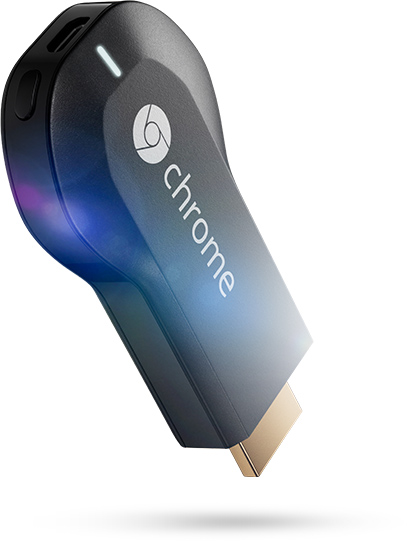 Roku has just introduced a new product, the Streaming Stick, that plugs into a TV's HDMI port and allows easy streaming of programmes and movies via the BBC iPlayer, Netflix and more.
Like the Google Chromecast, which is widely available in the US but not yet on the market in the UK, the Roku's HDMI access is intended to replace a bulkier set-top box.
Apple TV competes with Roku and Chromecast, offering a compact unit that will stream content from iTunes, YouTube, Vimeo, Netflix and other sources.
In other words, more consumers are choosing to stream entertainment, accelerating trends reported in Ofcom's 2013 analysis of the media market. Consumers still watch TV but they also use a lot of devices to access content. And, of course, the tradition of watching TV live is eroding little by little. With on-demand content available for streaming at any hour, the viewing habits of the world are definitely changing. What will this mean for marketers who typically rely on TV adverts to communicate with viewers? Stay tuned.
Monday, 22 April 2013
Earth Day 2013
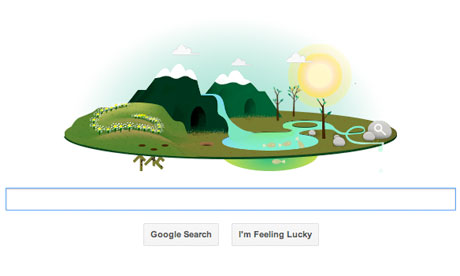
Today's animated Google Doodle sets the tone for worldwide Earth Day celebrations, as you can see. The company itself has been aggressively pursuing clean energy options for years.
All day, organisations and individuals are taking steps to raise awareness about sustainability and protect our planet. For example, the UK's Woodland Trust is running a "More Trees, More Good" campaign to promote the planting of trees.
Earth Day-related phrases are trending on Twitter now, including 'Happy Earth Day' and #EarthDay. 'Tony Stark' (of the Avengers) even tweeted a comic with the caption 'If we can't protect the Earth, you can be damn well sure we'll Avenge it'. Oxfam tweeted its analysis of how big food brands are dealing with climate change.
Want to estimate your carbon footprint? The nonprofit Nature Conservancy has a free calculator for you to try.
Happy Earth Day. What are you doing to save our planet?
All day, organisations and individuals are taking steps to raise awareness about sustainability and protect our planet. For example, the UK's Woodland Trust is running a "More Trees, More Good" campaign to promote the planting of trees.
Earth Day-related phrases are trending on Twitter now, including 'Happy Earth Day' and #EarthDay. 'Tony Stark' (of the Avengers) even tweeted a comic with the caption 'If we can't protect the Earth, you can be damn well sure we'll Avenge it'. Oxfam tweeted its analysis of how big food brands are dealing with climate change.
Want to estimate your carbon footprint? The nonprofit Nature Conservancy has a free calculator for you to try.
Happy Earth Day. What are you doing to save our planet?
Thursday, 26 January 2012
Google's controversial privacy changes
From March 1, Google will be putting all its data about users of Gmail, Google search, Blogger, YouTube, and other services together in one database, analysing it . . . and based on the results, serve up a simpler, better user experience. Read all about the changes here.

In the past, Google had separate privacy policies for each service. Now, by applying a single, uniform policy across services, and merging all it knows about you into one database, the company says it can personalize your Google experiences to make them more relevant to your needs.
Critics are unhappy because it's not possible for anyone to opt out. If you sign in, you're identified across all the Google services, and your data will be collected, whether you like it or not. Gmail may be convenient, but it will be less private because Google will use what it finds in your messages plus what it sees you watching on YouTube or writing on Blogger to present you with targeted ads.
You may, as Google points out, get more precise information when you search, because Google knows so much about you. And there are likely to be other benefits that will emerge as people learn to use the new system. Still, the privacy aspect is quite controversial.
In the past, Google had separate privacy policies for each service. Now, by applying a single, uniform policy across services, and merging all it knows about you into one database, the company says it can personalize your Google experiences to make them more relevant to your needs.
Critics are unhappy because it's not possible for anyone to opt out. If you sign in, you're identified across all the Google services, and your data will be collected, whether you like it or not. Gmail may be convenient, but it will be less private because Google will use what it finds in your messages plus what it sees you watching on YouTube or writing on Blogger to present you with targeted ads.
You may, as Google points out, get more precise information when you search, because Google knows so much about you. And there are likely to be other benefits that will emerge as people learn to use the new system. Still, the privacy aspect is quite controversial.
Monday, 8 November 2010
Google marketing ideas
Multinational marketers strive to leverage their marketing investments in all locations, yet deliver marketing that is customised (at least in part) for local customers or users.

Google has an interesting way of approaching this issue. Its reach is global, yet it adjusts some aspects of its marketing for local users. For example, on most days, its Google Doodle (the logo shown when users go to the main home page to conduct a search) is the same worldwide. On other days, however, it designs Google Doodles for users who log in from particular countries. These one-day Doodles may celebrate a local holiday or a notable achievement. For a summary of Google Doodles that appeared during a particular period, click here.
Google's marketing also appeals to brand fans who want to buy T-shirts, blankets and other merchandise bearing the Google or YouTube brand at the Google Store. Depending on your location, prices will be shown in pounds, dollars or other currencies.
To build community, Google invites fans to submit their own logos. These unofficial logos express the enthusiasm and talent of Google's users worldwide. Although Google is clearly a giant company, its marketing helps users feel that the company understands local differences all over the world.
Google has an interesting way of approaching this issue. Its reach is global, yet it adjusts some aspects of its marketing for local users. For example, on most days, its Google Doodle (the logo shown when users go to the main home page to conduct a search) is the same worldwide. On other days, however, it designs Google Doodles for users who log in from particular countries. These one-day Doodles may celebrate a local holiday or a notable achievement. For a summary of Google Doodles that appeared during a particular period, click here.
Google's marketing also appeals to brand fans who want to buy T-shirts, blankets and other merchandise bearing the Google or YouTube brand at the Google Store. Depending on your location, prices will be shown in pounds, dollars or other currencies.
To build community, Google invites fans to submit their own logos. These unofficial logos express the enthusiasm and talent of Google's users worldwide. Although Google is clearly a giant company, its marketing helps users feel that the company understands local differences all over the world.
Subscribe to:
Posts (Atom)