Monday, 24 February 2014

Specsavers segments the market for eyewear

How does Specsavers, the retail eyewear company, segment the consumer market for spectacles?

It starts with the broad definition of the available market: Customers who are interested in and have sufficient income and access to the product--meaning people who already wear prescription spectacles or want the fashion or function benefits of reasonably-priced spectacles, both indoor and for the sun.

Specsavers then applies a number of segmentation variables, including demographics (men/women), geographic (location in the UK, Australia, and 8 other countries), lifestyle/personality (fashion consciousness), price sensitivity (affordable eyewear), brand loyalty and perceived benefits.

The company partners with local optometrists and retailers to open branded stores that combine the buying power of a large retail chain with the personal approach of eyecare professionals who are based in and understand the local market. The combination makes for powerful competition. When Specsavers entered the Australian market in 2008, it opened 100 retail locations in 100 days. Today, the company has captured 35% of the market, and high brand recognition is helping its 290+ locations attract and retain customers. The business has an Australian glazing laboratory to serve the local market efficiently and effectively.

Specsavers also gives special marketing attention to specific segments within the overall market. For example, its Corporate Eyecare division offers a free booklet to help fleet operators encourage drivers to protect their eyes and eVouchers that employers can offer employees for eyewear discounts. The idea is to reach consumers by targeting their employers.

Targeting children, Specsavers has issued a special kids' magazine to promote good eyecare habits and promote specific branded frames, including Moshi Monster frames (segmentation variables: age and family situation). Just for seniors, Specsavers has a discount that supports its targeting of this large segment (age, price sensitivity).

In its home country of the UK, Specsavers sponsors a Book of the Year contest, inviting consumers to vote for their favourite book/author. At the end of 2013, best-selling author Neil Gaiman won for his book, The Ocean at the End of the Lane. This high-profile contest keeps the brand in the public eye for literary reasons, not just because of the benefits of affordable fashion spectacles.

To see what Specsavers is doing these days, visit its Facebook page (122,000+ likes), its Twitter page (20,000 followers) and its YouTube channel (more than 1 million views).

This post updates and extends the opening example in Chapter 3 of Essential Guide to Marketing Planning, 3d edition.

Friday, 21 February 2014

Subscription beauty boxes: Try, learn and buy

Birchbox, founded in 2010, pioneered the concept of selling a monthly subscription to samples of women's beauty products delivered by post. The concept, according to the co-founders, is 'try, learn and buy'. Once a customer has tested a sample of a new mascara or new bronzer, she'll know whether it is right for her--and be more willing to buy the full size at regular price. No wonder so many beauty brands want to participate.

Two years after it began operations in the US, Birchbox acquired JolieBox to gain entrance to the UK and European markets. Today, Birchbox has a multinational presence and faces considerable competition but continues to acquire customers. It now offers sample boxes for men as well as for women.

Nearly 900,000 people have 'liked' Birchbox UK on Facebook and the firm has posted hundreds of how-to and brand-specific videos on YouTube. To reinforce the brand's connection with style, Birchbox has (for a second year) wrapped London cabs in colourful patterns during London Fashion Week. The cabs highlighted the brand name and style connection, and distributed a free Birchbox filled with sample products at the end of every ride.

One of Birchbox's top competitors is GlossyBox, UK-based and also focusing on men's and women's personal care products. This company has customers in 16 nations and offers both monthly and limited-edition special occasion boxes by subscription. GlossyBox's Facebook page has nearly 600,000 likes. It also posts how-to videos on YouTube to encourage customers to try new techniques and new products.

Other competitors are entering the market all the time, and subscription sample boxes are popping up for many other types of products, from pet food to healthy treats. Try, learn and buy is a good way to reduce the inherent risk of new products--meaning products you've never used before. Once you know what suits your personal needs, you will buy the full size with confidence (and, just possibly, become brand loyal to this new product). 

This post updates the Birchbox feature in chapter 9 of Essential Guide to Marketing Planning.

Tuesday, 18 February 2014

Village England enters the middle as Mulberry moves upmarket

Just in time for London Fashion Week, an art gallery was transformed into a pop-up shop to showcase the new line of Village England leather handbags. Founded in 2012, Village England is establishing itself as a brand for women who favour classically stylish handbags in the affordable luxury price range.

Co-founders Julia Dobson and Eddie Knevett set out to design a leather handbag 'you can fall in love with but isn’t so precious that it can’t be thrown in the back of the car'. In other words, the product is fashionable yet functional, a handbag for walking downtown, taking the Tube or driving into the country.

The co-founders have a background in fashion marketing, and they see a promising opportunity in affordable luxury as Mulberry moves upmarket into premium luxury leather bags, priced as high as £2,500. Lately, Mulberry's upmarket momentum seems to be stalled, with the firm issuing profit warnings even as it eyes the buying power of Asian status-seekers who covet British luxe brands with tradition and cachet.

Mulberry's upmarket move leaves a gap in the market, which Village England aims to fill. Most of Village England's handbags are priced below £300, although some (like the Elsworth Black Tote featured in House of Fraser) carry price tags around £395.

Sociable from the start, Village England is building its brand in social media, especially important for building buzz after its pop-up shop shuts. Click to its Facebook page, Pinterest board or Twitter feed to see the brand's messages and its growth trajectory.


Wednesday, 12 February 2014

Brands speak up about their values

Rolls Royce  (manufacturer of gas turbines, engines and more--but NOT the car brand) says its brand is 'trusted to deliver excellence':
  • Trust: can only be earned by the way we behave with customers, shareholders, partners and colleagues
  • Deliver: we develop long-term relationships with customers and we must deliver consistently on their behalf  
  • Excellence: a standard, our way of life, few companies can aim higher.
Bentley Motors (super-luxury car brand owned by Volkswagen), says its brand is 'a journey of powerful luxury':
  • For the brand, it represents the skills, passion and pride of our people. Their craftsmanship is evident throughout, right down to the initials carefully etched into the upholstery inside every car. An individual hallmark of absolute quality.
Jeep (SUV brand owned by Fiat) says its brand is 'iconic':
  • The iconic Jeep brand is recognized the world over — forever tied to freedom, capability and adventure. Every Jeep vehicle has a unique story to tell, with a rich heritage that links back to the original Willys MA. 
Burberry (luxury clothing brand) says its brand is 'quintessentially British' and reflects the firm's core values – Protect, Explore and Inspire:
  • Digital luxury positioning and the optimisation across innovative mediums of the trench coat, trademark check and Prorsum knight heritage icons make the brand purer, more compelling and more relevant globally, across genders and generations.

Monday, 10 February 2014

Updating the Tata Nano marketing plan

The Tata Nano was launched in India in 2009 under the marketing theme of 'world's cheapest car' with a target market of people (particularly families) who had never owned a car. Its positioning was supported by basic auto features and a low, low base price. Tata's CEO told the Guardian, 'Here in India we see four people travelling by motorbike ... I thought they could travel more safely by car'. Tata was so overwhelmed by orders that it instituted a lottery to select the first buyers.

Now the Nano's marketing plan is being revamped - again - after lower-than-expected sales and reports that the car failed to meet minimum UN auto safety standards. Apparently, many consumers don't want to drive a car with such a low-price image.

The Nano wasn't the only tiny car to fail crash tests, by the way. The other four made-for-India cars that rated zero on a safety scale of 1 to 5 were: Maruti Suzuki Alto 800, Hyundai i10, Ford Figo and Volkswagen Polo. Without air bags, these no-frills autos couldn't pass the crash tests, even though they all meet India's safety guidelines.

Scientist Raghunath Mashelkar, who is on Tata's board of directors, blames poor marketing for the Nano's poor results (and Tata's former CEO agrees). Mashelkar says: 'The Nano is such a great product, it has 86 patents. So, excellence should have been put at the front, and affordability at the back'. In other words, the Nano should have been positioned on the basis of innovation rather than low price.

For the new marketing plan, Tata is positioning its Nano Twist as a car with style and excellent fuel efficiency. The marketing reflects a target market of young couples and features fashion colours and extras such as power steering. Low price is not the primary message. Will the new marketing plan reignite Nano's sales in 2014?

Friday, 7 February 2014

Aussie Animals boost shopping at Woolworths

Woolworths, the largest Australian retailer and ranked 15th in the world by revenue, follows a four-pronged strategy for continuing growth:

1. Extend leadership in food and liquor

2. Act on the portfolio to maximise shareholder value

3. Maintain the track record of building new growth businesses

4. Put in place the enablers for a new era of growth

Woolworths has been implementing its strategy as planned. Not only is the retailer increasing its sales of food and liquor--with higher prices, higher market share, higher customer counts, and higher per-customer transactions--it is adding to its strength and preparing for new growth by expanding into online retailing. It purchased EziBuy Holdings last year to gain market share and expertise in e-commerce. 

The retailer's point of differentiation is fresh, local quality--specifically, that 96% of its fresh fruits and veggies are grown in Australia, and 100% of its meat comes from producers in Australia. And, thanks to the popularity of its private label foods, careful price negotiations with suppliers and a focus on reducing waste, Woolworths consistently enjoys gross profit margins at or above 23%.

From a marketing standpoint, Aussie Animals trading cards get the credit for at least some of the recent revenue growth. The cards are actually free: Shoppers receive 4 free cards for every A$20 spent in a local Woolworths store. In other words, the cards act like a loyalty reward programme--the more money you spend, the more cards you receive. 

When Woolworths launched the trading cards in mid-2013, children found the colorful cards (depicting native animals) irresistible and began collecting and trading them (in school and on Facebook). 

Immediately, parents were implored to buy more at Woolworths so kids could collect the entire set. A lively collectibles market sprang up online. Woolworths posted programme updates on Facebook (where it now has nearly 600,000 likes) and created a separate swap zone for trading the cards.

Then, in early December, Woolworths introduced a special holiday set of Aussie Animals, reigniting trading card fever at the start of the year's busiest shopping period. And it worked.

Clever marketing? Clever competitive tactic? Here's what the Daily Telegraph said:

Whoever came up with this little - let's call it a racket - is an absolute genius. It is the science of peer pressure and parents are not immune.

Friday, 31 January 2014

Marketing Social Games

King and Zynga are two of the biggest social game companies in the world, serving hundreds of millions of players every day who log on via computer, mobile or tablet.

If you've played FarmVille, CityVille, Words with Friends or Bubble Safari, you've played Zynga's social games, online or on Facebook (where Zynga has 3.5 million likes). Freemium pricing is the name of the game, with special items available for purchase to help players move ahead. Of course, it's the games that count, which is why Farmville's Facebook page has more than 39 million likes.

Zynga just reported a loss and has purchased the UK game company NaturalMotion to expand its game offerings and provide variety for players. The company is also testing Bitcoin payments.

If you've played Candy Crush Saga, Farm Heroes Saga, Papa Pear Saga or Bubble Witch Saga, you've played King's games, again online or on Facebook. Candy Crush Saga, the best-known and most popular, has 60 million Facebook likes. King uses the freemium pricing model, allowing you to buy hints and extra levels after you get involved in the free game.

Then there's Minecraft, a super-popular multiplayer game that has tens of millions of players. The Minecraft Facebook page has 8.5 million likes.

Social games remain extremely popular. In fact, Minecraft and Candy Crush Saga were the top apps in the UK Apple Store in 2013.

But don't forget Angry Birds, which is relentlessly expanding beyond the virtual world. Angry Birds Land will open at Thorpe Park this May. In 2016, Sony is planning to release the first Angry Birds movie. Today being Chinese New Year, Angry Birds is celebrating with a new music video on the Rovio site.

Monday, 27 January 2014

How Dropbox makes freemium pricing pay off

Dropbox is a widely-used file sharing site that allows users to access and share documents, images and other files. Users appreciate being able to synch and access their Dropbox folder(s) across platforms, meaning PC or Mac, mobile or tablet.

For casual users, Dropbox has a basic, free service providing 2 GB of space (or more) for file storage and sharing. In fact, about 96% of Dropbox users pay nothing.

Based on freemium pricing, Dropbox also has a "pro" version with 120 GB of space and a "business" version with unlimited space available, both for a monthly fee.

Not surprisingly, Dropbox's freemium pricing has attracted 200 million consumer users in a very short time. In addition, availability of 'in the cloud' storage has attracted 4 million business customers who pay (month after month after month) for access to files across platforms, from anywhere at any time.

Dropbox has nearly 1 million Facebook likes and 3.3 million Twitter followers. It enjoys high brand awareness, reportedly has a solid revenue stream and ongoing demand for convenient and low-priced cloud storage/sharing suggests its freemium pricing model is paying off. (You can see some calculations about cloud storage costs here.) Looking ahead, how will increased competition, technological advances and pricing pressure affect Dropbox's profitability?


Wednesday, 22 January 2014

Sweet marketing for KitKat in Japan

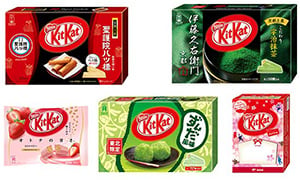
Inside the Seibu department store at the Ikebukuro train station in Tokyo is a new chocolate boutique featuring one of Japan's favourite brands: Nestle's KitKat. The brand name has become associated with good luck because it sounds like the phrase 'I hope you will win'. Students in Japan buy KitKats with the thought that it will help them do well on exams.

Not surprisingly, KitKat uses marketing to build on this good luck perception. The new boutique sells some exclusive KitKat flavours created by chocolatier Takagi for Nestle, including Sublime Bitter, Special Sakura Green Tea and Special Chilli. The boutique is already selling out its limited-edition products daily, but revenues aren't the only reason for this retail venture: It's actually a high-profile brand-builder. Simply type "KitKat Chocolatory" or "KitKat Japan" into a search engine and you'll see the boutique's worldwide media coverage.

From 2007, Nestle has developed KitKat variations only for Japan. In fact, depending on where in Japanese consumers buy KitKats, they will find flavours not available in other areas (like Purple Potato). Most KitKat packaging features English (the brand and the brand owner) as well as Japanese, adding a 'global' angle that enhances the product's sweet marketing appeal.


Tuesday, 21 January 2014

Brands buzz around Jelly

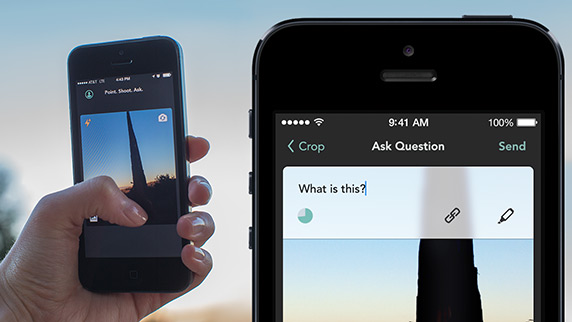
Jelly is barely two weeks old and already brands are buzzing around, giving it a try. What is Jelly? Co-founder Biz Stone (who co-founded Twitter) says: 'Jelly changes how we find answers because it uses pictures and people in our social networks'.

Jelly is a social search app. After you download it from the App Store or Google Play, you input your Facebook and Twitter accounts. Then if you ask questions via Jelly, your social media friends/followers can answer or forward the questions to others for help in answering. Since your mobile is with you all the time, you can use Jelly for answers whenever and wherever you are. Now of course you can just go directly to mobile search or your social networks with a question, bypassing Jelly. But Jelly hopes you'll enjoy the wider social contact and the ability to get answers quickly from people you know and trust.

Recognising a possible way to connect with customers outside of ordinary marketing communications, some brands are trying Jelly. During the first week, someone posted a question about hanging a picture on a brick wall--and Lowes answered via Jelly. This is just the kind of engagement any brand would enjoy because it showcases relevant content and expertise without actually seeming to sell.

Asda posted five questions in Jelly's first week, as a test. However, Asda is reserving judgement on Jelly's potential because the new app's users are early adopters and may not be core Asda customers. '50% of Asda customers [9 million people] are on Facebook each day and, around 10% are on Twitter and YouTube, so that’s where most of our effort will continue to go for now' says the retailer's head of social.

Will Jelly stick? Brand marketers will be watching its acceptance with interest.