Showing posts with label brand image. Show all posts

Saturday, 10 March 2018

Burberry's digital marketing powerhouse

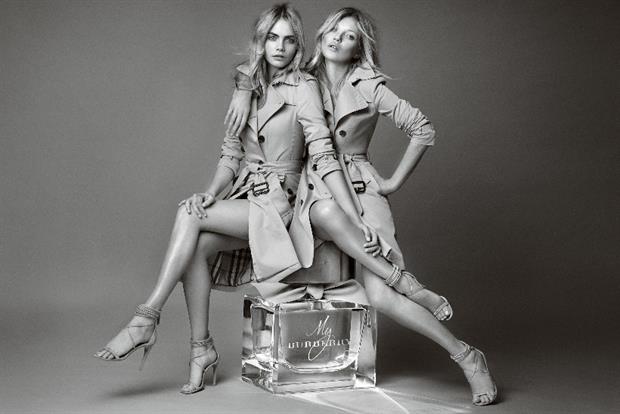
Burberry, the venerable UK fashion brand, has remade itself as a digital marketing powerhouse in the past decade or more. Above, Burberry's Instagram statistics as of today. Yes, 11 million followers worldwide.

One key aspect is adding to the company's online availability without diluting its high-style image. In addition to Burberry's own digital channels for promotion and distribution, the company recently arranged multinational distribution through Farfetch, a UK luxury-goods retailer with a robust online platform.

However, Burberry said it's working closely with Farfetch to ensure 'a consistent and curated digital experience' for customers that view product images and description online. In other words, Burberry isn't simply providing products for resale--it's actively involved in marketing to affluent consumers through Farfetch.

Another key aspect is streaming fashion shows and adopting new social media tools quickly. Burberry was among the first high-end fashion brands to promote itself on Snapchat, for instance.

Burberry has also used artificial intelligence (AI) to support marketing of its Cat Lashes mascara on social media, particularly Pinterest. The brand has nearly 9 million Twitter followers and 17 million Facebook followers.

Watch for more digital marketing innovation as Burberry leverages its brand visibility and image to engage consumers around the world.

Thursday, 18 May 2017

Luxury brands move toward omnichannel marketing

Luxury brands were, in many cases, late in adopting ecommerce strategies because of concerns about top-notch customer service, price competition and other issues. Now leading luxe brands are moving into cross-platform marketing to accommodate changes in consumer behaviour and buying preferences.

Consider LVMH, the €37.6 billion French-based group marketing top-quality, upmarket brands like Louis Vuitton, Bulgari, Tag Heuer and more than 65 other brands (soon to include Christian Dior Couture).

LVMH had a previous ecommerce venture, eLuxury, but eight years ago, during the great recession, the company closed the retail function and transformed the site into a digital fashion magazine.

Now LVMH is launching a new ecommerce venture. This new business (both online and app version) is 24 Sèvres, named for the firm's Paris street address. The business will go live in mid-June.

'Increasingly consumers want pictures over words', says LVMH's chief digital officer, Ian Rogers, mentioning the rapid rise of Instagram and Snapchat. Therefore, he says, 'if you look at our site, we lean far further toward visually-led merchandising than the more editorial skew of our competitors'.

Instead of brand-specific sites and apps, this new online retail platform will feature multiple LVMH brands--and some non-LVMH brands as well, with a visually innovative customer experience. Rogers says: 'There is . . . currently a major focus on omnichannel and experience, and we are moving from a mass culture to a mass of niches'.

Friday, 5 May 2017

Nike's marketing marathon

On Saturday, world-class athletes wearing special Nike shoes will attempt to do what has never been done--run a marathon in less than two hours. Nike has been promoting this effort for many months, identifying just the right elite athletes and selecting a track that is suited to setting this record.

The brand's lightweight shoes are a big part of this project, featuring technology that reduces effort, a salient functional benefit that even weekend athletes will appreciate. Even if none of the runners achieves the goal of 'breaking 2', Nike will be a winner for supporting the goal and celebrating sports performance (a key association for its brand, of course). In short, this marathon is also a marketing marathon.

Despite intense competition from Adidas, amongst other major brands, Nike enjoys strong brand loyalty and image. Yet Adidas has strengths that help it attract customers, including retro styled shoes favoured by many.

Nike UK has more than 400k followers on Twitter, where posts include promotions, 'where to buy', new product introductions and influencer images (think athletes). Nearly 200k followers watch the NikeWomen Pinterest account, and 450k followers check out Nike London's Instagram page. Nike UK has 28 million Facebook followers, many of whom also follow individual Nike sports accounts. Clearly, this is a brand with social media savvy, smart segmentation strategies and a good connection with its target markets.

Friday, 7 October 2016

Purpose-driven marketing at Unilever


Unilever's chief marketing officer recently said: 'We need to build brands with purpose. We need to go from "marketing to consumers", to "mattering to people"'.

In other words, the consumer products giant believes in purpose-driven marketing.

One year ago Marketing Week named the top 100 firms for brand purpose--and at the top was Unilever.

Just weeks ago, Unilever arranged to buy Seventh Generation, a US-based brand of household cleaners known for sustainability.

Unilever's executive vice president for global marketing notes that brands need to be activist as part of their purpose: 'Consumers are really expecting brands to create movements. They want to be part of those movements', she explains.

Yes, the firm's brands seek to make a positive difference (via social responsibility, sustainability and so forth). And in the process, Unilever benefits by meeting customers' needs, increasing public trust and, ultimately, improving the bottom line. 'Fifty percent of Unilever's growth today is coming from brands that are acting on their purpose', the EVP says.

Tuesday, 28 June 2016

Marketing Starbucks in China

Continuing a look at global brands in China, this entry is about Starbucks, the US-based coffee shop company that has made lattes and espressos part of daily life all over the world.

Starbucks just opened a spacious flagship cafe in the new Shanghai Disney resort. This isn't the first Starbucks connected with a Disney resort, but it is the first of this ultra-modern design...with more than 100 employees to serve thousands of customers every day. The company says this will be the busiest Starbucks on the planet.

China is an attractive market for Starbucks because coffee consumption is still relatively low compared with consumption in other areas--which means a lot of growth potential as consumers adopt the 'coffee culture'. Starbucks already has 2000 cafes in China and plans to open 2500 new cafes over the course of 5 years.

To reinforce its brand image and provide an upmarket consumption and sampling experience, Starbucks plans a new Roastery and Reserve Tasting Room for Shanghai. Modeled on the tasting room near the company's headquarters in Seattle, this Shanghai location will demonstrate the roasting process and offer samples of various coffees and flavours.

Will consumers in China pay the luxury price for a luxury coffee often enough for Starbucks to profit handsomely from its investment? 

Tuesday, 12 January 2016

Colourful new look for McDonald's packaging

McDonald's is updating its take-away packaging for a modern, 21st-century look. 'Every day 69 million customers visit McDonald’s around the world and this new packaging will be a noticeable change', says the company's senior director of global marketing.

Notice the use of the Golden Arches as the M in McDonald's? And the updated colours that are bold, a little playful and positive? This new packaging was created by a global team of designers who were brought together for one week to brainstorm. Their ideas were then presented to consumers for input and reaction.

Finally, the core ideas were provided to a Chicago-based design firm for refinement. The result: Simpler, less frenetic graphics that instantly convey the brand and the affect behind the brand.

The new packaging is part of an ongoing marketing effort to generate higher sales for McDonald's worldwide.

Friday, 26 June 2015

Competitive changes in the UK chocolate market

The UK market for chocolates is increasingly split between mass-market brands such as Cadbury Dairy Milk and upmarket brands such as Hotel Chocolat.

In fact, Hotel Chocolat's founder says: 'It's an emotionally charged food product that people are buying for the taste and the way it makes them feel'. With a decade of experience in marketing the emotional and taste benefits of luxury chocolates, Hotel Chocolat has established a distinctive brand image and built considerable brand equity.

On the mass-market side, Cadbury Dairy Milk (owned by Mondelez) continues to top the list of leading UK chocolate brands, with year-over-year growth. Mars and Nestle both have chocolate-bar brands in the top 10--and private-brand chocolates are also among the top sellers.

However, the competitive situation is about to change. Thorntons has been struggling for some time, caught between the upmarket brands and the mass-market brands. Now Ferrero has acquired it, which may lead to a new marketing strategy, not to mention a new positioning for the products and the retail shops. This will cause all the aspirational brands to work harder to connect with customers and reinforce loyalty.

So the hypothethical marketing plan for Lost Legends Luxury Chocolatier (which is included in my Essential Guide to Marketing Planning textbook) must be updated to reflect these important market changes.

Thursday, 28 May 2015

How important is a great brand logo?

A recent BBC News article asked: How important is it for a company to have a great logo? The article pointed to Nike's swoosh as an example of a well-established, highly recognisable logo.
One of the brand experts quoted in the story says: 'A logo is a simple and functional signpost to help people find and identify your business. But for a logo to be successful, the company behind it must be a respected and trusted brand'.
Nike, whose swoosh shown here is its Twitter and its Facebook profile picture, has nearly 5 million Twitter followers and more than 22 million Facebook likes. The swoosh is enough to identify the business and its most famous brand.

Nike describes itself this way: NIKE, Inc. fosters a culture of invention. We create products, services and experiences for today’s athlete while solving problems for the next generation. For investors, it says: We create innovative, must-have products. We build deep, personal connections with consumers. And we deliver an integrated marketplace with compelling retail experiences.

Long-term studies of brand value indicate: 'brands that deliver a unique and compelling core proposition, a distinctive brand identity, and great advertising have recorded 168% brand-value growth on average over the past 10 years'.

So how important is a great brand logo? Very important if it conveys the brand's image, identity and core proposition. The swoosh isn't responsible for Nike's market leadership but it helps Nike's brand visibility every time a sports fan sees one on a champion athlete's hat, shirt or uniform.

Wednesday, 15 April 2015

Burberry: To be a great brand, be a great company

Burberry (founded in 1856) is acknowledged as a great brand, with millions of global brand fans and laudable financial results. What does Burberry think about its stature? Here's a quote from the website:

Burberry believes that to be a great brand, it must also be a great company. Burberry constantly leverages the energy of its creative thinking culture for positive change, within its own organisation as well as in its business partnerships, wider community engagement and societal and environmental impact.


In other words, Burberry isn't just a fashion brand, it's also a creative force for good and for fostering creativity throughout the business world and society. And it has creatively revitalised the 159-year-old brand by using customer behaviour as the basis of its 21st century marketing.

Digital is, of course, a major element in Burberry's brand marketing. The CFO observes: 'We talk about the customer being agnostic, that’s how we think about digital versus mainline [sales]'. Customers can browse and shop as they choose, whether online or via mobile or in stores. Increasingly popular, click and collect (established in 2013) now accounts for 20% of Burberry's digital business. Being able to personalise Burberry sites for individual tastes and interests engaged customers in creative ways, as well.

Not only is Burberry embracing digital, it remains a solid presence in shopping centres and high streets worldwide, with 214 retail stores, 213 concessions, 57 outlets and 67 franchise stores. And it's a social media darling, with 1.7 million FB likes and 128,000 Pinterest followers.

Wednesday, 15 October 2014

Shopper marketing: selling from the shelf

When shopping, why do we reach for one package instead of another? The answer, say the experts at UK design consultancy Elmwood, is the influence of biomotive triggers

Shoppers may pause for only a few seconds before moving on to the next item in a store--so packaging must work its magic quickly, attracting our attention, identifying the brand and a key benefit and then encouraging us to pick that product.

Clearly, in-store elements of shopper marketing can make all the difference in a product's sales. In particular, cusps and curves are two biomotive triggers that can affect consumer behaviour.

Elmwood's Simon Preece explains the influence of cusp and curve in a recent Packaging News interview:
  • Cusps are sharp pointy shapes and they get our attention, signaling fear danger and caution. 
  • Curves suggest safety, softness and comfort; they make us feel secure and encourage interaction.
As Preece notes, Walt Disney's marketing for the recent movie Maleficent used cusps to convey the sense of danger and foreboding viewers would experience. Of course, being a Disney movie, the danger was resolved by the end. But this subtle use of cusps intrigued viewers and attracted attention in a cluttered environment. Curves are the main focus of Coca-Cola's packaging, Preece says, suggesting comfort--yet the logo has some cusps to capture attention and contrast with the curves.

Elmwood is responsible for the redesigned Andrex packaging shown at top (read its commentary on the packaging here). Toilet tissue should be soft, and the curves convey that important benefit. The puppy's eyes are looking right at the shopper, asking to be taken home--biomotive triggers that sell from the shelf.

Monday, 30 June 2014

Burberry builds on core competence of digital marketing

Burberry (founded in 1856) is a 21st-century marketing star, not just because of its strong luxury brand heritage and fashion sense but because of its savvy development of digital marketing expertise as a core competence across the company.

Shopping in a flagship Burberry store is a multimedia experience, with screens, speakers, iPads, live streaming of fashion events and more. 'We wanted to totally merge the digital and the physical worlds', the creative director said when the redesigned store was opened in 2012. Rather than worry about showrooming, Burberry seems to be diving into multichannel marketing with the knowledge that customers are and must be in control of where and when they browse and buy.

Visitors to Burberry websites have many multimedia options--including participating by showing what your trench looks like on the company's Art of the Trench site. Want your own custom-designed Burberry trench? Since 2009, the company has invited you to design what you want online. The mobile site can stream fashion events and more so you can watch or buy from your smartphone or tablet. 

Burberry aims to have a digital presence wherever its brand fans are (or want to be). Just recently it opened a digital branch on China's Tmall shopping platform, owned by Alibaba. In short, Burberry's content engages customers and fashionistas on multiple platforms, including in-person, via mobile and online. Take a look at Burberry's integrated social media presence on YouTube, Twitter (3m followers), Pinterest (86k followers) and Facebook (17 million likes).

This is a brief update to the closing case in chapter 1 of Essential Guide to Marketing Planning.

Wednesday, 21 May 2014

Core values of the Warburtons brand

Family-owned Warburtons has been named to two 'top grocery brands' lists in recent weeks, due to its positive brand associations and rapid growth.

  • Kantar Worldpanel put Warburtons at the top of the list because it is chosen so frequently by so many UK households--and because of its product innovations.
  • The Grocer put Warburtons #2 in its most recent brand listing (just behind Coca-Cola), in part because of the huge sales expansion it has experienced.

The company's turnover has doubled in the last ten years and continues to grow because of new product lines and product variations. It's aiming to capture market share via an expanding range of gluten-free products, for example.

Warburtons wants its brand to be associated with five core values: family, ambition, responsibility, quality and care. These values form the foundation for its marketing, including new product development and support for nonprofit causes. The family's name is on the business, and Warburtons works hard to maintain its brand leadership by applying the five core values every day.

Monday, 5 May 2014

Marketing cereal in China: Think green or black

Yes, Weetabix is marketing in China. The UK cereal company is now majority-owned by China's Bright Food business, and thanks to local knowledge, Weetabix's marketing plan calls for adding flavours and ingredients favoured by Chinese consumers.

Last year, the Weetabix chief executive said its Chinese breakfast foods are likely to be hot and savoury, in keeping with local tastes. Even though Weetabix made its name in cereal, the new products in China may not necessarily be cereals. Currently, its cereal bars are gaining popularity, thanks to their on-the-go convenience, which fits the busy lifestyle of many consumers.

Looking ahead, Weetabix is investigating new products such as green tea cereal, and less-sweet varieties that appeal to Chinese tastes. For now, the company will put a lot of marketing emphasis on its made-in-UK heritage and nutritional value because Chinese consumers are concerned about food purity and often perceive non-Chinese brands as safer.

Weetabix faces local competition from companies that are already marketing breakfast foods linked to the latest trends. One Chinese company makes cereal from black grains--tapping into the health associations with this colour. Another emerging food fad involves adding protein by adding peas to breakfast products. What's next for cereal marketing?

Wednesday, 23 April 2014

Dell's Distribution Strategy in India

Dell was founded in 1984 by Michael Dell, a college student who sold build-to-order PCs from his dormitory room. Three years later, the fast-growing company opened its first international division, in the United Kingdom.

Today, despite intense competition from tech leaders like Apple, Lenovo and Hewlett Packard, Dell has ambitious marketing plans for future growth in overseas markets like India.

The PC market in India showed some growth in 2013 but 2014 is not expected to be as strong. Dell is the second-largest PC marketer in India, with an estimated market share of 13.2%. The largest PC marketer, Hewlett Packard, has an estimated market share of 28.5%, more than double Dell's share.

To increase share and boost brand availability outside of major urban areas, Dell's distribution strategy in India relies on two key elements:
  • Targeting consumers, the company is doubling the number of Dell-brand stores in small cities and villages. These smaller markets are where Dell expects growth to be strong in the coming years, because PC ownership is not as widespread as in major urban areas. In addition, Dell is assembling laptops to keep in inventory, so distribution centers can ship laptops to the stores very soon after customers place their orders. In the past, Dell's build-to-order process minimised inventory costs--now, customers will receive orders more quickly, which in turn should increase customer satisfaction.
  • Targeting businesses, including partners, Dell is using a roadshow approach to bring its experts and products to major commercial centres like New Delhi and Mumbai. The objective is to increase support for channel partners, expand market coverage and demonstrate its ability to provide full solutions to commercial customers.

Tuesday, 8 April 2014

Tesco's vision includes restaurants

Tesco is continuing to expand and serve customers by investing in restaurant ventures, often with the idea of locating them near or within its stores. This is part of its vision to be (1) wanted/needed around the world, (2) a growing business, (3) innovative, (4) local/global winners and (5) inspire loyalty from customers, colleagues and communities.

By expanding its restaurant investments, Tesco is adding retail services that customers need and want, with innovative retail formats, and intriguing international touches. The latest restaurant venture is Fred's Food Construction, a casual restaurant featuring 'authentic American candy, soda and snacks' plus healthy salads and deli-style 'submarine' sandwiches.

Previously, Tesco has purchased Giraffe, casual family restaurants with burgers, brunch and a kids' meal deal. Now some Tesco Extra stores include Giraffe restaurants, to attract family shoppers to Tesco as a destination and provide other experiences beyond shopping, in line with the long-term vision.

The retailer also invested in Harris & Hoole, a coffee house with the image of a family-owned, artisanal restaurant that's expanding rapidly. It doesn't publicise Tesco's stake in the company because 'We don't believe our customers are interested in who is providing the financial backing for our business', according to a spokesperson.

After Tesco's costly and ill-fated expansion into Fresh & Easy grocery markets in the US, these restaurant ventures are intended to tap into revenue opportunities in markets where Tesco is strong.

Monday, 10 March 2014

H&M for Stars, Brides and Sustainability

Fast-fashion retailer H&M is polishing its sustainability and affordability image with high-profile marketing initiatives.
At left, a custom designed H&M evening gown made from 'more sustainable' materials, worn by Penelope Cruz to the Vanity Fair Oscar party following the Academy Awards last weekend. From April, consumers will be able to buy a similar gown--sustainably made--in H&M stores. H&M has other sustainable products, including a collection of clothing made from recycled materials.

Providing clean drinking water is another sustainability issue supported by H&M. Each year, the retailer donates 25% of the proceeds from a summer swimwear collection to the not-for-profit group WaterAid. The 2013 promotion was supported by social media posts on Pinterest and Facebook. Customers and employees vote to select the causes supported by H&M's Conscious Foundation, including education, clean water and women's issues. 

At right, H&M's new wedding dress, priced at £59.99. From March, consumers will be able to buy this graceful gown in H&M stores. Other retailers (including M&S, Peacocks and ASDA) have launched affordable wedding collections in the past. 

Will brides buy from H&M? Or is the publicity generated by a pretty dress at a pretty price an affordable way to attract customers to H&M stores to look at the dress--and then buy something else?

Wednesday, 12 February 2014

Brands speak up about their values

Rolls Royce  (manufacturer of gas turbines, engines and more--but NOT the car brand) says its brand is 'trusted to deliver excellence':
  • Trust: can only be earned by the way we behave with customers, shareholders, partners and colleagues
  • Deliver: we develop long-term relationships with customers and we must deliver consistently on their behalf  
  • Excellence: a standard, our way of life, few companies can aim higher.
Bentley Motors (super-luxury car brand owned by Volkswagen), says its brand is 'a journey of powerful luxury':
  • For the brand, it represents the skills, passion and pride of our people. Their craftsmanship is evident throughout, right down to the initials carefully etched into the upholstery inside every car. An individual hallmark of absolute quality.
Jeep (SUV brand owned by Fiat) says its brand is 'iconic':
  • The iconic Jeep brand is recognized the world over — forever tied to freedom, capability and adventure. Every Jeep vehicle has a unique story to tell, with a rich heritage that links back to the original Willys MA. 
Burberry (luxury clothing brand) says its brand is 'quintessentially British' and reflects the firm's core values – Protect, Explore and Inspire:
  • Digital luxury positioning and the optimisation across innovative mediums of the trench coat, trademark check and Prorsum knight heritage icons make the brand purer, more compelling and more relevant globally, across genders and generations.

Monday, 10 February 2014

Updating the Tata Nano marketing plan

The Tata Nano was launched in India in 2009 under the marketing theme of 'world's cheapest car' with a target market of people (particularly families) who had never owned a car. Its positioning was supported by basic auto features and a low, low base price. Tata's CEO told the Guardian, 'Here in India we see four people travelling by motorbike ... I thought they could travel more safely by car'. Tata was so overwhelmed by orders that it instituted a lottery to select the first buyers.

Now the Nano's marketing plan is being revamped - again - after lower-than-expected sales and reports that the car failed to meet minimum UN auto safety standards. Apparently, many consumers don't want to drive a car with such a low-price image.

The Nano wasn't the only tiny car to fail crash tests, by the way. The other four made-for-India cars that rated zero on a safety scale of 1 to 5 were: Maruti Suzuki Alto 800, Hyundai i10, Ford Figo and Volkswagen Polo. Without air bags, these no-frills autos couldn't pass the crash tests, even though they all meet India's safety guidelines.

Scientist Raghunath Mashelkar, who is on Tata's board of directors, blames poor marketing for the Nano's poor results (and Tata's former CEO agrees). Mashelkar says: 'The Nano is such a great product, it has 86 patents. So, excellence should have been put at the front, and affordability at the back'. In other words, the Nano should have been positioned on the basis of innovation rather than low price.

For the new marketing plan, Tata is positioning its Nano Twist as a car with style and excellent fuel efficiency. The marketing reflects a target market of young couples and features fashion colours and extras such as power steering. Low price is not the primary message. Will the new marketing plan reignite Nano's sales in 2014?