Wednesday, 17 December 2014

London's Hello Fresh cooks up market segmentation

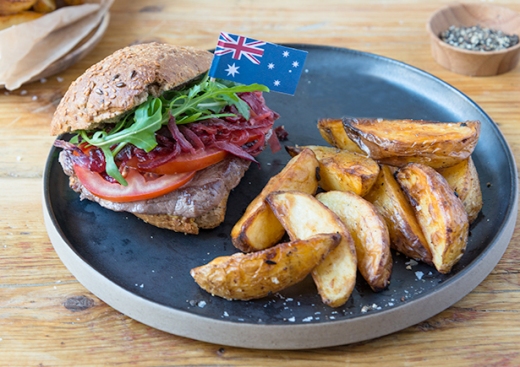
Hello Fresh is for home cooks who want the convenience of receiving packages of ingredients with creative recipes every week (or one-off), for making gourmet meals in their own kitchens. Everything but the chef is the company's tag line.

The online subscription service offers packages for family meals, for vegetarian meals and for 'classic' meals (with meat). Customers can choose packages that provide multiple meals for either 2 or 4 people, with step-by-step recipes including nutritional values and cooking times.

With a lot of venture capital backing, the company is expanding rapidly and already faces competition in some of the markets it serves. To continue its success, London-based Hello Fresh is segmenting its market by geography, attitude and behaviour.
  • Geographic segmentation: Hello Fresh operates in Australia, Austria, Belgium, Germany, the Netherlands, the UK and the US, adapting its recipes for local markets and sourcing ingredients from local producers. This allows the company to appeal to local tastes and preferences.
  • Attitude segmentation: Cofounder Patrick Drake explains: 'There is that intimidation factor with cooking . . . "I have never tried this recipe before so I am not going to try it", an attitude that discourages experimentation. Hello Fresh targets people who want to experiment with little risk (financial or culinary), a key element in its marketing.
  • Behaviour segmentation: Many people enjoy cooking at home (or want to cook at home) but don't have time to shop or don't have access to specialised shops for international ingredients. Hello Fresh addresses this segment's needs by delivering boxes with exactly the foods and extras needed for each meal.
Hello Fresh has already attracted 200,000+ Facebook likes, 7,000+ Twitter followers and 9,000 Instagram followers.

Sunday, 14 December 2014

Burberry's digital marketing strategy

Burberry has not only reinvented itself, it's become a case study in digital marketing to Millennials (and beyond). Thanks in large part to this enterprise-wide digital initiative--driven by marketing priorities--Burberry has tripled its turnover in less than 10 years.

The company continues to integrate its online and mobile marketing with brick-and-mortar store retailing. For example, when a shopper steps into a Burberry store, salespeople are ready with iPads to tap into the database and see every contact that shopper has had with the company, whether online or in a store or by phone. This allows continuity of experience and customisation of offers.

The stores have digital touches everywhere, from giant media screens to personalised mobile messages leading shoppers to specific product displays or departments. Knowing its customers tote gadgets, Burberry uses 'beacon' technology to sense mobiles and tablet computers as shoppers enter a store and send out messages if customers have opted into the system.

Burberry pays special attention to the in-store experience, because so many customers enjoy checking out the latest fashions firsthand before making a purchase. Inside and out, the stores must reflect the brand and amplify its image--which is even more important for digital buyers viewing web sites or social media, of course. Targeting Tokyo hipsters, Burberry recently opened a glittering new branch in the heart of the fashionable, tree-lined Omotesando district. From the eye-catching exterior to the digital displays to the new styles, this is definitely not the stodgy old Burberry of the past.

Burberry is highly social: Its FB page has 18 million likes, its Twitter account has 3.4 million followers and its Pinterest boards have 121,000 followers. Check them out!

Wednesday, 10 December 2014

Food trucks use social media as marketing engine

Entrepreneurs are bringing their unique food experiences to streets in London and beyond--with social media as the marketing engine for attracting customers. 

At left, a food truck with eye-catching flair: Engine's 1950s fire engine, serving American-style hot dogs and grilled sandwiches. Using social media like Twitter, Facebook and Pinterest helps Engine stay in touch with customers, alert them to new products and publicise new locations.

Another example: Rainbo (offering gyoza and more), which markets its weekend and festival outings with blogs like 'van life' and combines street food with social responsibility (its cause: ending child labour).

Now some food trucks have a membership organisation (KERB) to promote their services and encourage entrepreneurial newbies. KERB is savvy about social media, using Tumblr, Twitter, Facebook and more to feature its members and build excitement about gourmet street food.

Thursday, 4 December 2014

Changes in Nespresso's marketing environment

The marketing environment is changing for Nespresso. A division of Nestlé, Nespresso pioneered the high-quality, single-serve coffee/espresso machine in 1986 and remains a market leader.

In recent years, however, Nespresso has faced increased competition as well as regulatory pressure in many markets. One reason is the high profitability of replacement single-serve coffee capsules. The way razors require replacement blades, Nespresso machines require replacement coffee capsules. That means opportunity for Nespresso and for rivals, who have been making capsules to fit Nespresso machines.

Following a legal battle in France, Nespresso will now share technical information about its machines so rivals can make completely compatible replacement capsules. It won't threaten to invalidate warranties if customers use rivals' capsules, either.

Thanks to years of carefully-crafted marketing, Nespresso has successfully encouraged millions of espresso-lovers to visit its boutiques or order online when they need replacement capsules. Price-conscious buyers are most likely to switch to rival capsules. The changes in its marketing environment are unlikely to woo away the most brand-loyal customers, "club" members who enjoy the coffee and the entire buying/consumption experience.

Nespresso says that half of its new club members are introduced to the brand by friends and family--among the most trusted word-of-mouth sources. Having George Clooney as the brand's spokesperson is another competitive advantage. In Japan, however, Nespresso has a new marketing gimmick: friendly robots equipped to converse with customers about their java preferences. Not only will the robots engage customers and prospects, they'll capture conversational content that Nespresso can analyse for clues to needs, behaviours and buying intentions.

Wednesday, 3 December 2014

Packaging must sell from the shelf

From your own experience, you know that packages in any retail setting have only a few seconds to capture your attention, communicate a mood or benefit or brand, stimulate you to pick one up--and ultimately encourage you to buy.

Yes, packaging must protect the product, allow for safe transport, enable convenient storage in stores and in households and help in using or measuring the product. Sometimes packaging prevents theft. And of course products must carry labels that inform, warn, explain and comply with rules and regulations.

But the best packaging does a brilliant job of selling from the shelf, coordinates with other marketing elements and contributes to customer satisfaction. Ideally, it's also earth-friendly and adaptable to other uses.

Buzzfeed collected images of clever packaging last year--see them here. Packaging of the World features good packaging examples from everywhere.

Above, an example of a Coca-Cola bottle customized with given names for the Australian market. This 'Share a Coke' campaign resulted in sales of 250 million Coke bottles and cans just in Australia.

The campaign was expanded globally and was repeated in the UK this year, with more names plus 'Mum' and 'Dad' and 'Bestie' to attract consumers who wanted to share a Coke with family members and friends. The success of the campaign illustrates the power of good packaging with marketing as a priority.

Tuesday, 2 December 2014

Domino's digital marketing strategy

Few UK marketers are as successful in digital-media marketing as Domino's UK. The pizza delivery company has nearly 1 million Facebook fans and 212,000 Twitter followers. Consumers engage with the Domino's brand because they like its image, its service and the promotions mentioned in social media.

In fact, Domino's has an annual marketing calendar with specific social media content planned for each month and for each week. Yet about 10% of its digital media content is actually spontaneous, developed either in response to trending topics at the time or building on special events and other elements that can't be planned far in advance.

Domino's receives 70% of its orders online--and half of these are via mobile, including its app. The company has also arranged for ordering capabilities directly from Xbox game consoles. Domino's head of e-commerce explains:
Our target audience is a really good fit for the Xbox One – typically, gamers and pizza eaters are the same people.
The company's turnover is increasing and its digital marketing strategy is helping keep the brand in the public eye day after day.

Monday, 1 December 2014

Cyber Monday and beyond

Many experts predict that today--Cyber Monday--will be the busiest online shopping day of this holiday season, with buyers spending £500 million to £1.5 billion or even more.

Other experts believe that the second Monday in December--so-called Manic Monday or Middle Cyber Monday--will be even busier. Experian's analysis of 2013 data shows that UK buying on the second Monday outpaced buying on the first Monday, and it expects this trend to continue in 2014.

Amazon UK, which touched off the UK Black Friday shopping frenzy in 2010, reports that last Friday was its busiest single day ever, with 5.5 million items purchased. As in the US, Amazon UK has extended its specials for Black Friday Week, including Cyber Monday.

In the US, there is another big shopping day between Black Friday and Cyber Monday. It's Small Business Saturday, a day promoted by American Express and enthusiastically accepted by shoppers who buy from small and local businesses. Will this 'shopping holiday' cross the Atlantic as well and shape consumer behaviour among UK buyers?

Thursday, 27 November 2014

Will Black Friday Overtake Boxing Day?

BLACK FRIDAY


Black Friday has been a traditional holiday shopping day in the US for decades. In recent years, however, it's been adopted by UK retailers as a new shopping holiday--an opportunity to promote super-bargains and attract crowds of shoppers (measured by footfall and clicks). Is Black Friday about to overtake Boxing Day as a major shopping day?

According to the BBC, Amazon.com originally popularized Black Friday among UK online shoppers. These days, most High Street stores and e-commerce retailers see Black Friday as a day to promote low prices on in-demand merchandise and attract holiday shoppers who want to get started on their lists.

By some estimates, the level of sales on Black Friday 2014 will be double that of 2013.

For John Lewis, Black Friday 2013 was the retailer's busiest online shopping day--more than twice as busy as the previous shopping record!

Sunday, 23 November 2014

Singles Day = #1 Online Shopping Day

Not Christmas, not Black Friday, not even Valentine's Day can compare to the online shopping frenzy of China's Singles Day.

On November 11 (all ones, 11/11, get it?), singles browse for bargains and shop (usually online, increasingly via mobile). And shop. And shop.

Alibaba--by far the world's largest e-commerce business, with wholesale and retail sites for shoppers in China and beyond--has helped fuel this shopping extravaganza. In 2009, it introduced an array of Singles Day shoppers' specials on its various sites. The promotions were so successful that Alibaba eventually trademarked 'double eleven' and continued to expand the scope of its marketing.

In 2014, Alibaba's marketing for Singles Day began during October, with preorders at special prices. Once again, the company's extensive reach and promotional clout paid off: It recorded one-day sales of £5.9 billion on Singles Day, a hefty increase over the 2013 results. Alibaba is already looking ahead to even better results in 2015 as Chinese consumers exercise their buying power via mobile devices.

Alibaba's complex network of marketplaces is designed, the company explains, as a business ecosystem with a specific purpose:
We operate an ecosystem where all participants – consumers, merchants, third-party service providers and others – have an opportunity to prosper.

Wednesday, 19 November 2014

Peppa Pig Goes Global

Peppa Pig, just 10 years old this year, has taken the preschool branding world by storm. Her animated TV series is produced in UK studios and shown worldwide. Peppa even has her own Royal Mail stamp and a theme park, Peppa Pig World, in Hampshire. Coming soon, Peppa's part of a theme park in Milan will be even larger as the brand becomes popular throughout Europe.

Peppa merchandise is a multimillion-pound business. In the UK alone, Peppa products account for £200m in revenue. Worldwide, Peppa products are worth £640m in revenue. This turnover includes revenue from a deal with Mattel's Fisher-Price toy unit.

From January, 2015, Peppa will be in Walmart stores, part of a deal by EntertainmentOne with Jazwares to expand the brand in the US market. Peppa also has new retail agreements in Paris and the French market, building on the brand's higher awareness and preference.

Watch for Peppa on TV, in stores, in theme parks, online, and wherever parents and grandparents are looking for a fun brand suitable for preschool boys and girls.