Showing posts with label distribution. Show all posts

Tuesday, 25 September 2018

Coca-Cola adds coffee with Costa acquisition

Diversifying its product and brand portfolio, Coca-Cola has moved to buy Costa, the UK-based coffee shop chain now owned by Whitbread. Currently, Costa has 4,000 locations in 32 countries, plus thousands of self-serve coffee vending machines.

This acquisition will enable Coca-Cola to build on Costa's strong brand identity and, at the same time, enhance the non-cola beverage elements of its product portfolio. The acquisition has implications for global marketing, as well. Costa does well in China, for instance, and Coca-Cola already owns the best-selling Georgia coffee brand in Japan.

But as consumer behaviour changes, and coffee consumption grows year after year, Coca-Cola sees Costa as a brand with significant potential for further global expansion. 'Costa has strengths in many countries and in many key distribution channels of the coffee business', says Coca-Cola's CEO.

Tuesday, 11 September 2018

The global reach of Evolve Skateboards

More than 120k Facebook users 'like' Evolve Skateboards, more than 26k Instagram users follow Evolve Skateboards and nearly 16k people subscribe to the company's YouTube channel. Those social media interactions have helped accelerate word of mouth about this fast-growing brand of electric skateboards.

The Australian-based company founded by entrepreneur Jeff Anning and his wife, Fleur Anning, has an international customer base, distribution in multiple countries and many thousands of social media-minded brand fans. Target market: young professionals who see the boards as a convenient and fun way to commute on city streets.

The company was global from its first days in business. Two years ago, when Evolve launched a new product, it attracted A$ 1 million in orders in a single day. One challenge in growing so quickly has been signing with suppliers and manufacturing facilities that meet the firm's quality and performance standards.

Today, Evolve's annual turnover exceeds A$ 15 million as consumers worldwide are introduced to the product category of electric skateboards and come to prefer the Evolve brand. Thanks to social media, Evolve can stay in close contact with its target market in many nations, well beyond the firm's base in Australia.

Thursday, 14 June 2018

Burberry leverages the power of social media

https://www.instagram.com/burberry/
Social media platforms such as Facebook, Instagram and Twitter play a central marketing role for the UK fashion brand Burberry. Its marketing strategy actually relies on four distinct pillars: product, communication, distribution and digital. About communication, the company explains: 'We are evolving our communications to be led by product and made for social media'.

One study found that Burberry topped the list of 20 most valuable UK brands using social media in 2017. Fashion industry publication WWD says Burberry had the best-performing social media strategy during February's 2018 London Fashion Week. This is actually nothing new for the brand, which has long put special emphasis on social media and ecommerce: CampaignLive hailed Burberry's savvy social media strategy during London Fashion Week in 2014.

By cultivating tech-savvy consumers, Burberry has amassed an Instagram following of more than 11 million people. Its Twitter account is followed by 8.7 million people. More than 17 million people have clicked to like its Facebook page. In short, Burberry is leveraging the power of social media to reach and engage style-conscious brand fans who buy in stores or online or both.

This post updates the Burberry example in Chapter 8 of my Essential Guide to Marketing Planning.

Friday, 11 August 2017

Inside Uniqlo's Marketing Plan

The marketing plan of Uniqlo, based in Japan, targets Millennials and other selected groups through social media and distribution, in particular. The UK branch of this integrated retail empire has 100k Facebook likes, 31k Twitter followers and 70k Instagram (indicating the fashion interest of Instagram users). New products and new stores are featured in social media, along with seasonal favourites and topical messages.

Expanding beyond its home base of Japan, Uniqlo has a growing audience of brand fans in the UK and Europe, China, and the US. Many of Uniqlo's products are fashion basics, although it also launches new style collections seasonally. The company markets own-brand merchandise, and controls the design and production functions as well as controlling the retail outlets. This allows it to move quickly to ride the wave of a strong trend, for flexibility in adjusting the marketing plan as needed.

One recent innovation is the introduction of #UniqloToGo, vending machines dispensing t-shirts and light outerwear in US airports. The idea is to appeal to people passing through airports who need an extra shirt or another jacket to wear to or at their destination. It's not just convenient, it's also a way to increase brand awareness and capture extra sales. The prices are moderate, which encourages impulse purchasing.

This, plus pop-up stores in major cities, allows Uniqlo wider reach and more flexibility in executing its marketing plan.

NOTE: This post updates the Marketing in Practice box in Chapter 8 of Essential Guide to Marketing Planning, 4e

Monday, 19 June 2017

Beauty brands seek multichannel availability

Consumer behaviour is changing, and so beauty brands are changing their distribution strategies to be where consumers want to browse and buy. As department stores consolidate and shoppers seek out specialty shops and online outlets, brands like Nyx are opening their own UK stores for direct customer contact. Nyx, for example, recently opened a flagship UK retail location with digital elements designed to appeal to Millennials.

Beauty-sample subscription businesses like Birchbox give consumers more access to more new products. This is another channel for brands to reach consumers who like variety or want to test different items before becoming a loyal buyer of a particular brand/product.

Birchbox is, in fact, considering a UK store as another channel to supplement its online-only business model. 'Physical retail enhances the relationship with the brand, but it has to be profitable in their own right, it’s not just a marketing activity for us', says cofounder Katia Beauchamp. If Birchbox opens a store, the brands it distributes gain yet another channel of access to retail customers.

Yet the Birchbox cofounder's question is very important for multichannel strategy: Will brick-and-mortar retail shops be profitable on their own? The answer depends, in part, on how consumers adapt their browsing and buying habits in a crowded multichannel marketing environment.

Tuesday, 2 August 2016

Same-day delivery: marketing battleground for retailers

Sainsbury's recently announced it would offer same-day delivery of groceries ordered by noon. This is one of the ways the supermarket giant is battling aggressive competition from Amazon and no-frills discounters like Aldi. Sainsbury's is also proceeding with its acquisition of Argos, which itself offers same-day delivery or collection of toys and other products.

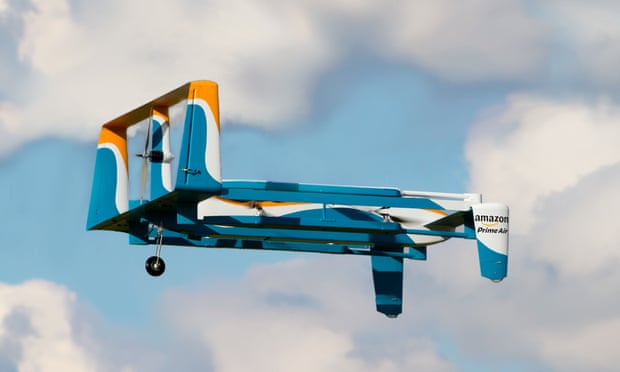
Amazon is offering same-day grocery delivery in London (in partnership with Morrisons for certain private brands). Whether delivered by drone in the future, as shown above, or not, Amazon Fresh promises Prime members that orders placed before the cutoff time will be at the customer's door by evening.

Rivals Aldi and Lidl are feeling the challenge of Brexit's impact on currency fluctuations. Because both Aldi and Lidl source many products from EU suppliers, the UK stores have to deal with higher costs when the pound sterling is low--and higher costs cut into already thin profit margins. For Sainsbury's and other UK-based retailers, however, this may present an opportunity to press price war advantages.

Meanwhile, speedy delivery is a niche being explored by startups such as Convibo, which offers one-hour delivery of grocery orders from London retailers such as Whole Foods and Waitrose. How much demand exists for one-hour delivery, compared with same-day delivery, is unclear--but this startup is a good example of distribution in general and service in particular as key points of differentiation.

Tuesday, 11 November 2014

Launching Coca-Cola Life and Pepsi True

In the latest cola wars between the world's largest soft-drink marketers, Coca-Cola Life and Pepsi True are launching into the 'battle of the stevias'.

These are neither zero-calorie colas with artificial sweeteners nor full-calorie colas with sugar or fructose syrup. They're 'mid-cal colas' featuring stevia, a plant-derived sweetener, typically targeting millennials who want to avoid a lot of chemical ingredients.


At left, Coca-Cola Life in bottles.

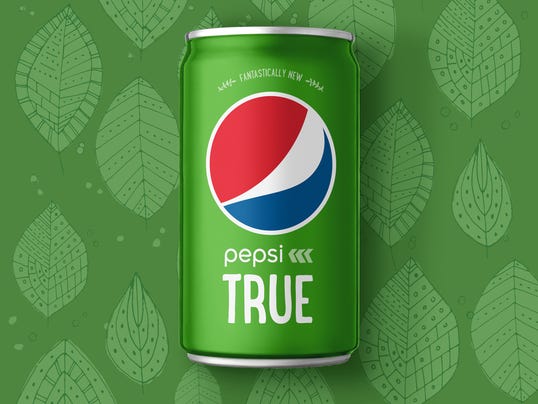
At right, a can of Pepsi True.


Note the use of green labels, which consumers usually associate with natural foods. What does this mean for dueling colas? A UK creative exec comments: 'The problem of sending confusing messages to consumers is they tend to avoid brands rather than try to decode them'. 

Coca-Cola Life is launching in the UK with sampling, outdoor and transit ads and of course digital marketing. When The Grocer tasted Coca-Cola Life and compared its flavour with other Coke products, the editors preferred Life. A key question is whether this new product will attract new customers or take them from existing Coke products.

Pepsi True is currently available through Amazon in the US, but will soon be on store shelves there. Pepsi marketers view this product as a niche item because it appeals to a relatively small subsegment of soft-drink buyers. 

Friday, 6 June 2014

LEGO's marketing plan: new distribution, new products


On the last day of February, LEGO opened its largest European store on the grounds of Disneyland Village at Disney Paris. (The official Disney Paris site hasn't updated its 'coming soon' note about the new store, but the store's definitely open--it's listed in the LEGO store locator here.)

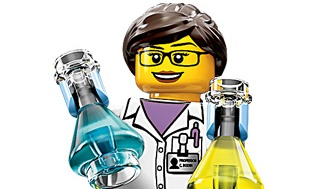
Increased distribution through company-branded stores is only part of LEGO's marketing plan for ongoing growth. The Danish company is also broadening its appeal by creating new minifigures featuring women as scientists (above, the chemist). The new minifigures were designed by a geochemist and submitted via LEGO's ideas crowdsourcing website, reviewed by the company's officials, and finally cleared for a new product introduction promotion in August.


Via this ideas website, several other new products are under consideration, including a Doctor Who block set, as shown above, and a set based on the US TV show Big Bang Theory. Watch for decisions in a few months. Given the immense popularity of these TV shows, new LEGO sets may tap into the adult market as a targeted segment, in addition to the traditional children's market for building blocks.

Monday, 2 June 2014

Inside the Grey Market

The grey market continues to be an issue for manufacturers worldwide. A grey market occurs when wholesalers or retailers sell a branded product even though they aren't authorised to do so. The product is legitimate, but the product was obtained outside the usual distribution channels typically used by the manufacturer in that geographic region.

Often, this situation develops when a manufacturer's wholesale price is high in one area but lower in another area (due, in part, to differing channel costs, distribution strategies and price sensitivities). Another reason for grey market activity emerges when a product is available in one region but not in another. Intermediaries may buy from grey market sources when they want to boost profit margins or seek a competitive advantage by stocking an item not sold in other nearby stores. This affects warranties, as well.

The grey market has been problematic for decades, one consequence of globalisation--heightened by the popularity of online retail and wholesale channels. Sony battled grey market goods when the PlayStation Portable was at its height of popularity. Canon is one of several manufacturers warning that some products in UK stores were imported from other areas without the proper authorisation. At the very least, Canon warns that such products aren't eligible for its 'cash back' promotions. At worst, grey market products may not contain all the right parts (such as functioning CDs).

Hewlett-Packard warns that grey market equipment may be cheap but it might not function properly. Apple iPhones have been sold in China via the grey market. Callaway, the golf club company, has battled the grey market, as well. Tesla Motors is also dealing with the grey market. Even beer has been sold on the grey market. All these products are real, not counterfeit.

What happens when a grey market purchase malfunctions? How does the warranty work, and who is liable for the cost? How does the manufacturer deal with customers' and channel members' reactions to the grey market?

Wednesday, 23 April 2014

Dell's Distribution Strategy in India

Dell was founded in 1984 by Michael Dell, a college student who sold build-to-order PCs from his dormitory room. Three years later, the fast-growing company opened its first international division, in the United Kingdom.

Today, despite intense competition from tech leaders like Apple, Lenovo and Hewlett Packard, Dell has ambitious marketing plans for future growth in overseas markets like India.

The PC market in India showed some growth in 2013 but 2014 is not expected to be as strong. Dell is the second-largest PC marketer in India, with an estimated market share of 13.2%. The largest PC marketer, Hewlett Packard, has an estimated market share of 28.5%, more than double Dell's share.

To increase share and boost brand availability outside of major urban areas, Dell's distribution strategy in India relies on two key elements:
  • Targeting consumers, the company is doubling the number of Dell-brand stores in small cities and villages. These smaller markets are where Dell expects growth to be strong in the coming years, because PC ownership is not as widespread as in major urban areas. In addition, Dell is assembling laptops to keep in inventory, so distribution centers can ship laptops to the stores very soon after customers place their orders. In the past, Dell's build-to-order process minimised inventory costs--now, customers will receive orders more quickly, which in turn should increase customer satisfaction.
  • Targeting businesses, including partners, Dell is using a roadshow approach to bring its experts and products to major commercial centres like New Delhi and Mumbai. The objective is to increase support for channel partners, expand market coverage and demonstrate its ability to provide full solutions to commercial customers.

Thursday, 5 September 2013

Lego becomes world's #2 toymaker

Lego has just moved up in the toy world, passing Hasbro to become the second largest toymaker on the planet.

(US-based Mattel, maker of Barbie and American Girl dolls, remains the world's top toymaker.)

One big reason for Lego's continued increase in sales and market share: the global success of the best-selling Friends play sets for girls.

Another big reason: Lego's Chima sets, which feature animals--especially popular in China, a market being targeted for additional marketing attention. 'Asia has not been a major focus for us as a company up until this point, but we see now with the emerging middle class, more and more consumers that are really interested in our ... products', the Chief Financial Officer tells Reuters. Not surprisingly, Lego will be building a factory in China so it can meet growing demand for its bricks and figurines. 

Lego also has some highly popular brand licenses (Star Wars, for example) and marketing partners that have licensed its brand (such as Merlin Entertainment). The company's knowledge of customer behaviour, branding expertise, product development skills and distribution savvy have all contributed to its worldwide success.

In UK shops and online stores, Lego's products are often featured on special themed shelves and pages. Argos has web pages devoted only to Lego, as do Amazon and Toys 'R' Us. This allows display of the full Lego range and keeps the focus on the brand and its unique personality.


Saturday, 2 April 2011

Targeting rural shoppers

Reaching rural shoppers--consumers who live far from cities and shopping centers--can be a major challenge for major marketers. Infrastructure may not be in place to support traditional distribution and marketing strategies.

United Villages, however, is now leveraging mobile technology to reach outlying villages throughout India. The firm's staff discuss products with retailers in small villages and use their mobiles to immediately place orders. At the warehouse, United Villages picks and packs orders in boxes for each retail location, and speeds the purchases back to the stores where shoppers can buy what they need.

Big companies usually can't afford to visit individual retailers in outlying areas, but United Villages can--and fast order delivery is important to the store owners, who want fast inventory turns for cash-flow reasons. Such an arrangement also saves store owners from having to close their stores and pay to travel to a market or wholesaler location.

This isn't the first time United Villages has targeted rural shoppers, as you can see from the 2007 interview with Amir Alexander Hasson, one of the founders. United Villages has also been working on providing rural India with telecentres and e-mail access for several years. Will this distribution approach become popular and spread to other nations?

Tuesday, 21 April 2009

Sweetpea Grows Up

Sweetpea, launched by two moms in Toronto, now offers a range of 10 frozen organic baby foods in stores throughout most of Canada. The key to its success was good planning--and finding a good distributor (updating coverage of channels in Chapter 8).

At first, co-founders Eryn Green and Tamar Wagman personally visited stores and grocery chains in and around Toronto and convinced 60 to carry Sweetpea products. Looking ahead, the entrepreneurs realized they couldn't visit every grocery store in every city and suburb to build the business. They needed the expert assistance of a professional natural-foods distributor, but the one they hoped to use signed with a competitor just before Sweetpea's products made their debut.

So Green and Wagman began a campaign to attract the attention of the other distributor, SunOpta. They called and e-mailed the SunOpta buyer for months, and when they finally got him on the phone, he agreed to look at their product information. It only took 10 minutes for SunOpta to say "yes" to carrying Sweetpea's products.

Thanks to smart channel decisions, Sweetpea is now sold through 350 stores all around Canada and has become a national brand name. As its distribution expands, Sweetpea will be growing up fast.