Stakeholders (also known as publics) are groups such as
community residents, media representatives, stockholders, financial
analysts and others who have an interest in or some influence on
marketing performance. Obviously, customers, employees, managers,
suppliers, government regulators and others can directly influence a
business and its performance, meaning they're particularly important
stakeholders.
As I say in my texts and here on the blog, competitors must also be considered stakeholders, because every rival can,
directly or indirectly, affect the performance of its competitors. This is particularly true in the grocery retailing industry, where activities such as price-match guarantees directly affect what competitors do.
Sainsbury's situation shows this in action. To be competitive, Sainsbury (with 1200 UK stores) has to offer good quality at good prices, as well as making sure its stores are the right size and in the most convenient locations for customers.
Its competitors are using price wars as a key element in their marketing plans--which puts the pressure on Sainsbury to cut prices, too.
Sainsbury recently complained that a Tesco matching price promotion unfairly compared some Sainsbury products with Tesco products. The high court disagreed. But taking this to court indicates that Sainsbury is concerned about the effects of Tesco's price policies.
In fact, Sainsbury just announced a major price-cut promotion of its own to fight back against what competitors like Tesco and Aldi are doing to attract customers and increase market share. Competitors are, as this shows, influencing Sainsbury's decisions and performance.
Seeking to analyse its strengths, weaknesses, threats and opportunities, Sainsbury has revealed that up to 25% of its stores are either the wrong size or not in the right location. That presents a challenge because of the company's real estate commitments. Can Sainsbury improve its financial position, fix its store situation, keep prices low and improve profits? Stay tuned.
Wednesday, 12 November 2014
Tuesday, 11 November 2014
Launching Coca-Cola Life and Pepsi True
In the latest cola wars between the world's largest soft-drink marketers, Coca-Cola Life and Pepsi True are launching into the 'battle of the stevias'.
These are neither zero-calorie colas with artificial sweeteners nor full-calorie colas with sugar or fructose syrup. They're 'mid-cal colas' featuring stevia, a plant-derived sweetener, typically targeting millennials who want to avoid a lot of chemical ingredients.


At left, Coca-Cola Life in bottles.
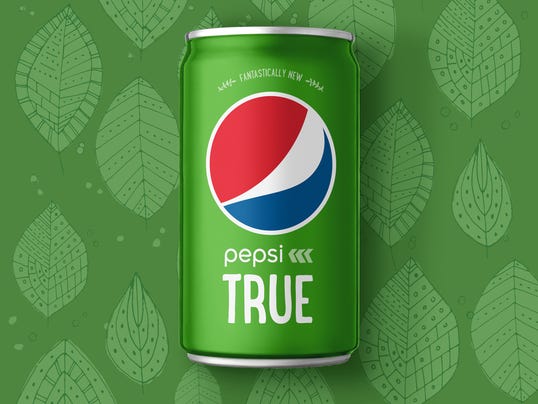
At right, a can of Pepsi True.
Note the use of green labels, which consumers usually associate with natural foods. What does this mean for dueling colas? A UK creative exec comments: 'The problem of sending confusing messages to consumers is they tend to avoid brands rather than try to decode them'.
Coca-Cola Life is launching in the UK with sampling, outdoor and transit ads and of course digital marketing. When The Grocer tasted Coca-Cola Life and compared its flavour with other Coke products, the editors preferred Life. A key question is whether this new product will attract new customers or take them from existing Coke products.
Pepsi True is currently available through Amazon in the US, but will soon be on store shelves there. Pepsi marketers view this product as a niche item because it appeals to a relatively small subsegment of soft-drink buyers.
These are neither zero-calorie colas with artificial sweeteners nor full-calorie colas with sugar or fructose syrup. They're 'mid-cal colas' featuring stevia, a plant-derived sweetener, typically targeting millennials who want to avoid a lot of chemical ingredients.

At left, Coca-Cola Life in bottles.
At right, a can of Pepsi True.
Note the use of green labels, which consumers usually associate with natural foods. What does this mean for dueling colas? A UK creative exec comments: 'The problem of sending confusing messages to consumers is they tend to avoid brands rather than try to decode them'.
Coca-Cola Life is launching in the UK with sampling, outdoor and transit ads and of course digital marketing. When The Grocer tasted Coca-Cola Life and compared its flavour with other Coke products, the editors preferred Life. A key question is whether this new product will attract new customers or take them from existing Coke products.
Pepsi True is currently available through Amazon in the US, but will soon be on store shelves there. Pepsi marketers view this product as a niche item because it appeals to a relatively small subsegment of soft-drink buyers.
Labels:
associations,
branding,
Coca-Cola,
cola wars,
distribution,
labels,
Millennials,
natural foods,
PepsiCo,
target market
Friday, 7 November 2014
Battle of the holiday adverts begins
With the yearend holiday shopping season about to begin, UK retailers are unveiling their new adverts and warm-hearted campaign themes.
The first was John Lewis, which put an adorable child and best friend, Monty the penguin, into the spotlight. Posted on YouTube, the advert attracted 4.5 million views in less than 48 hours.
This new holiday advert follows the animal friends theme that won John Lewis's bear and hare advert so many holiday views in 2013. Strong on emotion, no hard-sell, focus on positive attitudes and feelings.
Next was Marks & Spencer, which renamed itself Magic & Sparkle as it revealed its holiday fairies advert with a tweet:
Marks & Spencer is relying more heavily on social media this holiday season to capture the attention of tablet and mobile users who browse and buy with a click or fingertip.
Multichannel strategies are a must for 2014 holiday success. Watch for more social media marketing and more special adverts as countdowns to the holidays (and, earlier, the special window displays) continue.
The first was John Lewis, which put an adorable child and best friend, Monty the penguin, into the spotlight. Posted on YouTube, the advert attracted 4.5 million views in less than 48 hours.
This new holiday advert follows the animal friends theme that won John Lewis's bear and hare advert so many holiday views in 2013. Strong on emotion, no hard-sell, focus on positive attitudes and feelings.
Next was Marks & Spencer, which renamed itself Magic & Sparkle as it revealed its holiday fairies advert with a tweet:
Introducing a little Christmas Magic and Sparkle. #FollowTheFairies
https://t.co/yE2NJi8Rwx
— M&S (@marksandspencer) November 7, 2014
Marks & Spencer is relying more heavily on social media this holiday season to capture the attention of tablet and mobile users who browse and buy with a click or fingertip.
Multichannel strategies are a must for 2014 holiday success. Watch for more social media marketing and more special adverts as countdowns to the holidays (and, earlier, the special window displays) continue.
Tuesday, 4 November 2014
Retailers reveal consumer behaviour trends
Supermarkets and other retailers collect a massive amount of data about what shoppers buy, when they buy, how they pay, how often they shop, what time of day they shop and other details that help them analyse and understand consumer behaviour.
One of Tesco's highly valuable assets, in fact, is its Dunnhumby division, the tech engine behind its ability to utilise big data collected from Clubcard users' purchases.
John Lewis recently released a listing of trends based on its analysis of customer purchasing patterns and marketing research survey results.
This is the first in an annual series of reports designed to reveal changes in consumer behaviour and explain the implications.
Introducing the report, Mark Price of Waitrose told The Telegraph: 'People are buying food for now. The notion that you are going to go and push a trolley around for the week is a thing of the past. It is fundamentally changing the market'.
In other words, UK shoppers are no longer preparing menus in advance and shopping for food once a week. Pressed for time, they're buying weekday convenience and, often, planning for food-on-the-go (not necessarily fast food).
On weekends, however, UK consumers like to splash out on leisurely feasts. Bold flavours are increasingly in favour. Many use social media to share food photos and comments about what they like and don't like, which can accelerate and intensify reactions to food products--and to stores.
With better knowledge of consumer buying habits and priorities, retailers can design stores to meet the new needs and order products that fit current lifestyles. Marketing in all media will reflect these influences and position the retailers as 'the' place to shop for today's shoppers.
One of Tesco's highly valuable assets, in fact, is its Dunnhumby division, the tech engine behind its ability to utilise big data collected from Clubcard users' purchases.
John Lewis recently released a listing of trends based on its analysis of customer purchasing patterns and marketing research survey results.
This is the first in an annual series of reports designed to reveal changes in consumer behaviour and explain the implications.
Introducing the report, Mark Price of Waitrose told The Telegraph: 'People are buying food for now. The notion that you are going to go and push a trolley around for the week is a thing of the past. It is fundamentally changing the market'.
In other words, UK shoppers are no longer preparing menus in advance and shopping for food once a week. Pressed for time, they're buying weekday convenience and, often, planning for food-on-the-go (not necessarily fast food).
On weekends, however, UK consumers like to splash out on leisurely feasts. Bold flavours are increasingly in favour. Many use social media to share food photos and comments about what they like and don't like, which can accelerate and intensify reactions to food products--and to stores.
With better knowledge of consumer buying habits and priorities, retailers can design stores to meet the new needs and order products that fit current lifestyles. Marketing in all media will reflect these influences and position the retailers as 'the' place to shop for today's shoppers.
Wednesday, 29 October 2014
Spanish ads, English straplines
Looking at a Car and Driver magazine from Spain, I noticed many ads feature English straplines (see arrows). This indicates a globalisation of promotional themes and a recognition that drivers welcome global brands and are willing to buy them locally.
- At top left, Kia's strapline is "The Power to Surprise." That's the automotive brand's worldwide strapline.
- Center top, GT's global strapline for Champiro tyres is "Experience the Performance."
- Right at top, Mercedes Benz uses the strapline, "The best or nothing."
- Bottom left, BMW's ad includes the phrase "BMW EfficientDynamics," a reference to its earth-friendly lower emissions.
- Bottom right, Ford's ad shows the strapline "Go further." This strapline appears on its website and other promotional elements.
Labels:
advertising,
BMW,
Ford,
global brands,
GT,
Kia,
Mercedes,
straplines
Tuesday, 28 October 2014
Marketing wearable tech
Fitness trackers are being marketed as 'fashion meets function' for individuals who want to track activity or heartbeat or other indicators. These are a big segment of the wearable-tech market. Smart watches are, well, marketed as more technology in a convenient wristwatch size, portable in a different way than smartphones. Both are trendy for style reasons and for early adopters who enjoy being among the first to have the latest gadget.
Here are a few examples of marketing wearable tech:
- Fitbit is using multiple social media networks to showcase its latest wristband fitness trackers, including Instagram, Facebook, Twitter, Pinterest (especially key for fashionistas), Google+, LinkedIn, and Vine. The brand has recognition and a core of loyal followers who appreciate its streamlined look and ease of funtionality.
- Samsung is marketing its Gear smartwatches as 'comfortable, smart and stylish' on its UK website. Publicity about Android operating systems, bendable batteries and other elements related to the product help support its techy image. Samsung's strength in tablets and phones can only help its wearable tech products.
- Apple Watch, to be introduced in the UK next year, already has a lot of marketing momentum building because of product launches in the US and elsewhere. As expected from Apple, design is paramount to the marketing effort--as is the brand's iconic apple logo. Given Apple's premium image, this watch has a lot of buzz.
- Nike discontinued its Fuelband fitness tracker earlier in 2014 to focus on other wearable tech and, crucially, software related to wearable tech. The company recognised that fitness trackers have a life cycle--and the product category isn't yet in the maturity stage. Rather than continue with the wristband trackers that it marketed, Nike opted to look in Apple's direction. With Nike's strong brand equity, it will surely be able to compete in whatever niche it targets.
Labels:
Apple,
Fitbit,
fitness tracker,
Samsung,
smart watch,
wearable technology
Friday, 24 October 2014
How does brand identity sound?
South Korean automaker Kia is the latest marketer to incorporate sound into its brand identity. The distinctive musical sounds are part of Kia's multi-sensory branding, as shown on the company's website.
Brand fans are encouraged to download Kia's five-note melody as a ringtone, in various rhythms and styles (Reggae, Bossa Nova, modern rock, etc.).
Sonic branding has a long history. Music or sounds that are associated with a brand have the power to bring that brand to mind when you hear that unique melody or sound. And they can influence your attitudes and perceptions of the brand.
Not all sounds associated with a brand are intentional or pleasing, as this article explains. But careful planning can result in a sound that contributes to effective rebranding. That's what SNCF, the French railway firm, found when it created a unique sonic identity for its brand. Now, after years of hearing the railway's sonic brand signatures, 92% of the listeners surveyed were able to identify the brand after hearing only 2 notes--and 71% of the listeners had a positive attitude toward the brand.
Brand fans are encouraged to download Kia's five-note melody as a ringtone, in various rhythms and styles (Reggae, Bossa Nova, modern rock, etc.).
Sonic branding has a long history. Music or sounds that are associated with a brand have the power to bring that brand to mind when you hear that unique melody or sound. And they can influence your attitudes and perceptions of the brand.
Not all sounds associated with a brand are intentional or pleasing, as this article explains. But careful planning can result in a sound that contributes to effective rebranding. That's what SNCF, the French railway firm, found when it created a unique sonic identity for its brand. Now, after years of hearing the railway's sonic brand signatures, 92% of the listeners surveyed were able to identify the brand after hearing only 2 notes--and 71% of the listeners had a positive attitude toward the brand.
Saturday, 18 October 2014
Vinyl LP sales surge
An old-fashioned music medium, the vinyl LP is making a comeback year after year. Maybe LP sales statistics don't add up to a tsunami (yet), but they do indicate strong, ongoing consumer interest in vinyl. According to the Official Charts Co, 800,000 vinyl LPs have been sold to date this year, and 2014 is on track for 1 million LP purchases in the UK by yearend. (The Official Charts FB page is here.)
Record Store Day, held every May, attracts vinyl lovers to music stores around the country with special releases and promotions. The 2014 event broke recent sales records and contributed to vinyl's momentum.

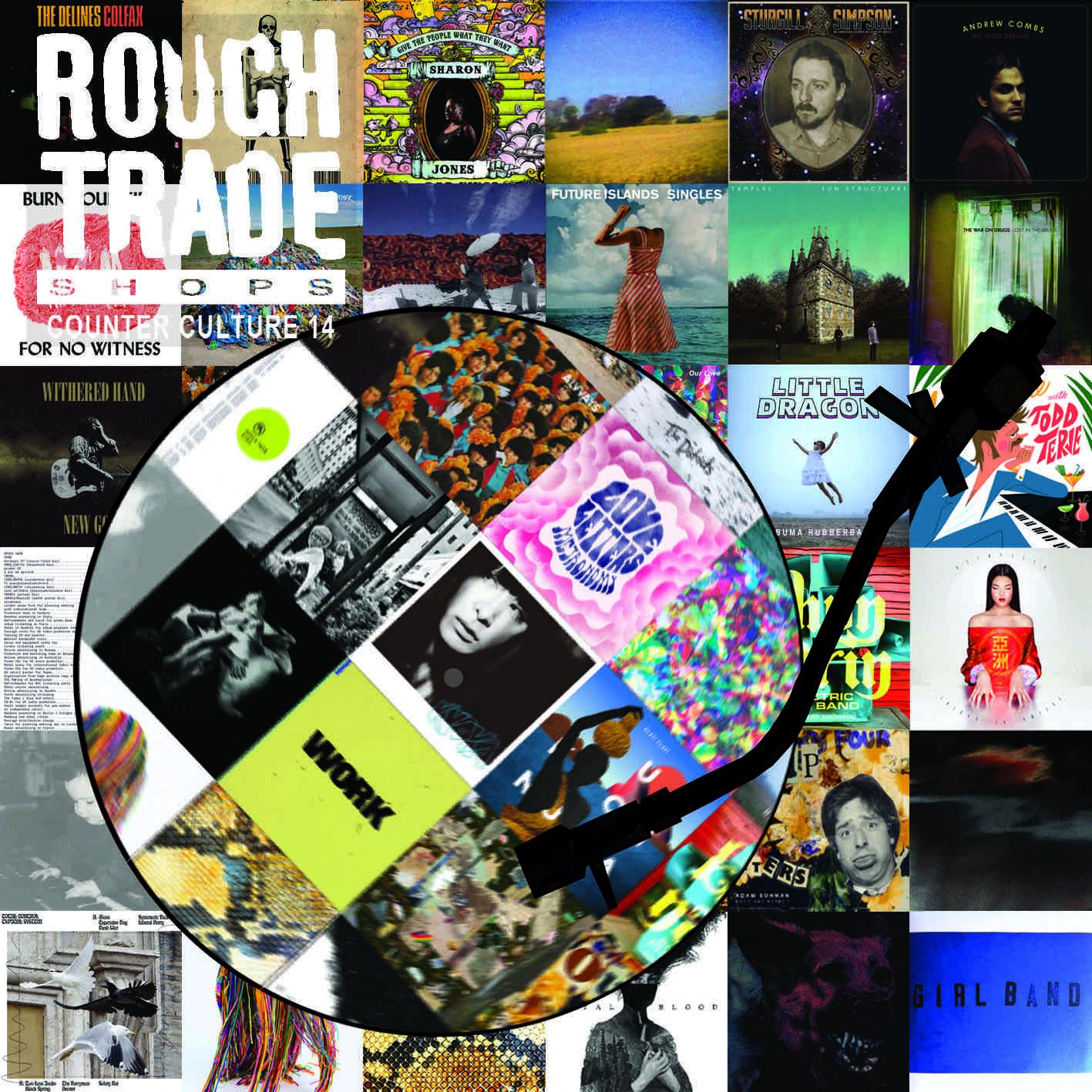
Vinyl is in the spotlight at Rough Trade, a music retailer based in London with two stores there, opened a branch store in the hip New York neighborhood of Williamsburg last year. Rough Trade will soon open a fourth store in Nottingham. The focus is on indie music--and vinyl is a key product element.
With 134,000 Twitter followers, Rough Trade actively promotes community and encourages exploration of new performers and new music. Vinyl gives customers a reason to visit the store, pick up LPs, read the album notes, and buy something new with a vintage heritage.
Record Store Day, held every May, attracts vinyl lovers to music stores around the country with special releases and promotions. The 2014 event broke recent sales records and contributed to vinyl's momentum.

Vinyl is in the spotlight at Rough Trade, a music retailer based in London with two stores there, opened a branch store in the hip New York neighborhood of Williamsburg last year. Rough Trade will soon open a fourth store in Nottingham. The focus is on indie music--and vinyl is a key product element.
With 134,000 Twitter followers, Rough Trade actively promotes community and encourages exploration of new performers and new music. Vinyl gives customers a reason to visit the store, pick up LPs, read the album notes, and buy something new with a vintage heritage.
Thursday, 16 October 2014
Look-alike shoes: Converse sues
Converse, now owned by Nike, markets a very distinctive sports shoe called the Chuck Taylor. The rubber-toed design is an all-American classic, popular year in and year out since it was introduced for basketball players nearly 100 years ago. It takes its name from a basketball star, Chuck Taylor, who joined Converse in the 1920s.
Now Converse is suing 31 companies, saying their shoes have too much of the Chuck Taylor look--and therefore violate intellectual property laws.
Among the firms being sued are Walmart, Kmart, Skechers and Ralph Lauren.
This isn't Converse's first attempt to assert its trademark rights. The company has served nearly 200 cease-and-desist notices in the past few years, telling marketers to stop making lookalike shoes that mimic Chuck Taylor's design. Now it's looking to the court system to enforce its trademark rights.
The marketing point? Success invites imitation. Marketers have to watch for imitators and be sure their brands and trademarks are protected. Otherwise, they may wind up marketing something that devolves into a generic product or category description. Zipper was once a brand. No longer. Converse wants to be sure that Chucks don't lose their brand protection. Just as important, it wants consumers to be reassured that when they buy a pair of shoes looking like the Chuck Taylor classic, it is a Chuck Taylor by Converse.
Now Converse is suing 31 companies, saying their shoes have too much of the Chuck Taylor look--and therefore violate intellectual property laws.
Among the firms being sued are Walmart, Kmart, Skechers and Ralph Lauren.
This isn't Converse's first attempt to assert its trademark rights. The company has served nearly 200 cease-and-desist notices in the past few years, telling marketers to stop making lookalike shoes that mimic Chuck Taylor's design. Now it's looking to the court system to enforce its trademark rights.
The marketing point? Success invites imitation. Marketers have to watch for imitators and be sure their brands and trademarks are protected. Otherwise, they may wind up marketing something that devolves into a generic product or category description. Zipper was once a brand. No longer. Converse wants to be sure that Chucks don't lose their brand protection. Just as important, it wants consumers to be reassured that when they buy a pair of shoes looking like the Chuck Taylor classic, it is a Chuck Taylor by Converse.
Labels:
brand,
branding,
Converse,
generic product,
intellectual property,
product,
trademark
Wednesday, 15 October 2014
Shopper marketing: selling from the shelf
When shopping, why do we reach for one package instead of another? The answer, say the experts at UK design consultancy Elmwood, is the influence of biomotive triggers.
Shoppers may pause for only a few seconds before moving on to the next item in a store--so packaging must work its magic quickly, attracting our attention, identifying the brand and a key benefit and then encouraging us to pick that product.
Clearly, in-store elements of shopper marketing can make all the difference in a product's sales. In particular, cusps and curves are two biomotive triggers that can affect consumer behaviour.
Elmwood's Simon Preece explains the influence of cusp and curve in a recent Packaging News interview:
Elmwood is responsible for the redesigned Andrex packaging shown at top (read its commentary on the packaging here). Toilet tissue should be soft, and the curves convey that important benefit. The puppy's eyes are looking right at the shopper, asking to be taken home--biomotive triggers that sell from the shelf.
Shoppers may pause for only a few seconds before moving on to the next item in a store--so packaging must work its magic quickly, attracting our attention, identifying the brand and a key benefit and then encouraging us to pick that product.
Clearly, in-store elements of shopper marketing can make all the difference in a product's sales. In particular, cusps and curves are two biomotive triggers that can affect consumer behaviour.
Elmwood's Simon Preece explains the influence of cusp and curve in a recent Packaging News interview:
- Cusps are sharp pointy shapes and they get our attention, signaling fear danger and caution.
- Curves suggest safety, softness and comfort; they make us feel secure and encourage interaction.
Elmwood is responsible for the redesigned Andrex packaging shown at top (read its commentary on the packaging here). Toilet tissue should be soft, and the curves convey that important benefit. The puppy's eyes are looking right at the shopper, asking to be taken home--biomotive triggers that sell from the shelf.
Labels:
biomotive trigger,
brand image,
design,
packaging,
retailing,
shopper marketing
Subscribe to:
Posts (Atom)